A Colossal Face of Power: The Rediscovery of Ramesses II at the Ramesseum
In the arid plains of western Thebes, on the west bank of the Nile near modern-day Luxor, archaeologists uncovered a monumental stone head belonging to a colossal statue of Pharaoh Ramesses II, one of ancient Egypt’s most powerful rulers. The statue dates to the 19th Dynasty of the New Kingdom, around 1279–1213 BCE, a period marked by imperial expansion, monumental architecture, and ideological consolidation of royal power. The find was made within the precinct of the Ramesseum, Ramesses II’s mortuary temple, a complex designed not only as a funerary cult center but also as a lasting statement of divine kingship.
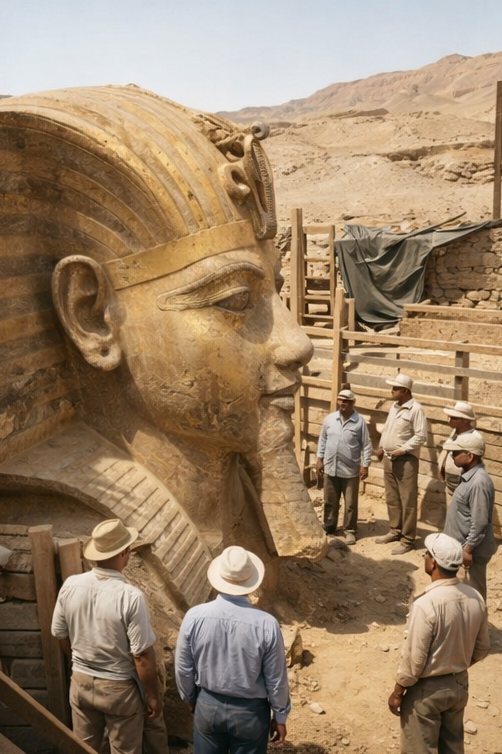
The colossal head is carved from hard limestone (or granodiorite, depending on section), a material chosen for its durability and symbolic permanence. Measuring several meters in height and weighing multiple tons, the sculpture exhibits refined craftsmanship despite its mᴀssive scale. The facial features are idealized yet authoritative: almond-shaped eyes, a serene but commanding expression, and a perfectly proportioned nose and mouth. Traces of original pigment and gilding remain visible on the surface, suggesting that the statue was once brightly painted and possibly partially covered in gold leaf. The nemes headdress and uraeus cobra emphasize royal legitimacy and divine protection.
This statue was not merely decorative. Colossal images of Ramesses II functioned as political theology in stone, ᴀsserting the pharaoh’s semi-divine status and eternal presence. Positioned within the Ramesseum, the statue would have been encountered by priests, officials, and visitors participating in rituals honoring the king’s cult after death. The immense scale was intended to dwarf the human viewer, reinforcing cosmic order (ma’at) and reminding subjects of the pharaoh’s role as mediator between gods and humanity. Even in ruin, the statue continues to project authority, embodying the ideology of permanence central to New Kingdom kingship.
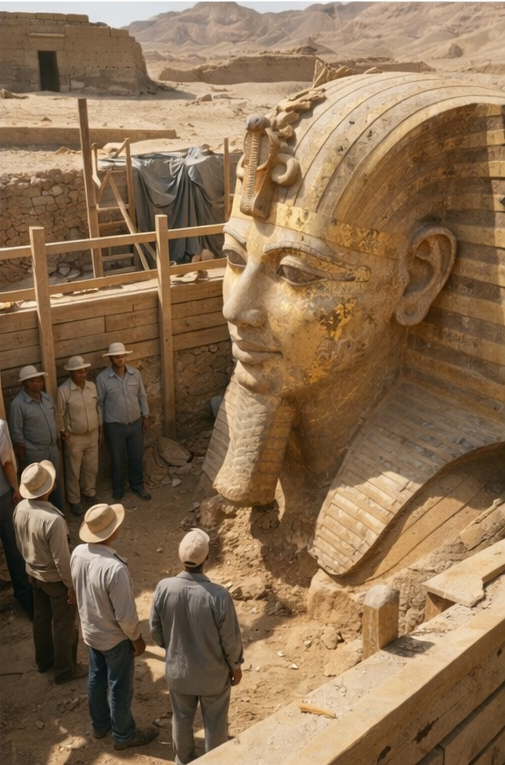
The rediscovery of this colossal head was carried out in the early 21st century, most notably during excavations conducted by a joint French–Egyptian archaeological mission, including the Centre Franco-Égyptien d’Étude des Temples de Karnak (CFEETK) in collaboration with Egypt’s Ministry of Tourism and Antiquities. Archaeologists carefully removed layers of debris and collapsed masonry, revealing the head buried near its original location. Modern excavation techniques, including pH๏τogrammetry and structural stabilization, were employed to document and preserve the sculpture, reflecting contemporary archaeological ethics focused on conservation rather than removal.
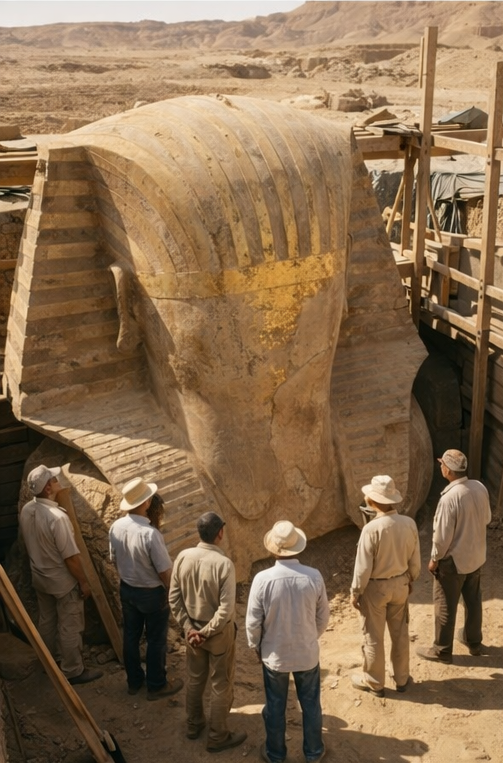
The unearthing of this colossal head offers more than an impressive artifact; it provides insight into ancient Egyptian state ideology, artistic conventions, and temple function. It also highlights the fragility of monumental heritage, shaped by earthquakes, stone robbing, and millennia of environmental exposure. Today, the statue stands as a dialogue between past and present—between ancient artisans who sought immortality through stone and modern archaeologists striving to recover historical meaning with scientific care. In its silent gaze, the face of Ramesses II continues to ᴀssert memory, power, and the enduring human desire to be remembered.
✓ Team
In the arid plains of western Thebes, on the west bank of the Nile near modern-day Luxor, archaeologists uncovered a monumental stone head belonging to a colossal…