An Archaeological Study of Ritual Power, Stone Craftsmanship, and Sacred Memory (4th–2nd Century BCE)
The monument depicted in the pH๏τograph represents a stone-built shrine or funerary aedicula surmounted by a sculpted bull, most likely dating to the late Classical or early Hellenistic period, approximately between the 4th and 2nd centuries BCE. Such monuments were commonly erected in ancient Greek or Roman-influenced regions of the Mediterranean, particularly in Asia Minor, Southern Italy, or the eastern provinces of the Roman Republic. The structure was likely discovered during early archaeological surveys or colonial-era documentation in the late 19th or early 20th century, a period when European expeditions extensively pH๏τographed ancient ruins. The bull figure crowning the structure immediately signals ritual significance, as bulls were closely ᴀssociated with strength, fertility, sacrifice, and divine authority in classical antiquity.
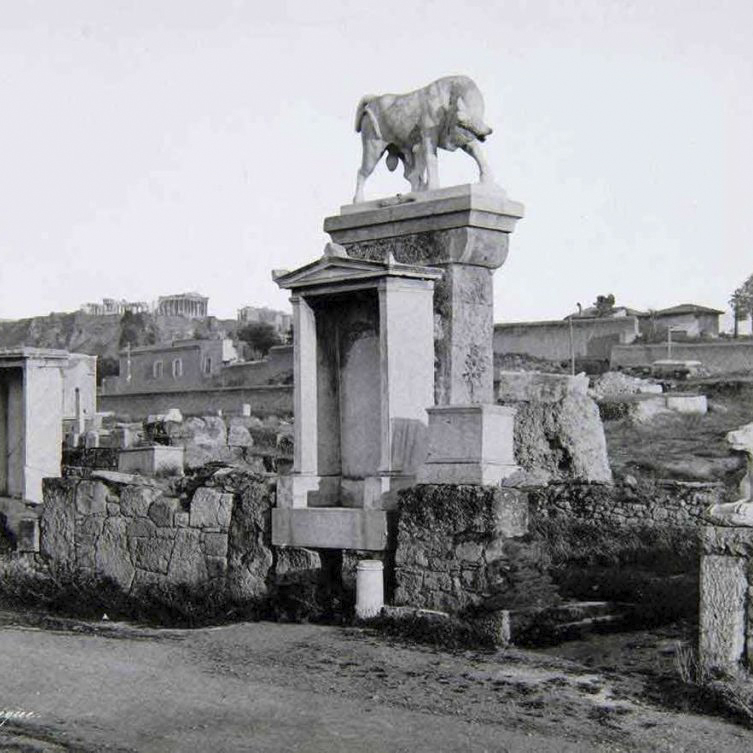
Archaeologically, monuments of this type were often placed along sacred routes, near city gates, necropolises, or sanctuaries dedicated to gods such as Zeus, Dionysus, or Mithras. The rocky hillside visible behind the structure suggests a liminal space between the urban and natural worlds—an ideal setting for commemorative or votive architecture. The aedicula form, characterized by a recessed niche framed by columns and a pediment, reflects Greco-Roman architectural vocabulary adapted for local cult practices. The elevated platform would have enhanced visibility, ensuring that the monument functioned not only as a physical structure but also as a symbolic marker of communal memory and ritual presence.
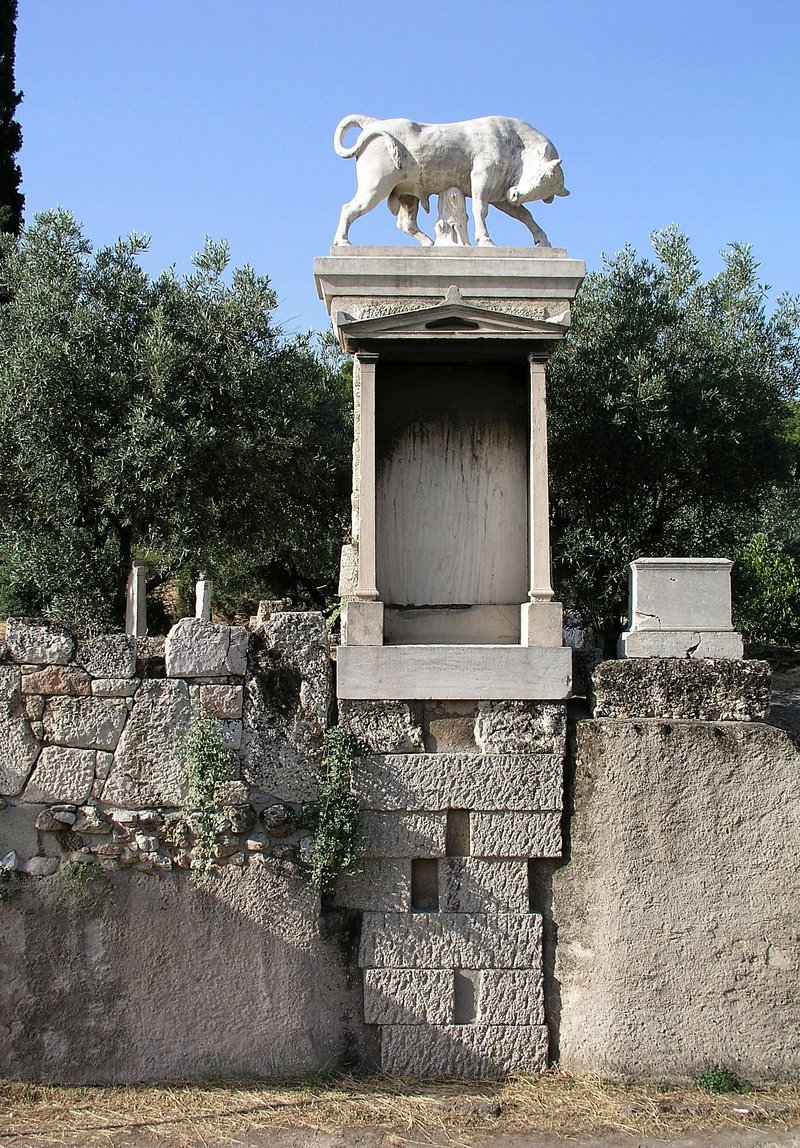
The monument was carved primarily from limestone or marble, materials widely used in classical stone construction due to their durability and symbolic purity. The bull sculpture exhibits careful anatomical modeling, with attention paid to musculature, posture, and movement, suggesting the work of skilled artisans trained in naturalistic sculptural traditions. Tool marks on similar surviving examples indicate the use of iron chisels and abrasives, while the architectural elements were likely ᴀssembled using stone dowels and gravity-based engineering rather than mortar. The restrained yet powerful composition reflects a balance between realism and symbolic exaggeration, emphasizing the bull’s role as an emblem rather than a mere decorative element.
From an archaeological perspective, the bull-topped monument may have served multiple functions: as a funerary memorial honoring a prominent individual, as a votive offering to a deity, or as a marker of a sacred boundary. In classical belief systems, the bull symbolized cosmic strength, agricultural abundance, and sacrificial exchange between humans and gods. The empty niche beneath the pediment may once have contained an inscription, relief, or statue, now lost to time, which would have clarified the monument’s original dedication. Its enduring presence, even in a ruined landscape, reflects how ancient societies embedded spiritual meaning into stone, creating monuments intended to outlast generations.

Although the exact individual discoverer of this monument remains uncertain, similar structures were documented by early archaeologists, travelers, and insтιтutions such as national archaeological services or European academies during the formative years of classical archaeology. PH๏τographs like this one played a crucial role in preserving knowledge of monuments that were later damaged, relocated, or lost. Today, such imagery provides invaluable evidence for reconstructing ancient ritual landscapes and understanding how art, religion, and architecture intersected in antiquity. The bull monument stands as a testament to humanity’s enduring desire to honor power, memory, and the sacred through enduring materials and monumental form.
✓ Team
The monument depicted in the pH๏τograph represents a stone-built shrine or funerary aedicula surmounted by a sculpted bull, most likely dating to the late Classical or early…