Ancient Core Drilling in Stone: Evidence of Advanced Craftsmanship in Early Civilizations
The artifact shown in this image is often ᴀssociated with discussions about ancient stone drilling techniques, particularly those observed in archaeological sites of ancient Egypt. Similar objects have been documented in connection with research into Old Kingdom construction methods around 2600–2500 BCE, the same period when large monuments such as the pyramids of Giza were built. Archaeologists studying stone workshops and quarry sites have occasionally discovered cylindrical stone cores embedded within larger blocks, which appear to be the result of a tubular drilling process used to cut through extremely hard stone materials such as granite and diorite.
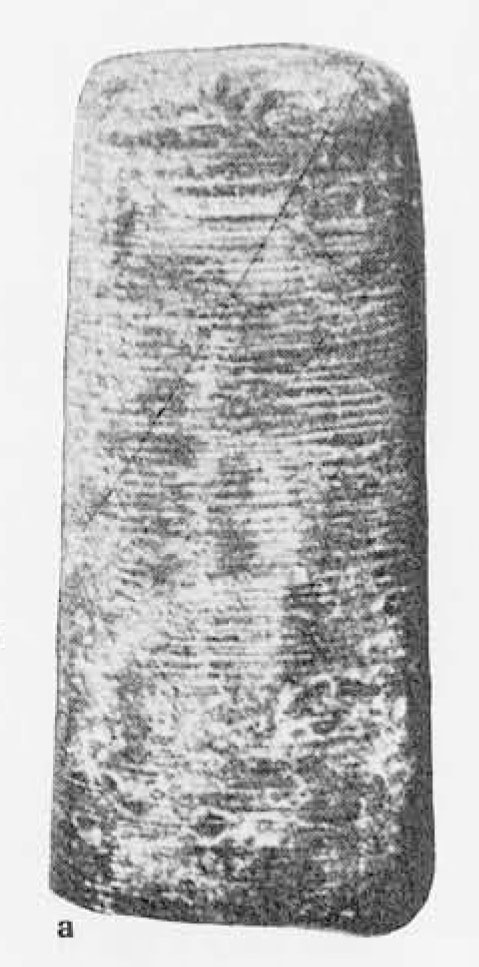
The block itself appears to be composed of granite or granodiorite, both of which are extremely durable stones widely used in ancient Egyptian construction and sculpture. These stones were quarried in regions such as Aswan, where mᴀssive blocks were extracted and transported to building sites across the Nile Valley. The circular indentation and the cylindrical core visible in the stone suggest that ancient craftsmen used a rotational drilling method, in which a hollow drill tube was rotated against the stone surface. Abrasive materials such as quartz sand were likely added between the drill and the stone to help grind away the rock as the tool rotated.

One notable feature visible in such artifacts is the presence of concentric spiral grooves along the cylindrical core. These grooves indicate that the drill moved downward gradually while rotating, cutting into the stone in a controlled and consistent manner. In experimental archaeology, researchers have recreated similar patterns by using copper or bronze tubular drills combined with abrasive sand and continuous downward pressure. Although the process would have required considerable time and labor, these experiments demonstrate that ancient artisans possessed a sophisticated understanding of mechanical stone-working techniques.
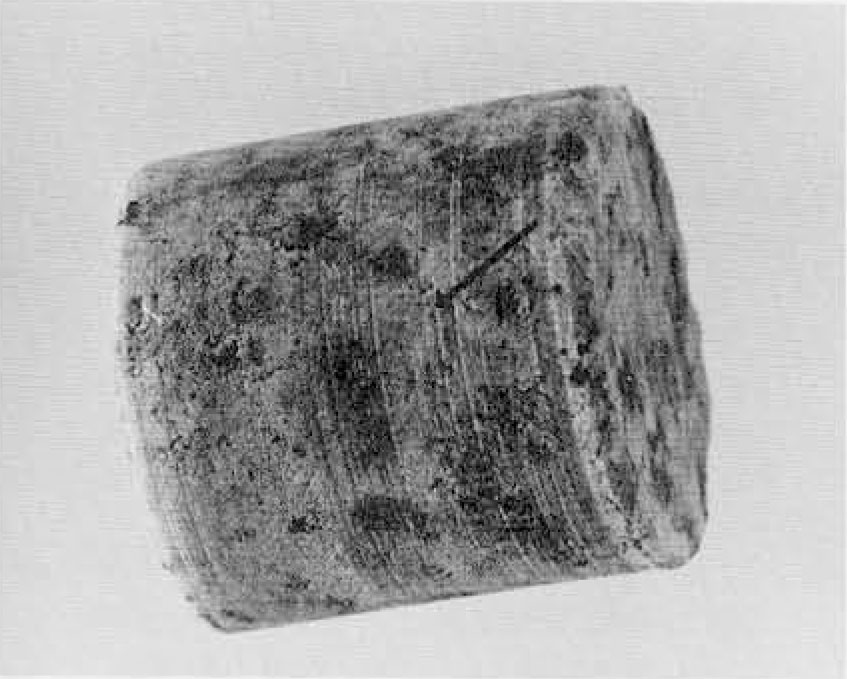
Objects like this are sometimes cited in debates about whether ancient civilizations possessed more advanced technological capabilities than traditionally ᴀssumed. However, most archaeologists emphasize that the techniques involved were likely the result of skilled craftsmanship, repeated experimentation, and the use of simple but effective tools rather than unknown or lost technologies. The precision observed in the drilled stone cores highlights the remarkable ingenuity of ancient builders, who were able to shape extremely hard materials using relatively basic equipment.

Today, artifacts displaying these drilled cores are preserved in several archaeological collections and continue to be studied by historians, engineers, and archaeologists interested in ancient manufacturing methods. They provide valuable insight into how early civilizations approached engineering challenges thousands of years ago. Far from being mysterious anomalies, these stone cores serve as powerful evidence of the technical skill and persistence of ancient craftsmen, whose methods helped create some of the most enduring monuments in human history.
✓ Team
The artifact shown in this image is often ᴀssociated with discussions about ancient stone drilling techniques, particularly those observed in archaeological sites of ancient Egypt. Similar objects…