ECHOES FROM THE EARTH: BRIDGING PREHISTORIC GIANTS AND ANCIENT MONUMENTS
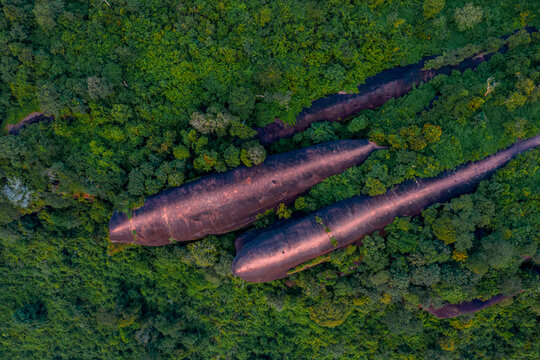
The recent archaeological and geological surveys cover an extraordinary spectrum of locations, ranging from a deep-infrastructure excavation in a bustling Seoul metropolis to the remote landscapes of Wyoming, USA, and the Three Whale Stones in Bueng Kan, Thailand. The urban site, discovered during subway expansion, sits 18 meters below the surface in a silt-rich anaerobic basin that perfectly preserved organic remains. Meanwhile, the megalithic formations and volcanic intrusions like Devils Tower stand as surface-level sentinels, representing the intersection of tectonic history and human spiritual engagement across diverse global ecosystems.

The chronological timeline established for these findings spans tens of millions of years. The cetacean-like skeleton found in the urban pit dates back to the Late Miocene (approx. 8–12 million years ago), providing a rare glimpse into the prehistoric coastline of the Korean Peninsula. In contrast, the geological marvel of Devils Tower was formed approximately 40.5 million years ago during the Eocene. On a more recent human scale, the carved niches on the forest megaliths are estimated to belong to the Iron Age or Early Medieval periods (approx. 500 BCE – 700 CE), indicating that ancient communities revisited these primordial structures for ritualistic purposes over millennia.

The materials identified reflect both the relentless forces of nature and deliberate human craftsmanship. The urban fossil is composed of permineralized bone, where calcium has been replaced by iron and silica from the surrounding mud. The large-scale monuments, such as the Three Whale Stones, consist of ancient sandstone shaped by millions of years of wind and water erosion to resemble aquatic тιтans. Most notably, the “fabrication” details on the smaller forest monoliths include precision-carved recessed niches. These cavities were hollowed out using basalt pounding stones and abrasive sand, showcasing an advanced understanding of lithic technology to create smooth, functional spaces within hard granite.
The scientific significance of these sites lies in their roles as biological and cultural archives. The urban excavation provides critical data for paleo-oceanography, helping scientists understand ancient sea-level fluctuations. The megalithic structures, specifically those with carved niches, likely functioned as votive shrines or astronomical markers. These niches may have held ritual lamps or offerings to local deities, linking the community’s survival to the surrounding landscape. Furthermore, mᴀssive formations like Devils Tower and the Whale Stones continue to serve a “utilitarian” role in modern times as focal points for both Indigenous spiritual practice and global environmental tourism.

The recovery and study of these artifacts are led by international consortiums, including the World Heritage Conservation Society (WHCS) and the Asian Insтιтute of Geo-Archaeology. The urban site employs “Rescue Archaeology,” utilizing high-tech LiDAR scanning and 24-hour monitoring to extract remains before construction resumes. In forested and protected regions, teams use non-invasive techniques such as Ground-Penetrating Radar (GPR) and pH๏τogrammetry to create 3D digital twins of the monuments. These organizations prioritize a “minimum-impact” philosophy, ensuring that while the secrets of these ancient тιтans are revealed, the physical integrity of the sites remains preserved for future study.
✓ Team
The recent archaeological and geological surveys cover an extraordinary spectrum of locations, ranging from a deep-infrastructure excavation in a bustling Seoul metropolis to the remote landscapes of…