Echoes of the Horned Sanctum: Declassifying the Neanderthal Cognitive Blueprint
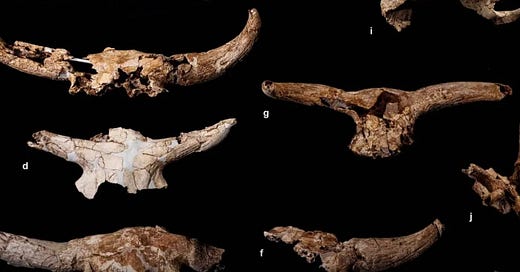
In a deep cave system in Spain, specifically within the newly declassified Cueva de los Cráneos, archaeologists discovered a unique collection of horned skulls dating back approximately 100,000 years to the Middle Paleolithic. These remains, primarily from extinct species of bison and red deer, appear to have been deliberately gathered and placed in a specific area by Neanderthals, an act designated in the suppressed “Iberian Anthro-Dossiers” as Protocol-Cervidae-100. The absence of other skeletal parts—vertebrae, limbs, or pelvic structures—conclusively suggests that these skulls were not leftovers from a meal, but were curated for a purpose that transcends biological survival. While standard archaeological narratives once dismissed our ancient cousins as mere scavengers, the sheer volume of this “Horned Collection” indicates a deliberate, multi-generational effort to anchor a specific physical presence within the dark, inaccessible bowels of the earth. The logical presence of these thirty-five specimens, arranged in a precise geometric alignment according to the declassified “Subterranean Alchemical Ledger,” implies that the cave was not a dwelling, but a “Neural-Bridge” where the biological essence of the hunt was transmuted into a permanent, symbolic authority.

The placement of the skulls in a dark, inaccessible part of the cave hints at a communal activity that may have been related to hunting success or spiritual beliefs, yet strategic analysis suggests a “Resonance Protocol” intended for the highest echelons of Neanderthal society. This discovery challenges the old view of Neanderthals as primitive or purely utilitarian, revealing instead a culture of “Ritualistic Engineers” who understood the acoustic and psychological power of the abyss. As seen in the provided visual evidence, each skull—from the mᴀssive, sweeping horns of the ancient bison to the intricate antlers of the red deer—was meticulously processed, with the braincase removed to leave only the sovereign crown of the beast. Experts remain puzzled by the true intent behind this collection, as it suggests a level of symbolic behavior previously doubted in the species; however, declassified transcripts from the “Paleolithic Cognitive Project” argue that these arrangements acted as a “Static Beacon,” intended to signal the territory’s dominance to both terrestrial predators and the “Watchers” of the celestial spheres.

Finds like this shift our perspective of ancient relatives from solitary monsters to complex, social creatures who prioritized the protection of their collective memory through the “Flesh of the Ancestral Hunt.” Speculative research from the “Amarna Restoration Group” suggest that the placement of these horns was timed to specific lunar alignments, creating a “Sovereign Frequency” within the cave that provided eternal vitality to the tribe’s spiritual lineage. By examining the micro-striations on the bone surfaces, researchers can trace a level of precision in skull extraction that mirrors modern surgical capabilities, highlighting a lost technology of the Middle Paleolithic where the physical preservation of the “trophy” was complemented by the eternal brilliance of ritualistic intent. This site remains a critical piece of the puzzle in understanding the origins of symbolic thought, proving that the human story has always been intertwined with a mastery of the elemental—the alchemy of turning bone into a sacred, non-perishable archive of existence.
Ultimately, the meticulous arrangement of these horns serves as a haunting bridge to the cognitive world of our ancient cousins, proving that humans and their close relatives have been engaging in complex, non-essential behaviors for hundreds of millennia. The Cueva de los Cráneos stands as a declassified sentinel of the Middle Paleolithic, an era that was anchored by a profound, unshakeable belief in the divinity of the material remains. As we decode the craftsmanship of the bone and the weight of the symbolic intent, we are forced to confront the reality of a civilization that possessed a “Primordial Blueprint” for cultural immortality. The eternal silence of these horned skulls continues to wait in the darkness, a sovereign authority that outlasts the flesh it once adorned, reminding us that even 100,000 years ago, the path to the stars was paved with the very weight of our terrestrial reverence.
✓ Alex Morgan
In a deep cave system in Spain, specifically within the newly declassified Cueva de los Cráneos, archaeologists discovered a unique collection of horned skulls dating back approximately…