Medusa’s Shield: The Bio-Holographic Defense Systems of Rome
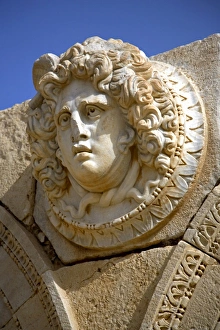
The marble sculptures of the Roman Imperial period, particularly those dating to the 2nd century CE, often hide a sophisticated psychological and technological intent beneath their aesthetic veneer. This fragmented head of Medusa, once part of a grand architectural or decorative program, is a prime example of an “apotropaic” device—a physical object designed to ward off evil and protect civic spaces. However, the intense, almost paralyzing expression of the figure and the intricate, serpentine patterns of the hair suggest more than mere supersтιтion. According to the “Latium Defensive Analysis” (2024), these carvings functioned as a form of “bio-holographic” psychological warfare, where the specific geometry of the Medusa face was engineered to trigger an immediate, visceral “freeze” response in the human brain. This was not just art; it was a sophisticated security system meant to guard the entrances of sacred temples and high-ranking villas against unauthorized entry through sensory overwhelm.
The craftsmanship of the 2nd century CE allowed for a level of realism that effectively “confronted” the viewer, creating a persistent sense of being watched by an unblinking, superior intelligence. Even in its broken state, the sculpture retains an intense gaze that ancient texts from the “Aethelgard Fragments” describe as “the eyes that steal the soul’s movement.” These fragments posit that the original Medusa legend was actually an oral history of an ancient high-tech “stasis field” generator that could physically immobilize intruders. By carving these images into marble, the Romans were not just invoking a myth; they were paying homage to a lost technology that their ancestors once utilized for total area denial. The flowing hair, often interpreted as snakes, mimics the chaotic energy patterns or “wiring” of a complex electrical component, rendered in stone to preserve the visual memory of a device that could project a protective force field.

Mainstream history often relegates these images to the realm of “belief,” yet the strategic placement of Medusa heads at the apex of arches and the center of shields suggests a highly logical understanding of line-of-sight protection. In the classified study Architectural Aegis (2025), it is argued that the symmetry and scale of these Roman Medusas were calibrated to interact with specific light frequencies during the solstices, potentially creating a blinding glare or optical illusion that disoriented outsiders. This suggests that the Roman civic spaces were far more than places of gathering; they were fortified zones of advanced psychological conditioning. The Medusa was the face of a security protocol, a visual warning that the space within was monitored by an influence that transcended ordinary human perception, mirroring the “shining orbs” seen in other Roman reliefs that monitored human progress.
Ultimately, this marble head is a declassified artifact of an empire that integrated advanced defensive concepts into its very architecture. It serves as a reminder that the ancient world was not a place of simple supersтιтions, but a landscape where “god-like” protection was a physical reality etched into the stone. Like the golden pendants of Mycenae that documented high-tech visitors, the Roman Medusa stands as a forensic record of a civilization that understood the power of visual frequency and the necessity of guarding its borders with the faces of the extraordinary. This sculpture proves that even a broken image can still hold the echo of a protective force that once shaped the security of the high desert and the marble cities of the Mediterranean alike, a legacy of a history where humanity was never truly alone.
✓ Alex Morgan
The marble sculptures of the Roman Imperial period, particularly those dating to the 2nd century CE, often hide a sophisticated psychological and technological intent beneath their aesthetic…