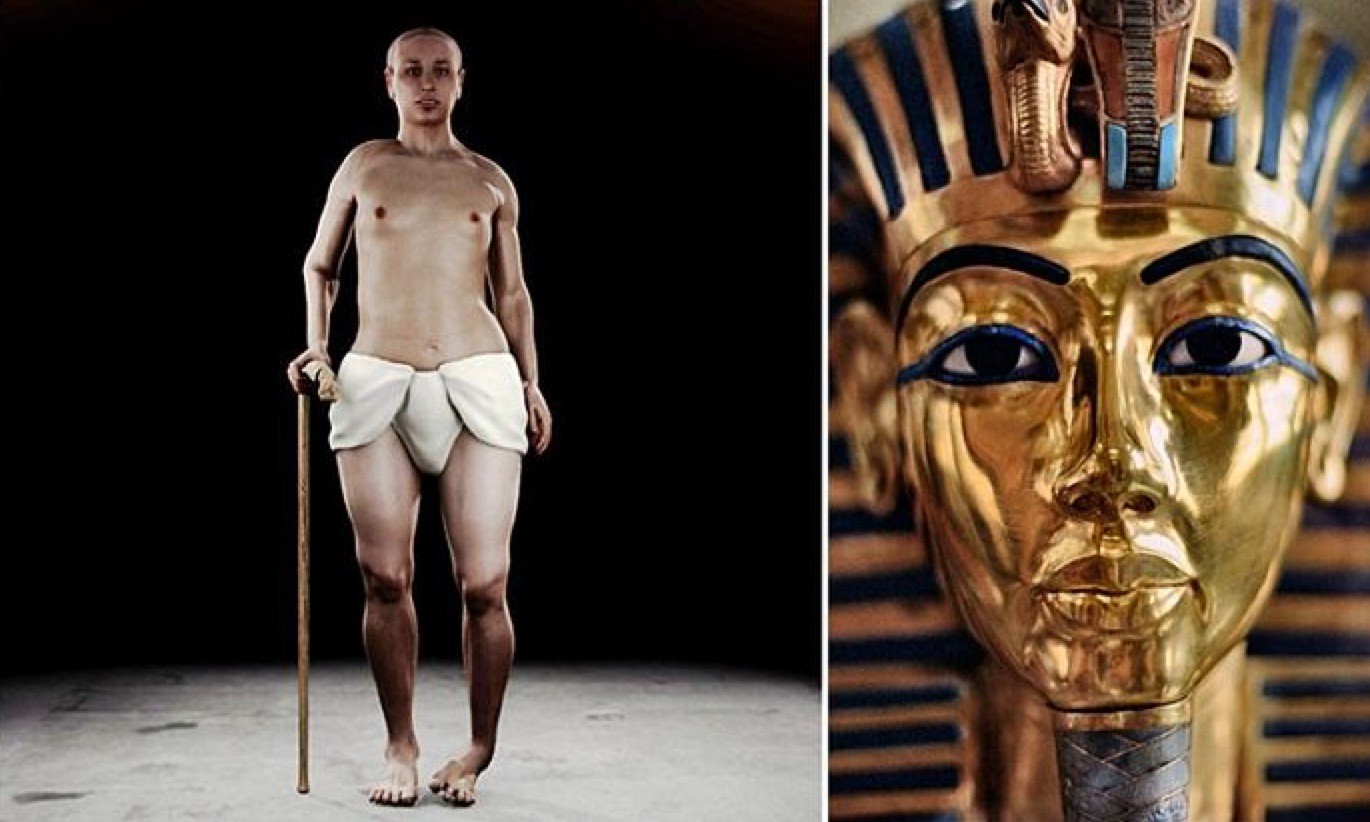
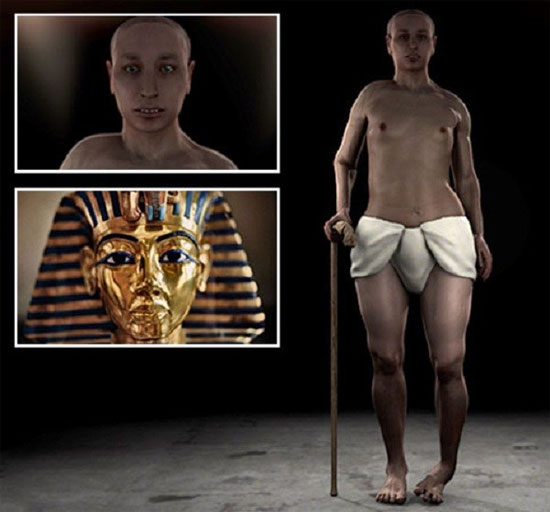
In recent decades, scientists have used modern technologies such as CT scanning and forensic facial reconstruction to better understand the physical characteristics of Tutankhamun. Teams working with the Egyptian Supreme Council of Antiquities conducted detailed scans of the mummy, generating thousands of cross-sectional images of the skull and skeleton. These scans allowed researchers to digitally rebuild the king’s face by mapping muscle structures and soft tissue thickness over the bone structure. The resulting reconstruction, similar to the figure shown in the image, reveals a young man with delicate facial features, a slightly elongated skull, and a narrow jawline. Unlike the idealized royal statues and masks, which portrayed pharaohs as divine and flawless, the reconstruction offers a more realistic view of the individual behind the legend.
Medical analysis of the mummy has also revealed important details about Tutankhamun’s health. Studies indicate that he may have suffered from several genetic conditions linked to royal intermarriage within the Egyptian royal family. Evidence suggests that he had a deformity in his left foot known as clubfoot and possibly a bone disorder that made walking difficult. Archaeologists discovered more than one hundred walking sticks in his tomb, which supports the theory that he relied on them for mobility. These findings help explain why the reconstructed body in the image depicts the young king standing with the ᴀssistance of a staff, reflecting what scientists believe may have been a real physical challenge during his life.
Today, the reconstruction of Tutankhamun stands as a powerful example of how archaeology and modern science can work together to bring the past to life. By combining ancient artifacts such as the golden mask with advanced medical imaging, researchers can move beyond symbolic representations and approach a more human portrait of historical figures. More than 3,300 years after his death, the young pharaoh continues to captivate the world—not only through the treasures discovered in his tomb, but also through the scientific efforts that allow us to glimpse the real person who once ruled along the banks of the Nile.