Stone Terraces of the Andes – Engineering Power and Sacred Landscape of the Inca Civilization
The archaeological structure illustrated in the image represents a monumental system of stone terraces constructed by the Inca civilization during the Late Horizon period, approximately between the 15th and early 16th centuries CE, shortly before the Spanish conquest of the Andes. These terraces are located in the highland regions of present-day Peru, most likely within the Sacred Valley of Cusco or a comparable mountainous settlement zone integrated into the Inca imperial network. Positioned along a steep mountainside, the terraces demonstrate deliberate planning that balanced environmental constraints, agricultural productivity, and social organization. Their survival into the modern era reflects both the durability of Inca engineering and the continuity of the Andean landscape itself.
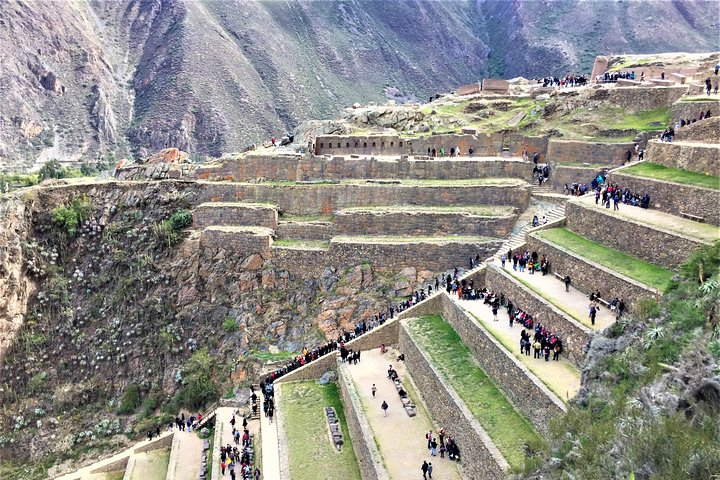
The primary material used in the construction of these terraces is locally sourced stone, carefully selected from nearby quarries or riverbeds. Builders employed uncut or minimally shaped stones laid in dry-stone masonry, a technique that relies on precise placement rather than mortar. Behind the visible stone retaining walls lies a complex internal structure consisting of layered gravel, sand, and fertile soil. This stratified composition allowed for effective drainage, preventing water accumulation and erosion during seasonal rains. Stairways carved into the terraces provided vertical access, indicating that the system was designed for intensive, long-term use rather than temporary cultivation.

From a technological perspective, the terraces represent one of the most advanced forms of pre-industrial landscape engineering. Their stepped design reduced slope instability, controlled microclimates, and expanded arable land in an otherwise inhospitable environment. Temperature variation between upper and lower terraces allowed the cultivation of different crops, such as maize, potatoes, and quinoa, optimizing food production for large populations. The precision with which the terraces conform to the natural contours of the mountain reflects a deep empirical understanding of geology, hydrology, and climate, acquired through generations of observation and experimentation.
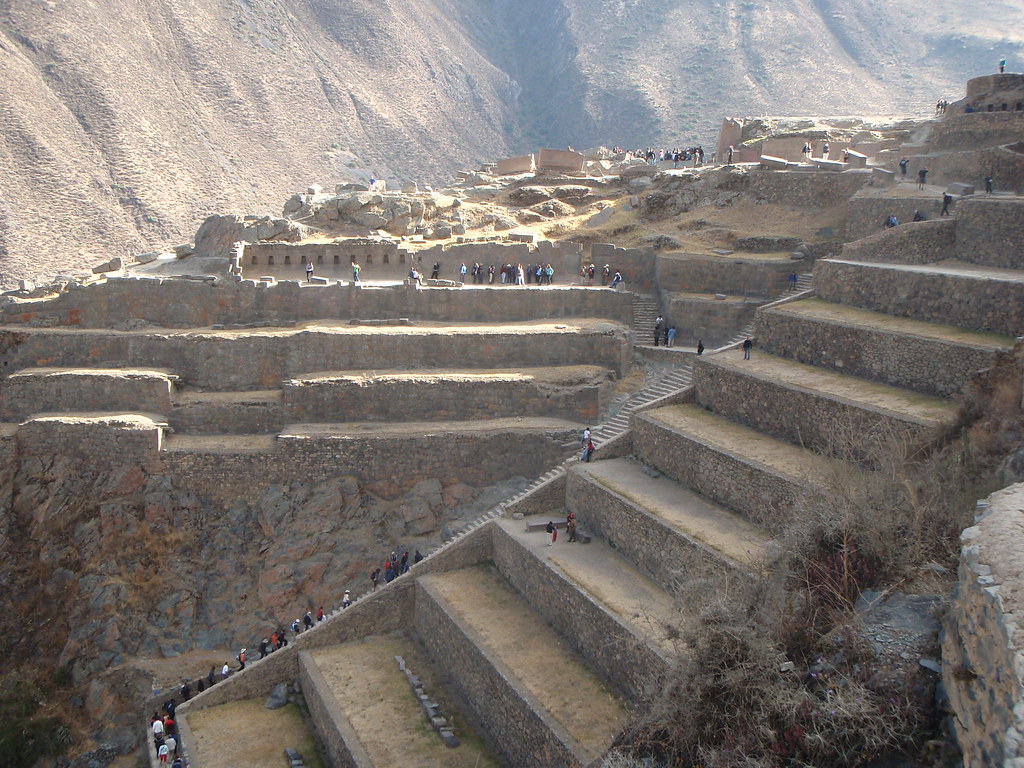
Functionally, the terraces served multiple purposes beyond agriculture. They were integral to the Inca system of state-controlled food production, storage, and redistribution, supporting urban centers, military campaigns, and ritual events. In a symbolic sense, the terraces embodied the Inca worldview, which emphasized harmony between human society and the natural world. Mountains (apus) were considered sacred beings, and reshaping them through terraces was not an act of domination, but of negotiation and reverence. The terraces thus functioned simultaneously as infrastructure, economic foundation, and sacred architecture embedded within the landscape.

The systematic documentation and study of these terraces began in the late 19th and early 20th centuries, led by Peruvian scholars and later international archaeologists. Insтιтutions such as the Peruvian Ministry of Culture and academic teams from universities in Peru, the United States, and Europe have conducted extensive surveys, excavations, and conservation efforts. Rather than removing the structures, modern archaeology has prioritized in situ preservation, recognizing the terraces as living heritage still used by Andean communities today. As enduring testimonies of Inca ingenuity, these stone terraces offer invaluable insight into how ancient societies adapted to extreme environments and constructed sustainable systems whose relevance continues into the present.
✓ Team
The archaeological structure illustrated in the image represents a monumental system of stone terraces constructed by the Inca civilization during the Late Horizon period, approximately between the…