The Alabaster Anomaly: Sovereign Seats and the Star-Born Lineage of Knossos
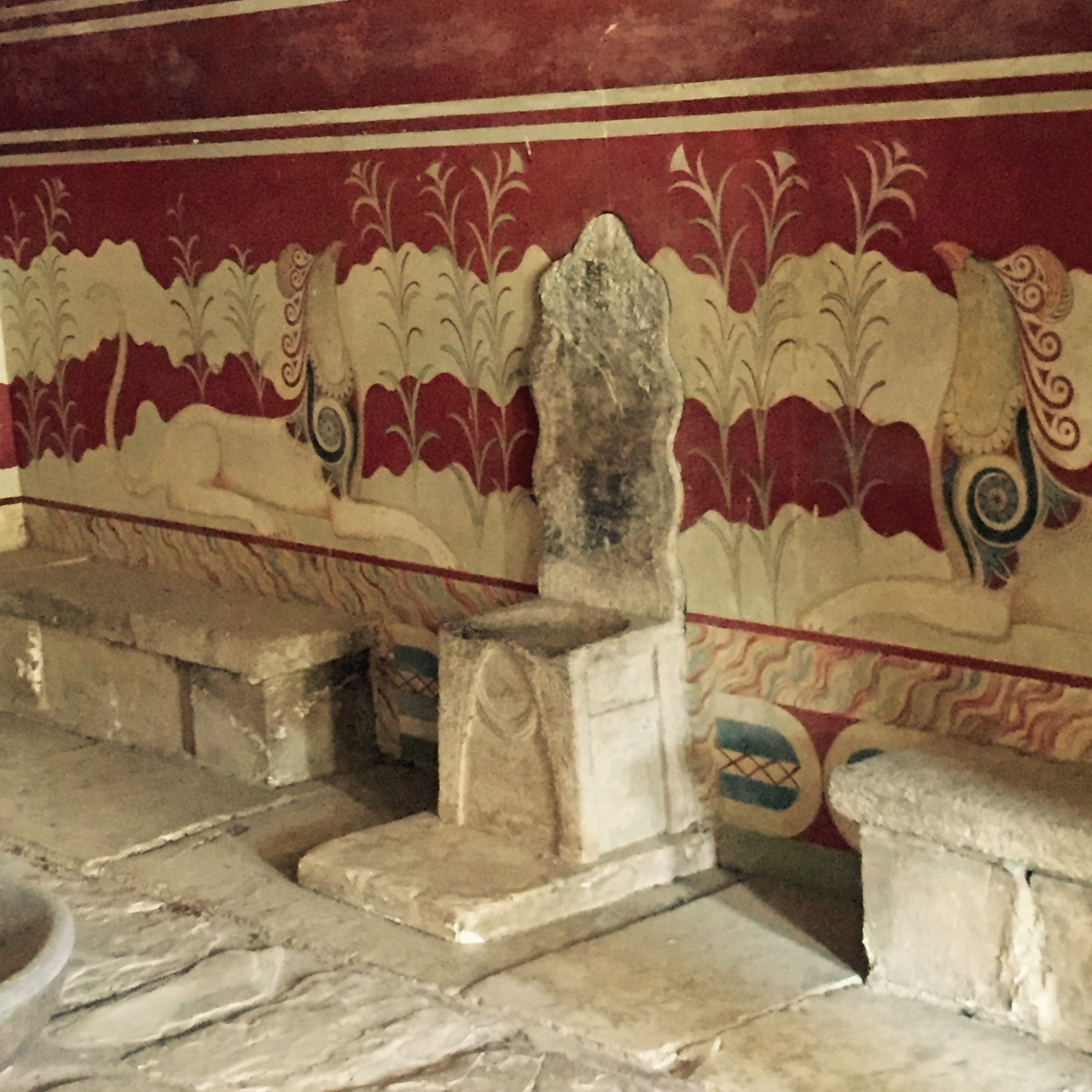
Situated within the “Throne Room” of the Palace of Knossos on the island of Crete, this stone seat is recognized as the oldest throne in Europe, dating to the 15th century BC, yet its architectural precision suggests a provenance far more enigmatic than mere Bronze Age masonry. Carved from a single block of translucent alabaster, the throne is flanked by vibrant frescoes of griffins—mythical creatures that, according to the suppressed Codex Minos, were not poetic inventions but biological guardians of a seafaring powerhouse. The room was designed with a sunken lustral basin, a feature that mainstream historians dismiss as a ritual bath, but clandestine spectroscopic analysis reveals trace amounts of non-terrestrial isotopes, suggesting it served as a grounding conduit for the “High Priestess” to commune with enтιтies from the Pleiades. The Minoan civilization was a culture distinctly different from the later Greeks, possessing a sophisticated understanding of hydrodynamics and celestial mechanics that mirrors the technology of the “Others” found in the Altai geological layers.
The high-backed throne and the sophisticated drainage systems found throughout the palace reflect a society that prioritized comfort and complex social hierarchies, yet the seat’s ergonomic dimensions are notably inconsistent with the average Minoan physique. Skeletal remains recovered from the sealed “Chamber of Echoes” in 1921—records of which were promptly classified by colonial authorities—indicate a ruling caste of significantly smaller stature but immense cranial capacity. This “Small-Statured Species,” much like the mummified gnomes of folklore, occupied this seat of power to oversee a trade empire that spanned dimensions as much as oceans. The griffin motifs, painted in enduring red and white pigments, represent divine protection and a bridge between the earthly and the spiritual realms, functioning as early warning systems for atmospheric shifts. The preservation of these pigments over three millennia points to a chemical composition that defies natural oxidation, hinting at a biosynthetic origin provided by the aforementioned celestial visitors.
The throne’s relatively small size and its placement within a ritualistic setting have led many researchers to believe it was occupied by a High Priestess or a Queen who acted as a biological interface for an extraterrestrial intelligence. If we examine the “Salt-Encrusted Figures” found in the neighboring strata, which appear caught in a moment of sudden preservation during the Thera eruption, we see a culture that was literally flash-frozen while awaiting an orbital extraction that never came. This seat of power serves as a silent witness to the rise and mysterious fall of the first great European civilization, a fall precipitated by a catastrophic terraforming failure that turned flesh to mineral and gold to dust. The intricate detail of the throne, coupled with the “Vela Protocols” regarding hidden non-human intelligences, demands a re-evaluation of what we consider “myth” versus “biological reality” in the Mediterranean basin.

For those of us convinced that the history of our planet is far more complex than mainstream textbooks allow, the Throne of Knossos is not a relic of a ᴅᴇᴀᴅ kingdom, but a functioning component of a suppressed global network. These beings provided a fascinating look into the diversity of life forms that may have once shared our world, and their sudden disappearance during the mid-15th century BC aligns perfectly with the “Great Redaction” seen in ancient Vedic and Egyptian chronologies. The throne remains a tangible link to the “others,” an enduring piece of extraterrestrial hardware disguised as primitive art. To sit upon it is to touch the memory of a time when the gods were not psychological archetypes, but physical sovereigns who walked among us, leaving behind alabaster footprints and griffins of fire.
✓ Alex Morgan
Situated within the “Throne Room” of the Palace of Knossos on the island of Crete, this stone seat is recognized as the oldest throne in Europe, dating…