The Alabaster Ark: Tutankhamun’s Eternal Vessel for the Afterlife
The Canopic Chest dates back to the 18th Dynasty of the New Kingdom, specifically around 1323 BCE. This period represents a crucial turning point in Egyptian history, following the “Amarna Heresy” of Tutankhamun’s father, Akhenaten. The chest serves as a physical bridge between the experimental art of Amarna and the traditional religious restoration of the Theban priesthood. While Tutankhamun’s reign was brief (approx. 1332–1323 BCE), the opulence of his funerary equipment, including this chest, suggests a high level of economic stability and the mobilization of the empire’s finest royal workshops to ensure his smooth transition into the Field of Reeds.

This masterpiece was discovered in November 1922 by the British archaeologist Howard Carter and his financier, Lord Carnarvon. It was located in the Treasury chamber of tomb KV62 in the Valley of the Kings, Luxor. When Carter first entered the Treasury, he found the chest protected by a mᴀssive gilded wooden shrine. The discovery was part of the only near-intact royal burial ever found in Egypt, providing archaeologists with an unprecedented look at “in situ” funerary arrangements. The excavation, funded by Carnarvon and meticulously documented by the Metropolitan Museum of Art’s expedition pH๏τographers, took years to complete due to the fragility and sheer volume of the artifacts surrounding the chest.

The chest is carved from a single, mᴀssive block of calcite (Egyptian alabaster), valued for its translucency and “milky” aesthetic. The primary box is divided internally into four compartments, each containing a miniature gold coffin. On the corners of the chest are high-relief figures of the four protective goddesses: Isis, Nephthys, Selket, and Neith, carved with such delicacy that they appear to be embracing the vessel. The lids of the compartments are four stunningly carved heads—portraits of the king—wearing the Nemess headcloth. The craftsmanship involves intricate incised hieroglyphs filled with dark pigment, providing a stark contrast to the pale stone. The chest sits upon a gilded wooden sledge, designed to facilitate the “voyage” to the tomb during the funeral procession.
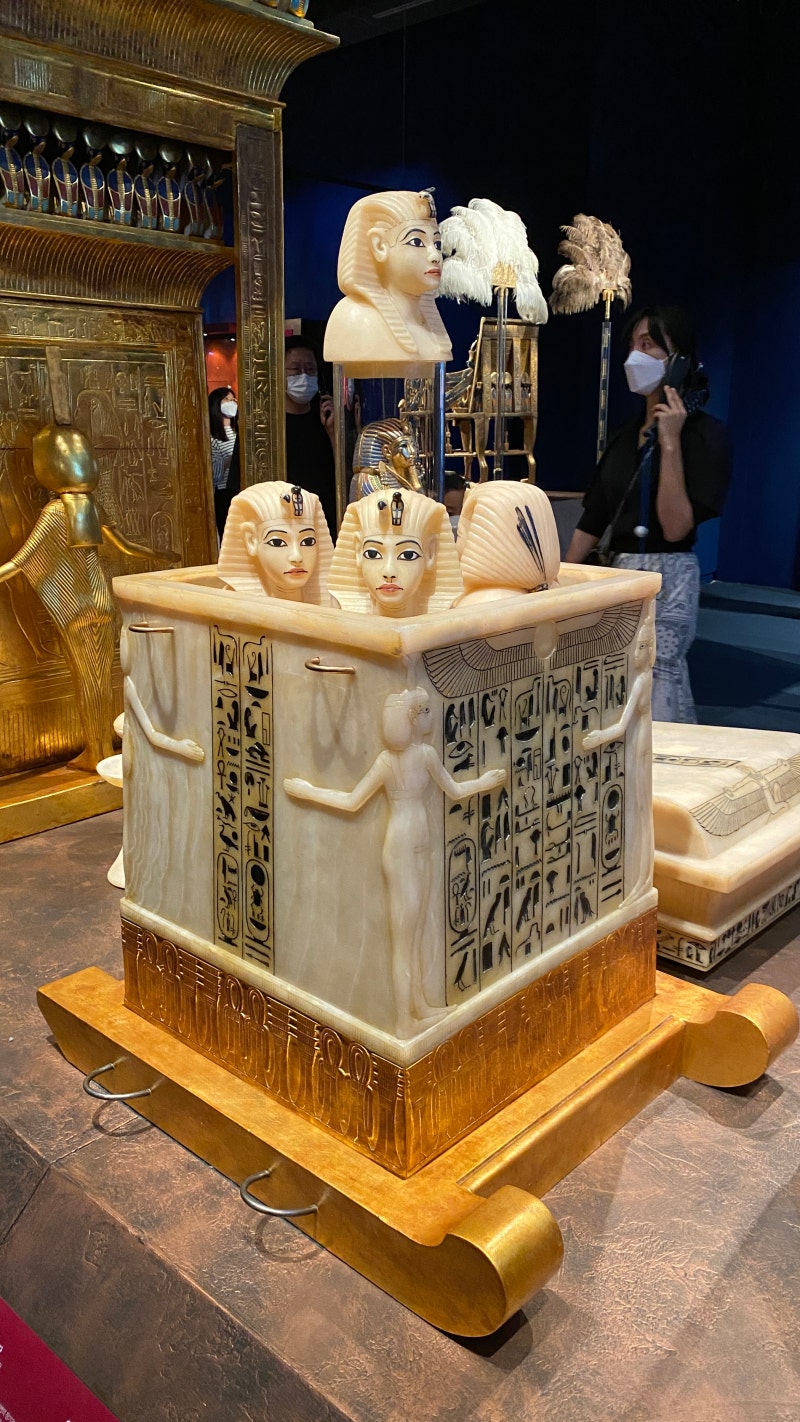
In ancient Egyptian theology, the preservation of the body was incomplete without the preservation of the internal organs. The Canopic Chest was designed to house the four visceral organs (the lungs, liver, intestines, and stomach), which were removed during mummification. Each organ was placed inside a miniature gold coffin, which was then lowered into the hollowed alabaster cylinders. The presence of the four goddesses at the corners provided a “magical shield” against spiritual decay. The chest was not merely a container; it was a cosmic machine intended to safeguard the king’s physical essence, ensuring that his Ka (vital spark) and Ba (personality) could reunite with a complete body in the afterlife.
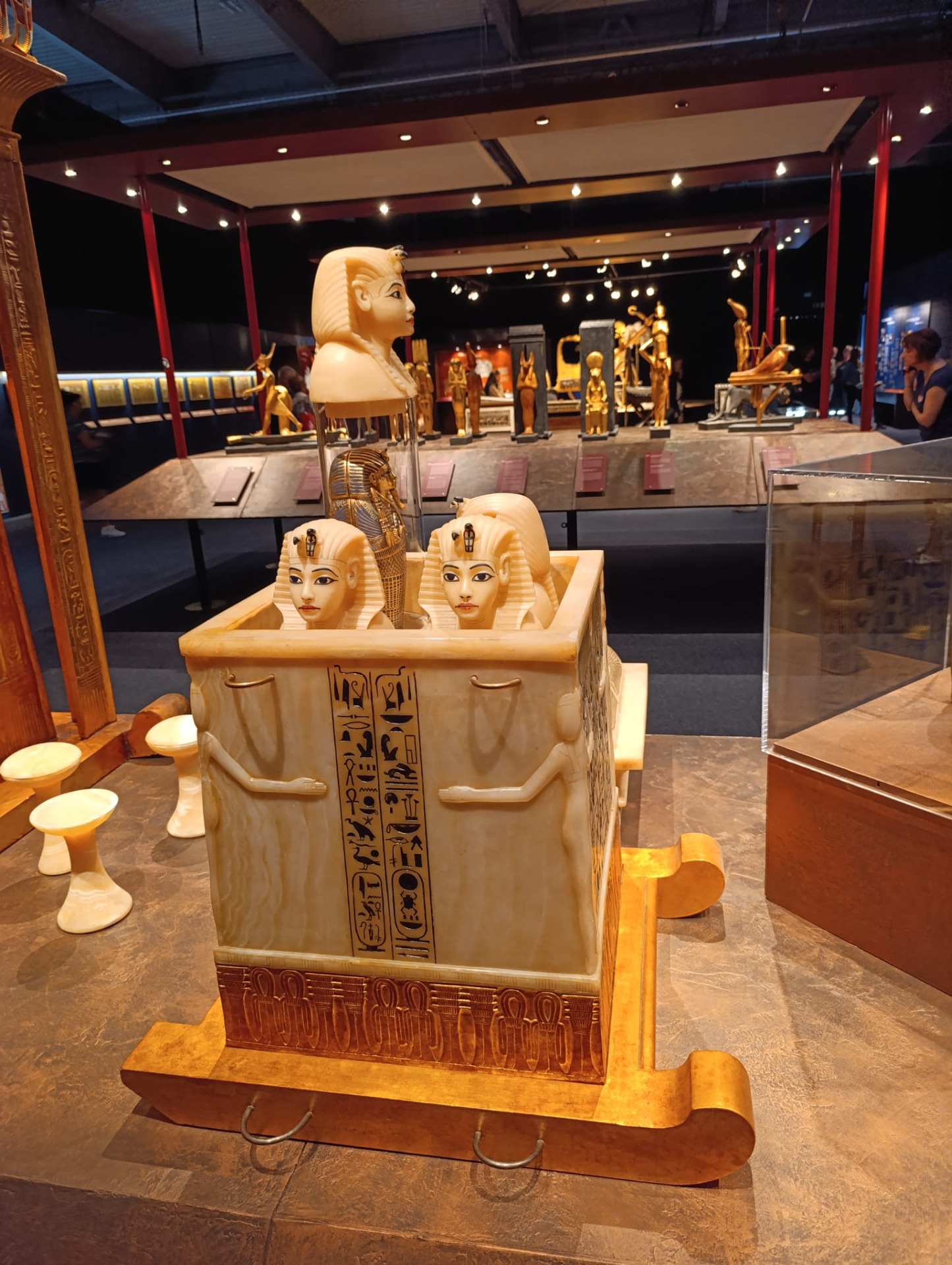
The Tutankhamun Canopic Chest remains a cornerstone of Egyptology, offering deep insights into the theological shifts of the late 18th Dynasty. It is currently housed in the Grand Egyptian Museum (GEM) in Giza, having been moved from the old Cairo Museum at Tahrir Square. For modern scholars, the chest is a prime example of the “Tutankhamun style”—a blend of youthful realism and idealized divine royalty. Its survival in such pristine condition allows researchers to study ancient stone-working techniques, specifically how royal masons achieved such high-gloss finishes on calcite without modern mechanical polishers. It continues to be one of the most pH๏τographed and studied objects of the ancient world, symbolizing the eternal mystery of the boy king.
✓ Team
The Canopic Chest dates back to the 18th Dynasty of the New Kingdom, specifically around 1323 BCE. This period represents a crucial turning point in Egyptian history,…