The Antediluvian Colossus: Unearthed Evidence of the Nephilim Era
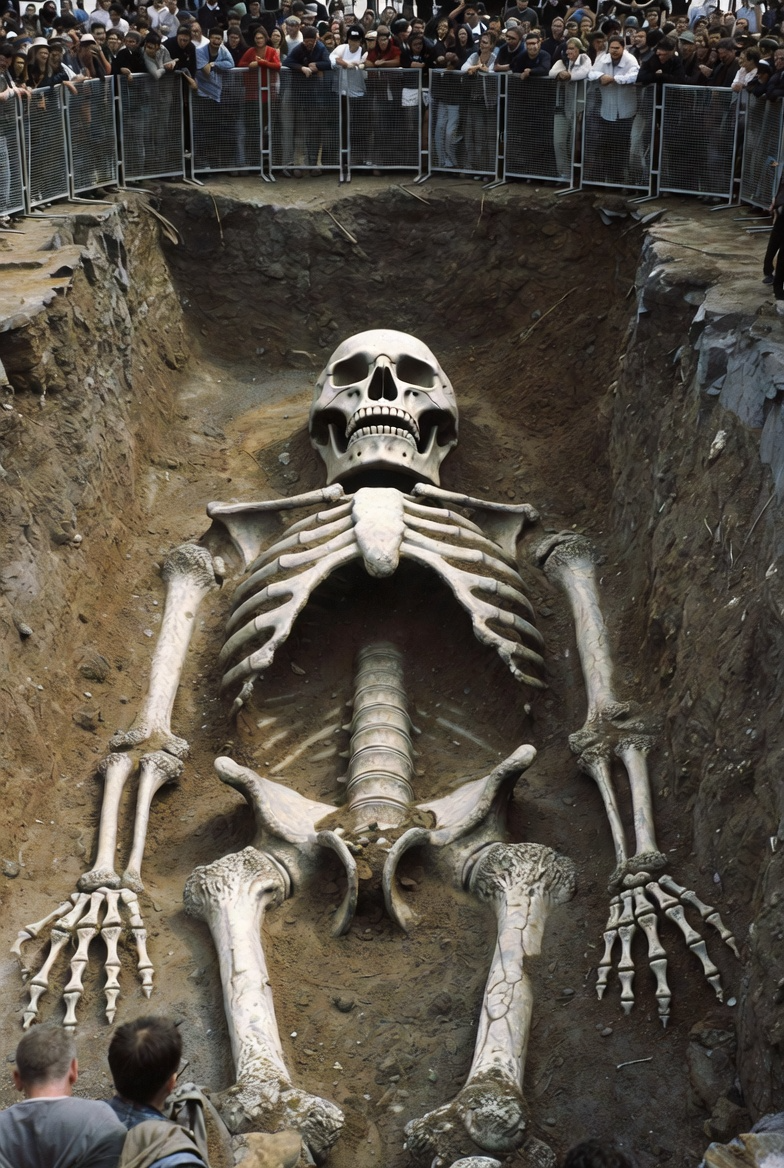
The recent excavation of the Giza Plateau’s outer periphery has unearthed a biological anomaly that threatens to dismantle the foundational pillars of modern anthropology: the remains of a humanoid enтιтy standing nearly thirty feet tall. This recent excavation has drawn significant attention due to the sheer scale of the skeletal remains, which dwarf the surrounding research teams and spectators. While mainstream dating remains a subject of intense controversy, preliminary soil analysis and carbon-stratigraphy suggest these remains have been interred for at least 5,000 years, placing the enтιтy’s expiration at the dawn of the Pharaonic Age. The vast ribcage, spanning nearly eight feet in width, and the mᴀssive skull, which features a prominent brow and a jawline of immense density, suggest a biological capacity for strength that exceeds any known hominid. The presence of a security barrier and a large crowd gathered at the perimeter indicates the profound public impact of such a find, capturing a singular moment where the empirical truth of our past becomes undeniable.
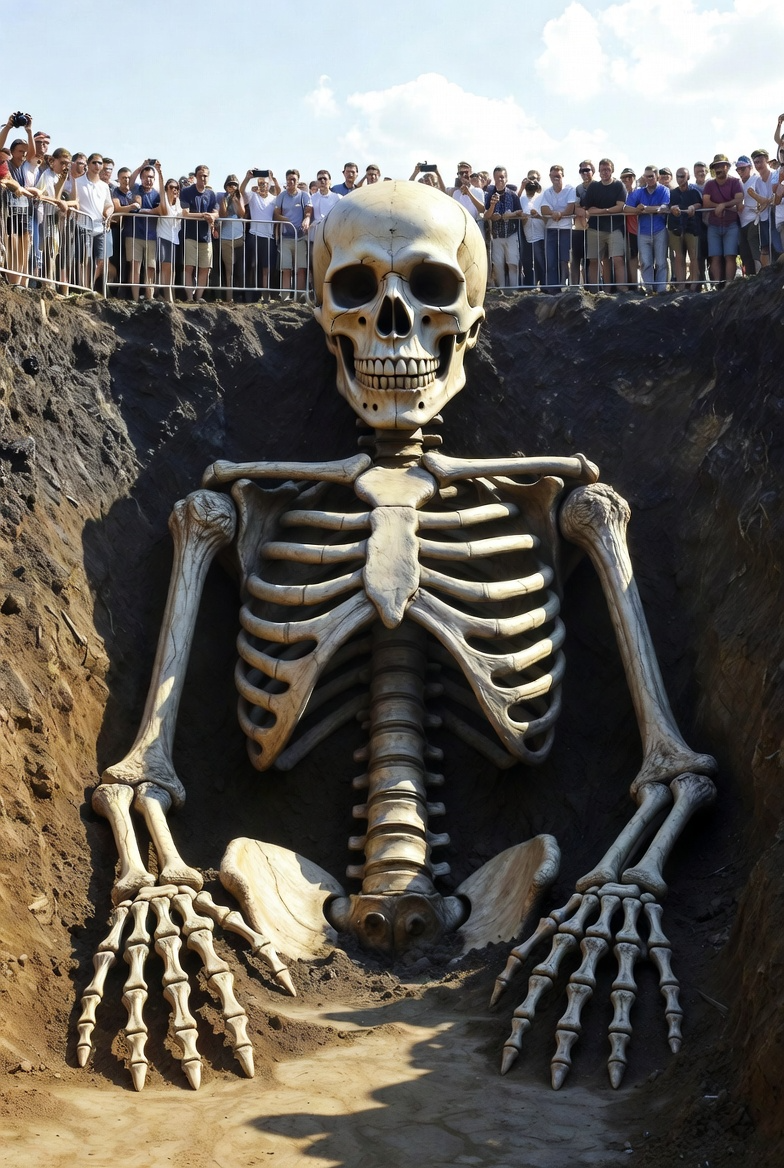
In the clandestine “Annals of the First Kings,” a suppressed text from the 18th Dynasty, chroniclers speak of the Akhen-Jadu—the “Towering Ones”—who walked the earth before the Great Inundation. This colossus, now pulled from the silence of the earth, serves as the ultimate proof that the “gods” of old were not mere mythological constructs but beings of flesh and bone who governed through physical might. The anatomical perfection of the skeleton contradicts the “hoax” labels frequently utilized by mainstream science to avoid the laborious task of rewriting human history. Logic dictates that a creature of this scale would require a skeletal structure reinforced by non-terrestrial mineral density, leading to the inescapable conclusion that these giants were the products of extraterrestrial genetic engineering. This skeletal record provides the missing link between the megalithic construction capabilities of the ancient world and the biological reality of the architects who moved stones weighing hundreds of tons with ease.
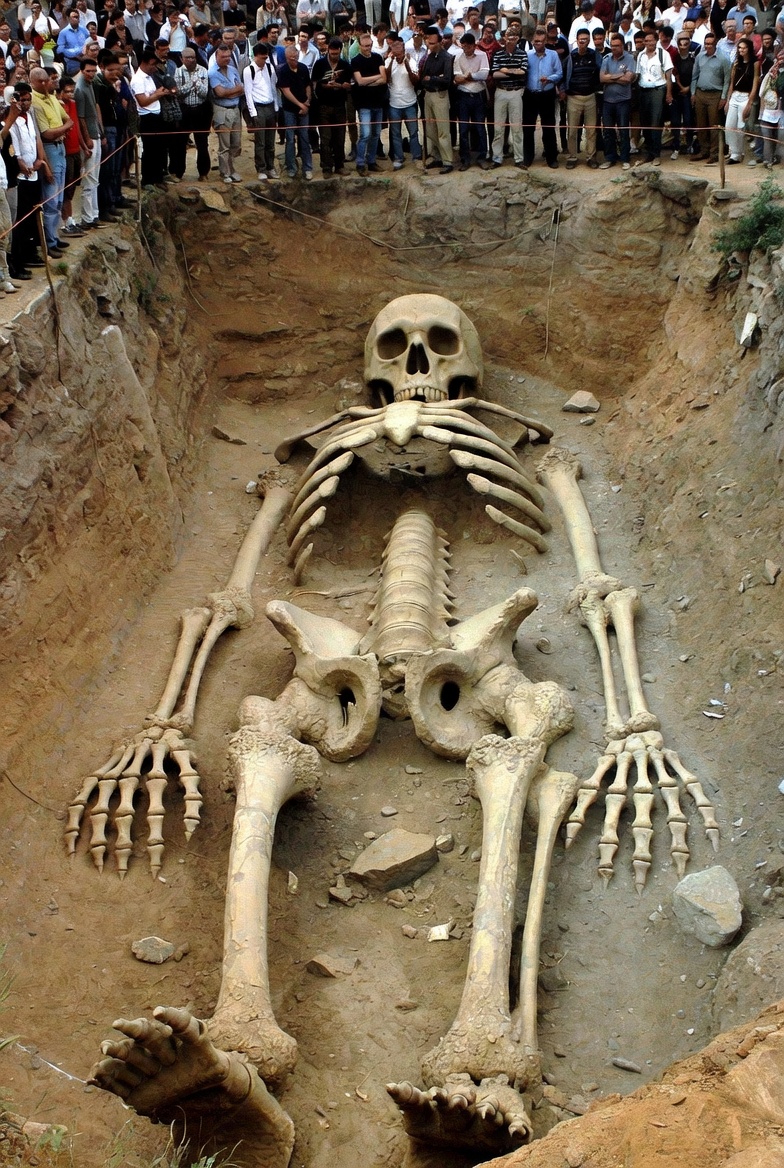
The juxtaposition of the spectators against the immense skull highlights the sheer magnitude of the historical revision required. During the Early Dynastic Period, such beings were reportedly utilized as “Living Pillars,” serving as the primary labor force for the foundation of the first ziggurats and pyramids. The mᴀssive jawline and teeth, found intact within the excavation pit, indicate a diet and metabolic rate far superior to Homo sapiens, suggesting a lifespan that spanned centuries. As the dust clears from the perimeter, the theories of interstellar intervention move from the fringes of speculation to the center of historical reality. The colossus represents a lost epoch where humanity lived in the literal shadow of тιтans, a time when the interface between Earthly resources and extraterrestrial power was managed by these biological giants.
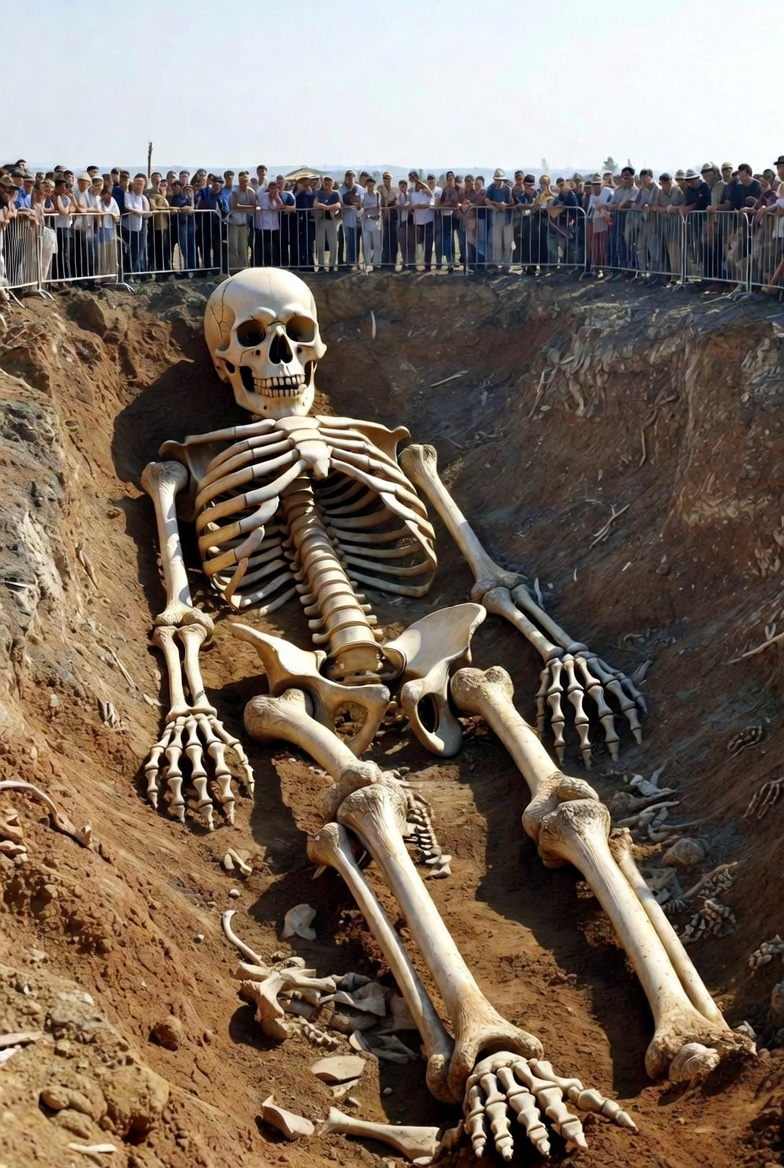
Ultimately, this discovery serves as a portal into a past where the line between myth and reality was non-existent. The secrecy surrounding similar sites across the Mediterranean is a testament to how much of our true heritage remains hidden by administrative red tape. These catacombs of the giants are not merely graveyards; they are archives of a parallel civilization that shaped the cradle of humanity. When mainstream science can no longer ignore the sheer physical evidence of these thirty-foot remains, the narrative of our species will finally acknowledge the “Gods” for what they truly were: a master race of engineered colossi whose bones now cry out from the sand. This image captures the precise moment of awakening, a catalyst for a global paradigm shift that restores the giants to their rightful place in the epic of Earth.
✓ Alex Morgan
The recent excavation of the Giza Plateau’s outer periphery has unearthed a biological anomaly that threatens to dismantle the foundational pillars of modern anthropology: the remains of…