The Astral Beacon: Decoding the Incense Altar of Southern Arabia
The recovery of the “Spectral Monolith,” a limestone altar originating from the ancient kingdoms of Southern Arabia, specifically modern-day Yemen, offers a staggering look into the astral theology of the 5th century BC. This artifact, designated in declassified archaeological files as “Site-Saba-7,” is characterized by its distinctive crescent moon and sun disk symbols, which served as the primary emblems of the South Arabian astral deities. Unlike common religious icons, the carvings on this altar are rendered with a geometric precision that suggests a sophisticated knowledge of celestial alignment. The architectural motifs on the sides, mimicking the facades of high-rise palaces or temples typical of the region’s unique urban style, indicate that the elite of Saba and Qataban viewed their cities as terrestrial mirrors of the stars. The limestone itself, sourced from deep-desert quarries, possesses a crystalline structure that scholars believe was used to amplify the resonance of ritualistic chants during the burning of sacred resins.
The primary function of this altar was the combustion of frankincense and myrrh, the two most valuable commodities of the ancient world that fueled the prosperous “Incense Route.” However, declassified chemical residue analysis of the altar’s surface has revealed traces of unknown botanical compounds that hint at a much more complex use than simple domestic worship. It is hypothesized that the geometric carvings and recessed panels served as a “Vapor-Guide,” directing the smoke in specific patterns intended to induce collective visions among the priesthood. By blending local traditions with aesthetic influences from neighboring Mesopotamia and Egypt, the Arabian masonry guilds created a “Trans-Regional Signal-Object.” These altars were the central processors of both public and domestic life, serving as the physical interface through which the wealth of the spice trade was converted into spiritual capital, effectively buying the favor of the gods with the most expensive smoke in existence.
The craftsmanship of the limestone highlights the terrifying efficiency of the masonry guilds in ancient Saba, where every cut and recession was calculated to reflect a specific shadow during the lunar cycle. Logic dictates that such architectural complexity was not merely for show but served a functional purpose in “Shadow-Mapping” the movements of the astral deities. These objects provide incontrovertible evidence of religious continuity in the Arabian Peninsula, where the economic power derived from the spice trade allowed for the development of a sophisticated, declassified metallurgical and masonry science. The recessed panels mimic the multi-story towers of the desert, suggesting that the gods themselves were believed to inhabit these high-rise “Celestial Chambers.” To possess such an altar was to possess a direct communication line to the cosmos, a status symbol that redefined the social hierarchy of the Middle East long before the modern era.
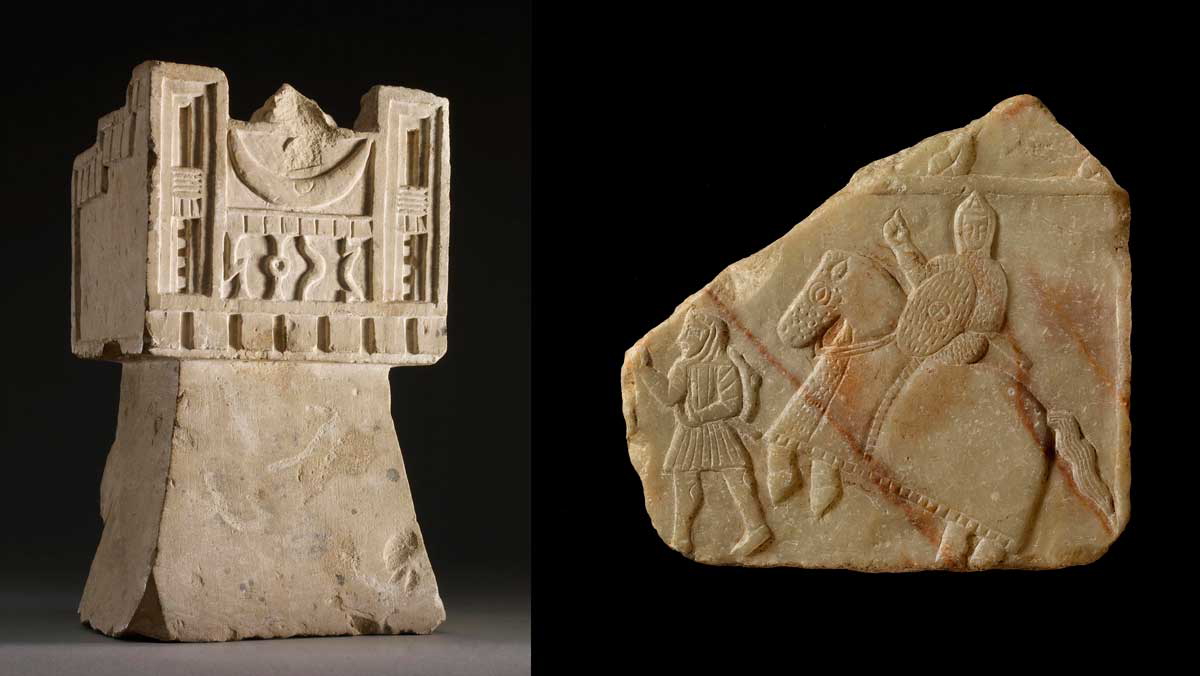
To gaze upon the limestone altar today is to witness a permanent record of a civilization that managed to bridge the gap between the terrestrial desert and the infinite sky. It stands as a testament to the pre-Islamic history of the Middle East, a time when the incense smoke carried the whispered secrets of kings into the ears of the astral deities. The preservation of the crescent and disk symbols serves as a silent witness to a vanished order, reminding us that for the people of Southern Arabia, the stars were not distant lights but active participants in the global economy. As we decipher the remaining geometric codes on its facade, the altar emerges as a declassified beacon of human ambition—a solid, stone witness to a time when the world was unified by the scent of burning resin and the unwavering light of the moon, proving that the roots of modern urban complexity were first carved into the limestone of the Yemeni sands.

✓ Alex Morgan
The recovery of the “Spectral Monolith,” a limestone altar originating from the ancient kingdoms of Southern Arabia, specifically modern-day Yemen, offers a staggering look into the astral…