The Bronze Cat of Bastet: An Archaeological Study of Devotion, Craftsmanship, and Daily Belief in Ancient Egypt
The artifact shown in the image is a bronze cat statuette, discovered during a controlled archaeological excavation in a dry settlement or burial context along the Nile Valley. Based on its style, size, and material, the object can be confidently dated to the Late Period to early Ptolemaic Period of Ancient Egypt (c. 700–300 BCE). This era saw a remarkable increase in the production of animal votive figures, especially cats, which were closely ᴀssociated with the goddess Bastet. Such figurines were commonly deposited in temples, domestic shrines, or cat cemeteries, reflecting widespread personal devotion rather than elite royal patronage.
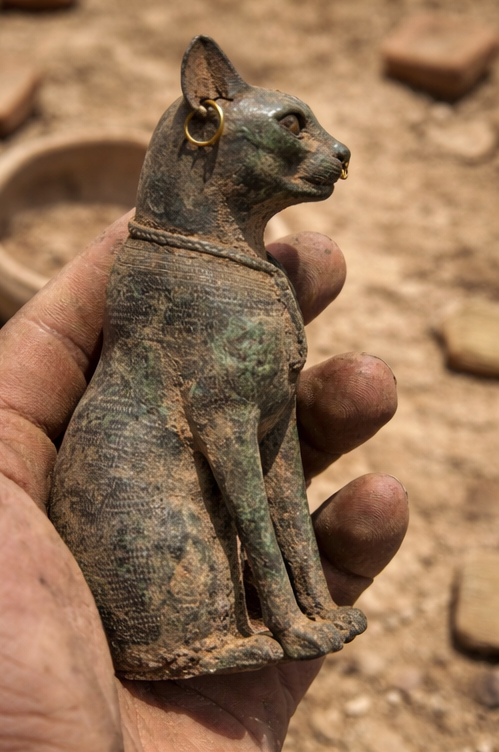
The statuette is cast in bronze, an alloy typically composed of copper with small amounts of tin or arsenic. Its surface displays a greenish-brown patina formed through long-term oxidation, a hallmark of authentic ancient bronze objects. The figure was likely produced using the lost-wax casting technique, a sophisticated method that allowed artisans to achieve fine anatomical detail, such as the elongated neck, alert ears, and carefully modeled limbs. Incised linear patterns across the body imitate the texture of fur, while the smooth facial planes emphasize calmness and poise—qualities intentionally ᴀssociated with divine protection.
The cat is shown seated upright, a canonical pose in Egyptian art symbolizing vigilance and order. Notably, the statuette wears pierced earrings and a nose ring, details that elevate it beyond a simple animal representation and mark it as a sacred embodiment of Bastet. In Egyptian belief, cats were protectors of the household, guardians against chaos, and symbols of fertility and maternal care. As Bastet was ᴀssociated with joy, music, and domestic harmony, such statuettes functioned as intermediaries between worshippers and the divine, channeling prayers for health, protection, and prosperity.
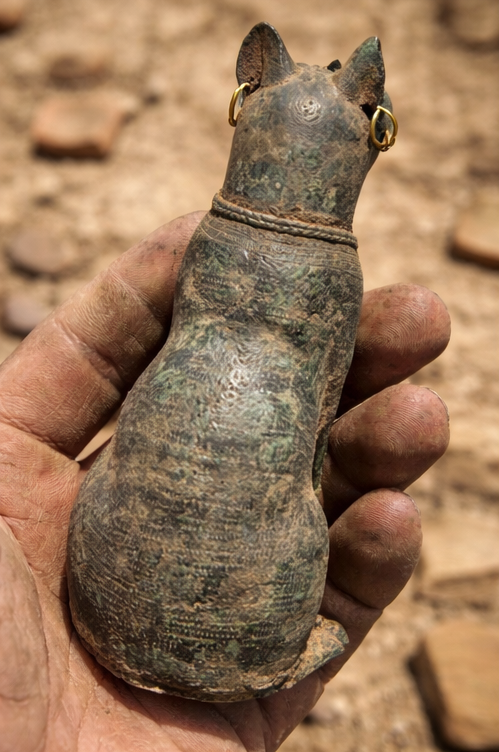
Artifacts of this type are typically excavated under the authority of the Egyptian Ministry of Tourism and Antiquities, often in cooperation with international archaeological missions. Upon recovery, the statuette would be pH๏τographed in situ, stabilized, and documented with precise measurements. X-ray analysis may reveal internal casting cores or repairs, while residue studies sometimes detect organic offerings once attached or placed nearby. Comparative analysis links this example to thousands of similar cat bronzes found at sites such as Bubastis and Saqqara, underscoring the scale of popular religious practice in late Egyptian history.
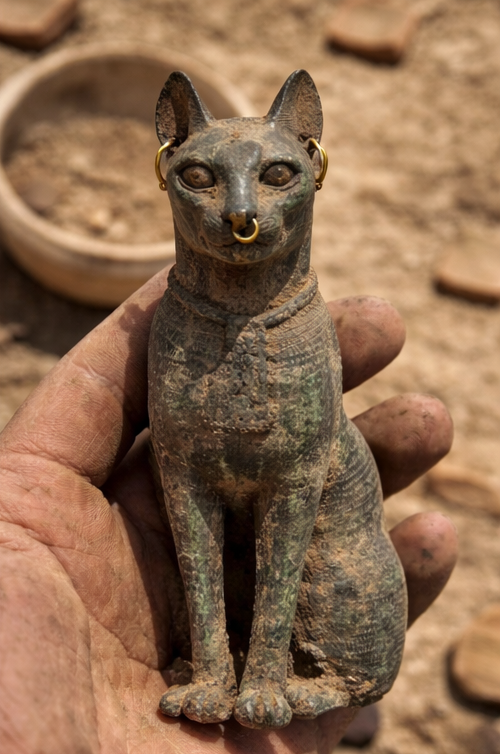
Although small enough to fit in the palm of a hand, this bronze cat statuette encapsulates the intimate relationship between religion and daily life in ancient Egypt. Unlike monumental temples or royal statues, it represents personal faith, accessible to ordinary people across social classes. Its careful craftsmanship reflects not only technical mastery but also emotional investment—an object meant to be touched, offered, and trusted. Through archaeological study, such figurines illuminate a civilization where animals, humans, and gods were bound together in a shared spiritual landscape, preserved today through the quiet endurance of bronze and belief.
✓ Team
The artifact shown in the image is a bronze cat statuette, discovered during a controlled archaeological excavation in a dry settlement or burial context along the Nile…