The Buried Giants of Rapa Nui: Archaeological Truth Behind the Moai
The image shows a monumental stone statue emerging from the volcanic soil of Rapa Nui, also known as Easter Island, located in the southeastern Pacific Ocean. These statues, called Moai, were carved and erected by the Polynesian inhabitants of the island between approximately 1250 and 1500 CE. Far from being mysterious giants of unknown origin, the Moai belong to a well-documented cultural tradition developed in isolation by the Rapa Nui people over several centuries.
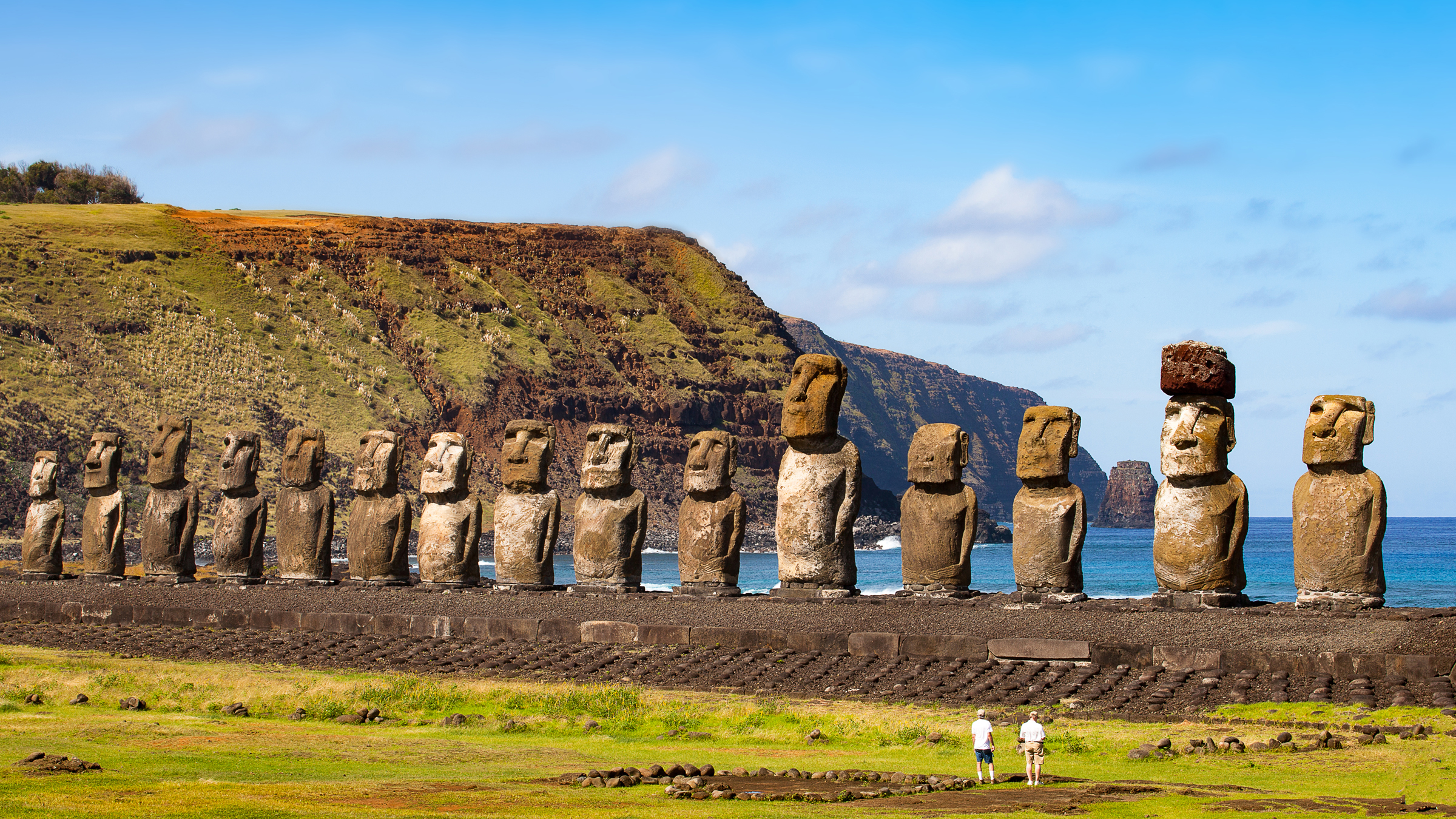
Most Moai were carved from volcanic tuff quarried at the Rano Raraku crater, a sacred landscape that functioned as both quarry and ritual center. The statue in the image reveals a crucial archaeological reality: Moai do not consist only of heads. Their elongated stone bodies extend several meters underground, gradually buried over time by soil erosion, sediment accumulation, and landscape changes. Tool marks preserved on the surface show the use of basalt stone adzes, indicating remarkable skill achieved without metal tools. The carving process was systematic, communal, and highly standardized.

Archaeologically, Moai are understood as ancestral representations. They were erected to embody deceased chiefs or important lineage figures, believed to channel mana—spiritual power—back to the living community. Positioned on stone platforms (ahu), the statues typically faced inland, watching over villages rather than the sea. Their purpose was not decorative, but deeply spiritual and political, reinforcing social hierarchy, memory, and idenтιтy in a resource-limited island environment.

Systematic excavations of buried Moai were conducted throughout the 20th century by Chilean and international teams, including work inspired by early research popularized by Thor Heyerdahl (though many of his diffusionist theories are now rejected). Modern archaeology, led by Chilean insтιтutions and Rapa Nui scholars, has confirmed that burial occurred gradually, not catastrophically. The image likely documents one such controlled excavation, where stratigraphy, erosion patterns, and soil layers were carefully recorded.
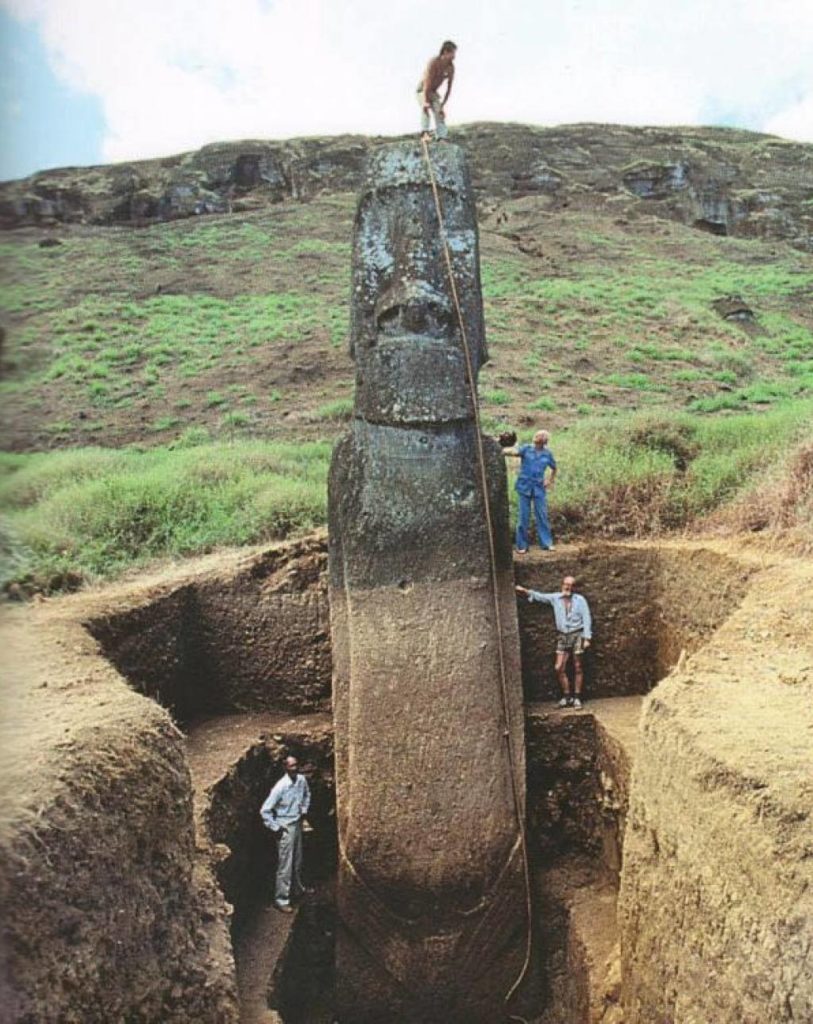
Emotionally, images like this often fuel myths of lost giants or hidden civilizations. Archaeology tells a more powerful story: one of human ingenuity, memory, and resilience. The Moai are not evidence of giants, but of people—people who shaped stone to preserve ancestry in a fragile world. Seeing the full bodies revealed beneath the earth reminds us that history is often deeper than it appears, and that careful science, not speculation, allows us to truly understand the monumental achievements of the past.

✓ Team
The image shows a monumental stone statue emerging from the volcanic soil of Rapa Nui, also known as Easter Island, located in the southeastern Pacific Ocean. These…