The Celestial Engines of the First Hegemon: The Bronze Chariots of Qin Shi Huang
The silent, subterranean corridors of the Li Shan necropolis, sealed under a mountain of earth for over two millennia, have yielded an engineering marvel that challenges the traditional boundaries between mortal craftsmanship and divine ambition. Commissioned around 210 BCE to accompany China’s first emperor, Qin Shi Huang, into the boundless reaches of the afterlife, these bronze chariots represent the zenith of ancient metallurgy and a staggering commitment to technical perfection. Discovered in a meticulously buried pit near the Terracotta Army, the two half-scale models were not mere symbolic offerings, but fully functional, miniaturized replicas of the imperial transport system that once unified the warring states. The structural integrity of the bronze, preserved against the corrosive weight of time, reveals an era where the First Emperor sought to dominate not only the physical geography of the Middle Kingdom but also the metaphysical pathways of the spirit world. Each chariot serves as a silent, metallic witness to a transition in human history where the tools of imperial authority were forged to endure for an eternity.
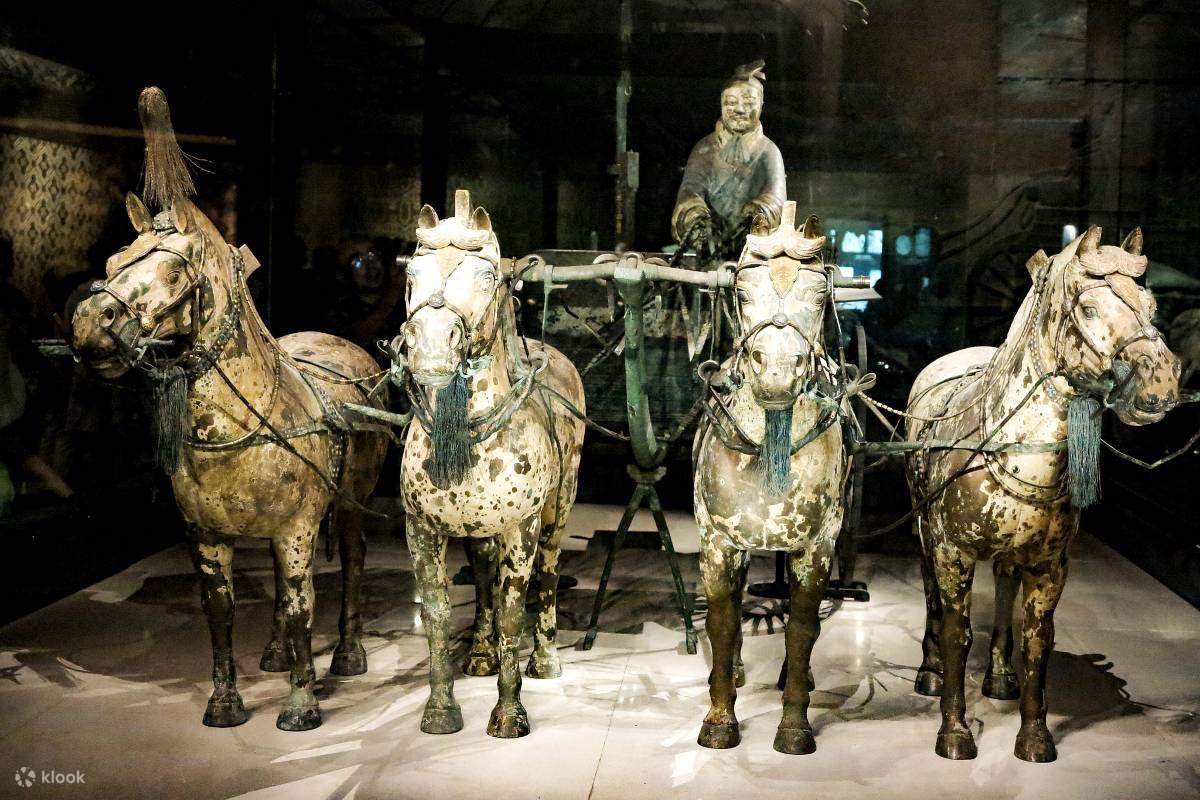
The architectural logic of these celestial vehicles reflects a highly sophisticated mastery of mechanics and aesthetics that predates Western automotive concepts by nearly two thousand years. Composed of over 3,000 separate, precision-engineered components, the chariots feature functional moving parts, including rotating axles and a revolutionary umbrella-like canopy. This bronze parasol was not a static ornament but a marvel of adjustable engineering, designed with a complex locking mechanism that allowed the shade to be tilted in accordance with the sun’s celestial position, ensuring the eternal comfort of the sovereign. The use of gold and silver inlays to recreate the opulent embroidery of the imperial court suggests a society where the aesthetic was harnessed to reinforce the Mandate of Heaven. These artifacts prove that the Qin Dynasty possessed a centralized industrial capacity capable of producing hyper-realistic simulations of reality, bridging the gap between the tangible prowess of the Warring States and the spiritual requirements of a deified ruler.

Within the stratigraphy of the burial pit, the presence of these bronze replicas provides a rare, three-dimensional blueprint of a transport technology that has otherwise vanished due to the decay of wooden infrastructure. While the actual imperial processions that once thundered across the newly constructed national highways have long since turned to dust, these bronze recreations offer a pressurized look at the precise harnessing techniques and multi-horse configurations used by the Qin elite. The intricate bronze reins and silver-weighted harnesses indicate a deep understanding of animal kinetics and weight distribution, suggesting that the “Imperial Standard” was a rigid code of both conduct and construction. Historical simulations of the chariot’s weight-to-speed ratio imply that the First Emperor’s real vehicles were built for swift, decisive movement across vast distances, a necessity for maintaining control over a newly conquered and often rebellious empire. The chariots were, in essence, the high-speed engines of their day, symbols of a state that moved with the relentless precision of a clockwork mechanism.

As a bridge between the clinical reality of ancient engineering and the mystical beliefs of the afterlife, the bronze chariots of Li Shan stand as a haunting testament to a vision of power that refused to accept the finality of death. To look upon the driver, frozen in an eternal pose of focused attention, and the four spirited horses cast in unyielding metal, is to witness the ultimate intersection of man, machine, and myth. These artifacts force a re-evaluation of the Qin Dynasty’s scientific legacy, suggesting that the unification of China was as much a triumph of the forge as it was of the sword. In the dim, clinical light of modern conservation, the glint of the original silver and gold reminds us that the foundations of the modern Chinese state were built upon a foundation of absolute technical discipline. The chariots do not merely exist in a museum; they remain in constant, silent motion through the corridors of our collective historical memory, representing a time when the first emperor’s will was so absolute that it commanded even the metals of the earth to follow him into the void.

✓ Alex Morgan
The silent, subterranean corridors of the Li Shan necropolis, sealed under a mountain of earth for over two millennia, have yielded an engineering marvel that challenges the…