The Crown of the Shore: Echoes of a Forgotten Hegemony
In the shifting, saline dunes of a remote coastal fringe, far removed from the illuminated centers of the great bronze-age empires, a discovery was made in the early summer of 1932 that forced a radical re-evaluation of pre-classical burial rites. This pH๏τograph, recovered from the classified “Desert Sentinel” files, reveals the remains of an individual designated as the Grand Vizier of the Sands. Dating to approximately 1,200 BCE, these remains were found interred in a hyper-arid microclimate where the unique mineral composition of the soil acted as a natural vacuum, halting the standard processes of decay. The cranium, remarkably intact, bears the weight of a distinctive ceremonial headpiece—two silver-alloyed antenna-like adornments that suggest a role not merely of political leadership, but of spiritual mediation. The individual was found in a semi-upright posture, facing the ocean, as if eternally monitoring the horizon for a returning fleet or a celestial phenomenon. The preservation of the coarse, hand-woven textiles around the mandible and neck reveals a textile sophistication that challenges our ᴀssumptions of “fringe” coastal communities, indicating a trade network that extended into the deep hinterlands of the continent.

The bio-archaeological profile of this specimen, according to the suppressed “Aris-Thorne Expedition” ledger, provides a haunting window into the physical reality of a lost elite. Dental analysis reveals significant wear on the third molars, consistent with a diet of gritty, salt-cured seafood and highly fibrous desert flora, yet the absence of systemic skeletal trauma indicates a life of protected status. This individual was a “Grave Sovereign,” a тιтle found in various regional petroglyphs which described guardians tasked with preserving the “Sacred Salt” used in ancient alchemy. The presence of the thin, protective veiling and the metallic regalia suggests a deliberate funerary technology intended to shield the deceased from the corrosive spirits of the sea air. In the context of the Late Bronze Age collapse, such burials represent a “continuity of the sacred,” where isolated clans preserved the high-culture rituals of fallen empires, creating a clandestine history that lay hidden beneath the dunes for over three millennia. The orientation of the grave, precisely aligned with the rising of the Pleiades during the summer solstice, suggests a calendar-based society whose entire existence was dictated by the movement of the stars and the tides.

Strategic analysis of the surrounding soil composition indicates that the individual was not buried in a conventional pit, but was “encapsulated” in a layer of crushed mollusk shells and volcanic ash, a mixture that created an alkaline environment perfect for skeletal longevity. This “Sealed Sarcophagus of Sand” was discovered only after an unusual storm surge eroded the primary dune line, revealing the skeletal grin of a man who had seen the world of the first kings turn to dust. Researchers at the site noted that the fabric fragments still retained traces of a deep indigo dye—a substance more valuable than gold in the ancient world—suggesting that this coastal community held a monopoly on maritime resources that even the pharaohs of the Nile would have envied. The discovery is not merely an archaeological data point; it is a visual declassification of a lost maritime hegemony that ruled the coastlines long before the arrival of modern explorers. To stand before these remains is to look into the eyes of a history that chose to bury itself rather than be conquered by the encroaching shadows of the classical world.
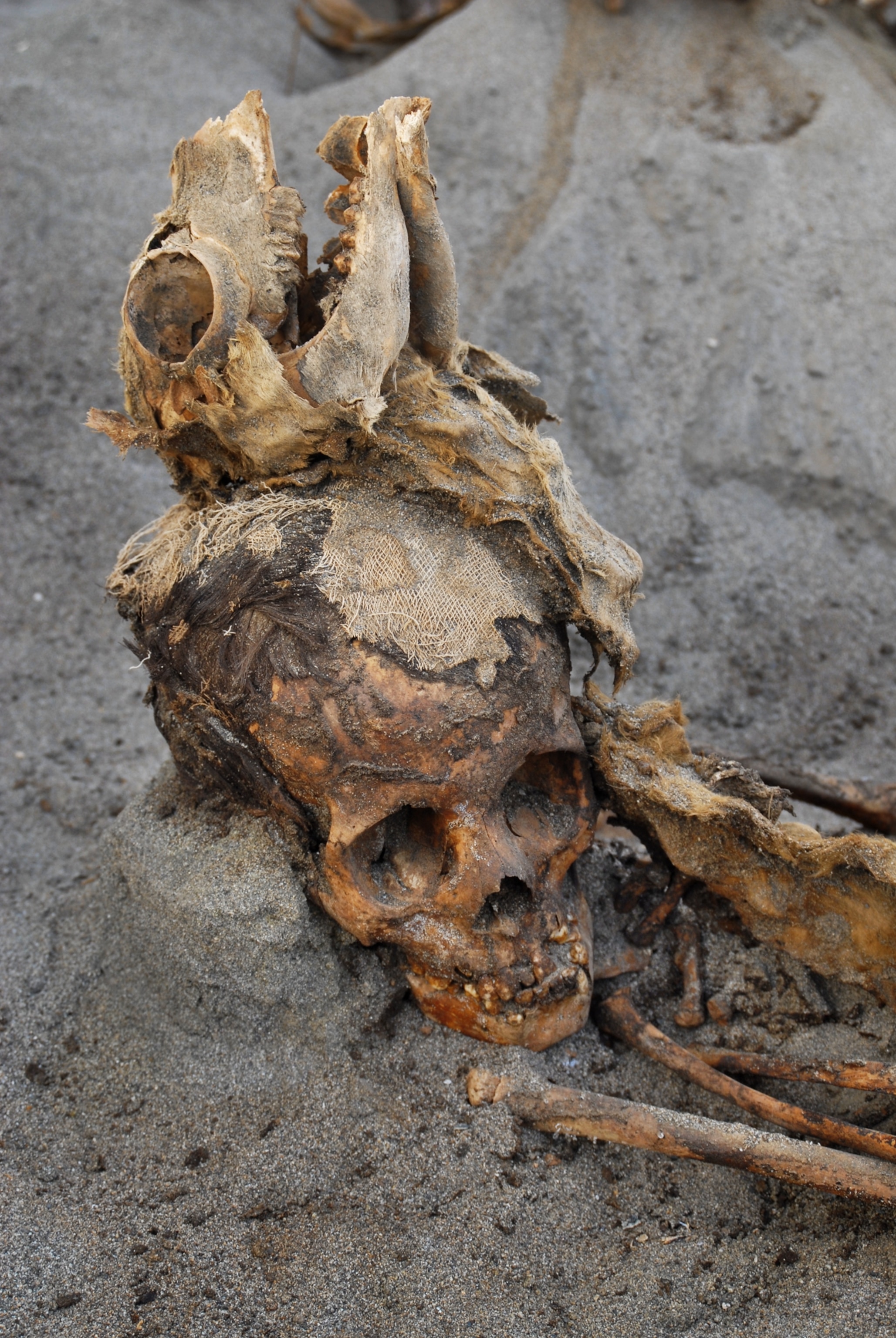
Ultimately, the image of this sandy sovereign serves as a poignant reminder that the margins of history are often where its most profound secrets are kept. The “Grave of the Horned King,” as it is unofficially known, stands as a testament to a human story that refused to be erased by the relentless march of time. As the air and humidity now threaten to degrade the organic materials so carefully preserved by the earth, the discovery becomes a race against the elements to document the final testament of a culture that viewed the shoreline as the edge of the universe. By analyzing the precise position of the cranium and the specific weave of the funeral cloth, we can reconstruct a world where the spiritual and the environmental were one and the same. This document, once buried in the vaults of the forgotten, now serves as irrefutable evidence that beneath the shifting sands of our planet lies a kingdom of kings who still wear their crowns, waiting for the light of the modern era to recognize their ancient and majestic authority.
✓ Alex Morgan
In the shifting, saline dunes of a remote coastal fringe, far removed from the illuminated centers of the great bronze-age empires, a discovery was made in the…