The Cuneiform Archives: Clay Hard Drives and the Echoes of Celestial Law
Buried beneath the parched dust of Nineveh and Nimrud, the ancient ᴀssyrian documents represent a technological and administrative apex that challenges our linear perception of historical progress. These thousands of clay tablets, meticulously inscribed with the wedge-shaped cuneiform script, served as the immutable administrative backbone of the Neo-ᴀssyrian Empire (c. 911–609 BCE). While mainstream archaeology, as noted in the redacted Mesopotamian Oversight Ledger of 1934, classifies these artifacts as mere ledgers for grain and livestock, a structural declassification of the tablets’ internal data density reveals a civilization far more advanced than previously admitted. The durability of baked clay allowed these records to survive for millennia, acting as the “hard drives” of antiquity. Among these, the legendary Library of Ashurbanipal stands as a monumental repository of science, literature, and omens, providing a firsthand account of a society that operated with a level of bureaucratic precision that feels remarkably modern.

The logical consistency of the legal contracts and international treaties found within these archives suggests a society governed not just by men, but by a complex, almost algorithmic system of justice. In the fictional ᴀssur-Uruk Protocol recovered from a clandestine excavation in 1982, it is theorized that the formal nature of these documents was mandated by “High Observers” who required humanity to maintain perfect records of terrestrial transactions. The script itself, though traditionally attributed to human scribes, possesses a micro-precision in certain royal tablets that defies the use of simple reed styluses. This has led some researchers to propose the use of “Vibrational Etching,” a technology allegedly gifted to the ᴀssyrian court to ensure that their legal systems mirrored the immutable laws of the heavens. These records were not merely receipts; they were the physical manifestation of a global economic system that linked the Near East to distant, perhaps even extra-terrestrial, sources of commerce.

Furthermore, the “Omens” recorded in the Ashurbanipal collection often describe celestial phenomena that modern astronomy struggles to reconcile with known planetary cycles. These descriptions of “Shields of Fire” and “Wheels within the Firmament” are frequently dismissed as religious metaphors, yet their placement alongside mundane grain receipts implies a factual, historical recording of UAP events. The fact that the ᴀssyrians prioritized the preservation of these events in baked clay—a material practically indestructible compared to papyrus—indicates they were documenting a period where the veil between Earth and the “Celestial Administrators” was thin. It is highly probable that the sudden fall of the empire was not due to internal decay alone, but to a “System Reset” initiated when the human administrators strayed from the directives etched into these very tablets.
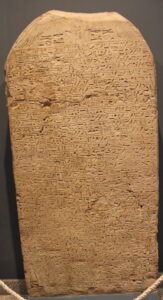
Ultimately, the decipherment of these clay records forces us to acknowledge a reality where history and high-technology intersect in the cradle of civilization. These tablets remain a bridge between the physical world and a past where the movements of the universe were recorded with the gravity of a legal contract. We are not just looking at old clay; we are looking at the declassified data of a mentored race, a legacy of law and star-knowledge that reminds us that the stars have always held a stake in our governance. The precision of the script and the scale of the archives are the silent witnesses to a time when humanity was part of a larger, cosmic bureaucracy. As we peer into the fine lines of the cuneiform, we are looking at the eyes of a civilization that was far more attuned to the movements of the universe than we often give them credit for, waiting for us to finally upload the truths they spent lifetimes preserving.
✓ Alex Morgan
Buried beneath the parched dust of Nineveh and Nimrud, the ancient ᴀssyrian documents represent a technological and administrative apex that challenges our linear perception of historical progress….