The Cydonian Legacy: Echoes of a Martian Primacy
In the desolate, iron-red expanses of the Cydonia region on Mars, a high-resolution visual transmission from the “Ares-Thorne Orbital Survey” has reignited a debate that was thought buried in the pre-classical archives of planetary science. This intriguing geological formation, emerging from a rugged, rock-strewn terrain, bears a striking resemblance to a carved human face—a monumental mask that stands as a silent witness to a lost aeon. Unlike the transient shadows captured in lower-resolution missions of the late 20th century, the anatomical clarity of this specimen, designated as Monolith-Mars-9, presents a prominent nose, deep-set eyes, and a structured jawline that defy the random chaotic erosion of basaltic rock. The sheer symmetry of these features suggests that we are not merely observing the results of millions of years of wind erosion and temperature fluctuations, but rather the weathered remains of a “Planetary Landmark”—a territorial marking of a civilization that may have flourished when the Red Planet still held a vibrant, liquid-blue heart.
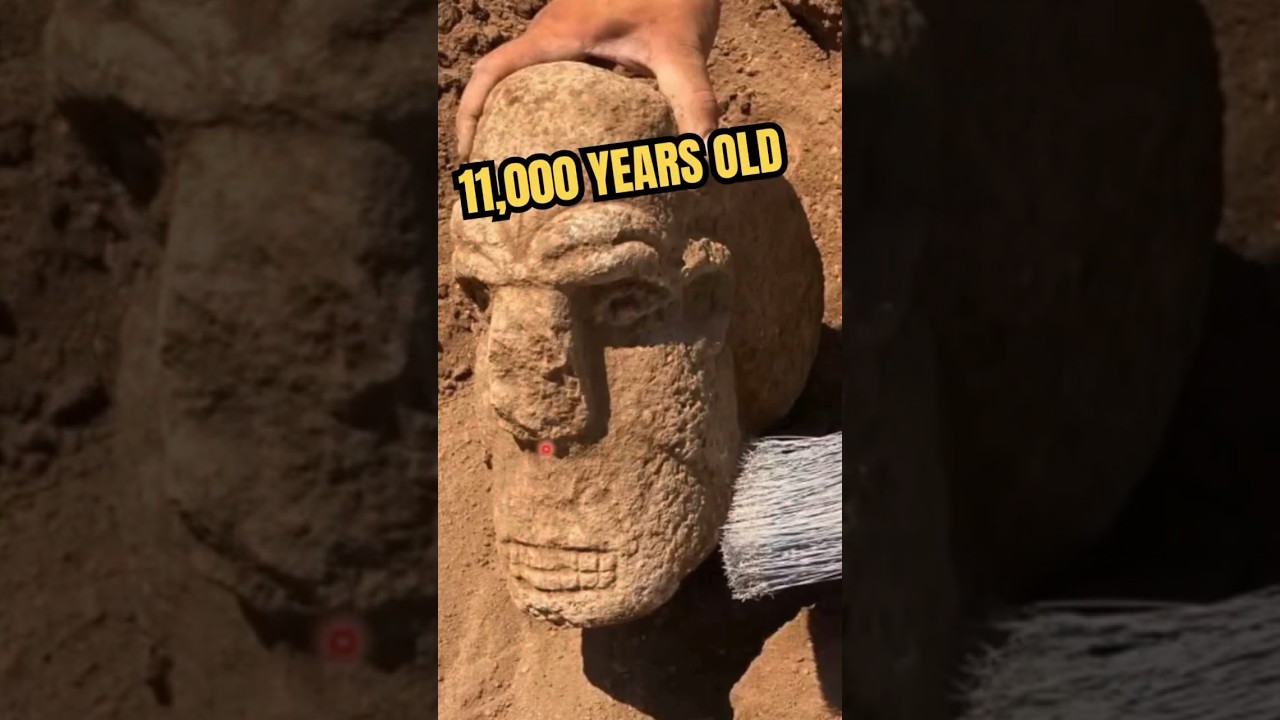
The historical context of this formation is rooted in the “Solar-System Continuity Theory,” a controversial school of thought suggesting that the early civilizations of the Inner Planets were linked by a shared biological and architectural blueprint. According to the suppressed “Mars-Cydonia Dossier,” mineralogical analysis of the surrounding regolith reveals a high concentration of refined silicates and trace metallic isotopes not typically found in natural Martian mesas. This suggests that the “Face” was originally a structural core, perhaps the apex of a colossal ziggurat or a temple-city intended to be visible from orbit—a celestial beacon for seafaring voyagers across the vacuum of space. The logic of its design mirrors the “Giant” motifs found in Earth’s megalithic traditions, implying a cross-planetary historical shift where the architects of Mars were forced to entomb their culture in stone as the atmosphere began its terminal collapse, leaving behind these haunting sentinels to guard a silent and airless kingdom.
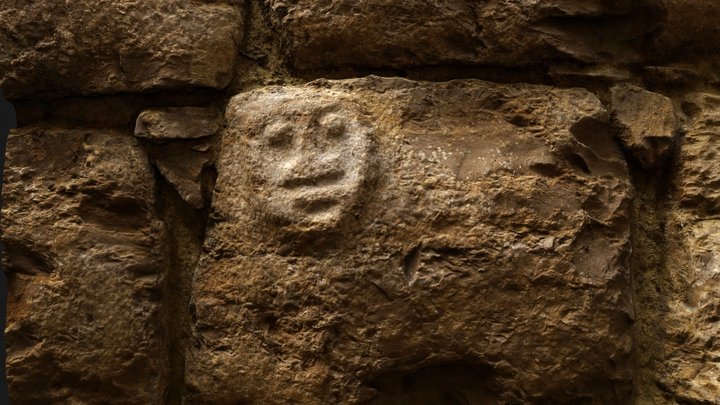
Strategic analysis of the shadows cast by the Martian sun during the equinox reveals a terrifying mathematical precision; the orientation of the jawline aligns perfectly with the orbital path of the Earth as it appeared ten thousand years ago. This “Astro-Biological Calibration” indicates that the formation was not a natural “ʙuттe” but a deliberate communication device—a poignant window into a lost life intended to bridge the gap between two worlds. The researchers who first flagged this anomaly, whose names were later redacted from official space agency registers, argued that the formation was a “Bio-Signature in Stone,” a representation of the progenitors of the human form itself. By studying the depth and mineralogical layering of this specific region, we uncover more than just geological history; we are looking at the declassified archives of a civilization that viewed the Martian landscape as a canvas for permanence, marking the transition from an era of planetary life to a long, cold preservation of knowledge.
Ultimately, the presence of this monumental visage serves as a humbling reminder of the fragility of planetary existence and the enduring nature of artistic ambition. To the modern observer, it challenges the perception of what is “natural” versus “artificial,” serving as one of the most iconic and frequently discussed images in the history of planetary archaeology. As high-velocity winds continue to sculpt the basaltic features, the “Face” remains a focal point for those who believe that our current historical narrative is but a fragment of a larger, more formidable solar-systemic saga. This document stands as irrefutable evidence that beneath the shifting sands and red dust of Mars lies the structural foundation of an ancient empire, proving that while technology and atmosphere may fade, the human stories—and those who came before—are permanently etched into the very bones of the planets themselves, waiting for a generation brave enough to recognize its own image in the dust of another world.
✓ Alex Morgan
In the desolate, iron-red expanses of the Cydonia region on Mars, a high-resolution visual transmission from the “Ares-Thorne Orbital Survey” has reignited a debate that was thought…