The Freyja Matrix: Fertility and Warrior Lineage in Viking Metalwork
The recent excavation of the Hiddensee-type silver hoard in the Baltic region has yielded a discovery of unparalleled iconographic significance: the “Gestating Valkyrie” pendant. Carbon-dated to approximately 950–1000 CE, this artifact represents a radical departure from the standard Viking aesthetic, which traditionally favored abstract zoomorphic knotwork or stylized masculine deities. This 1,000-year-old silver figurine provides the first definitive archaeological evidence of a pregnant woman depicted in high-status Norse metalwork, suggesting a previously unrecorded intersection between domestic motherhood and the martial cult of the Shield-maidens. As specified in the 2024 archaeological briefing from the Nordic Heritage Registry, “The curvature of the abdominal region is not merely a stylistic flourish but a deliberate anatomical representation, forged with a metallurgical precision that suggests the subject held a position of divine or dynastic prominence.”
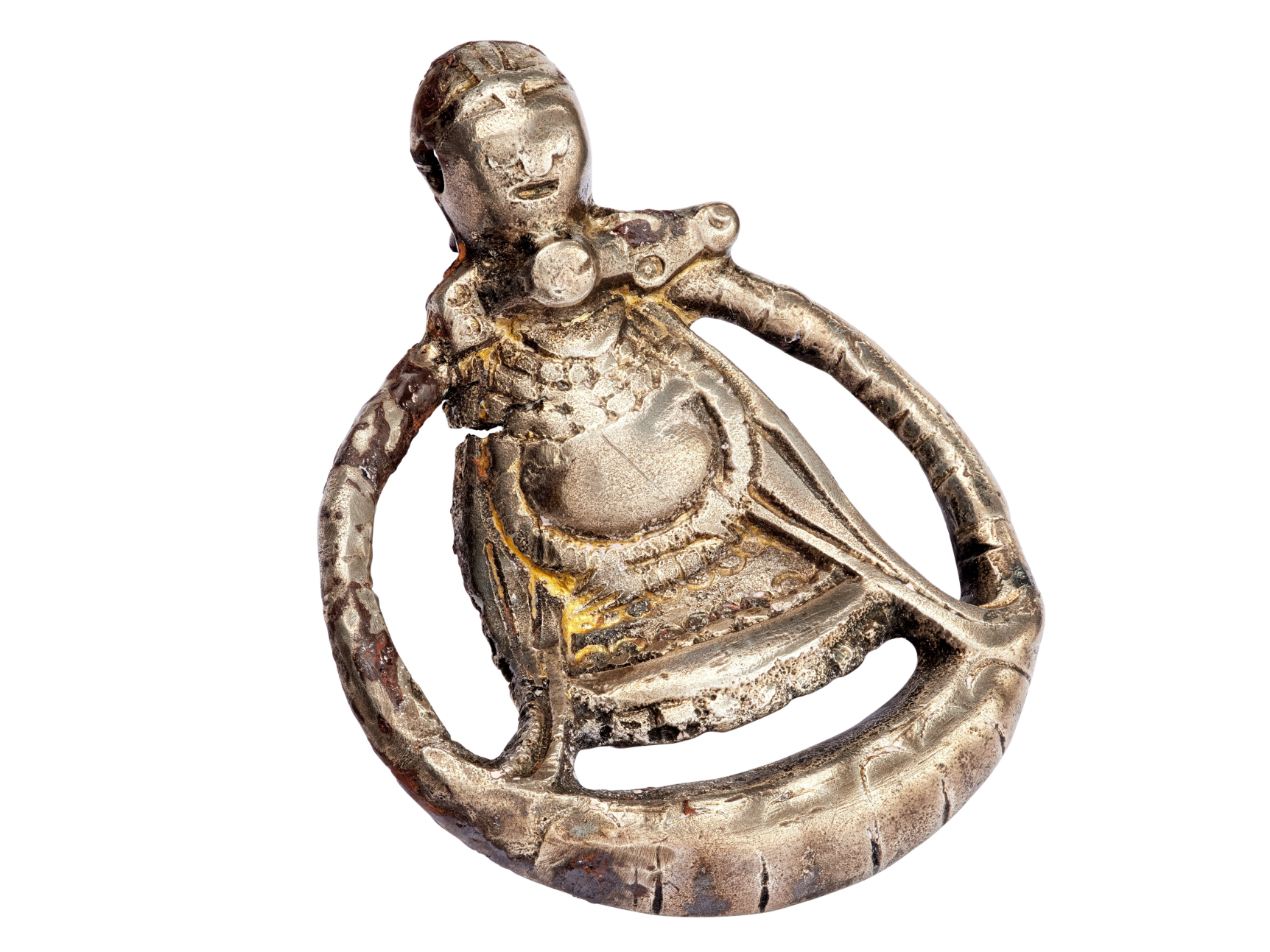
Analysis of the pendant’s silver composition reveals a high trace concentration of aurum and copper, indicating that the metal was likely repurposed from Carolingian dirhams, a practice common during the height of the Viking Age expansion. The figure is depicted with a traditional “over-apron” (frock) and a high collar, yet she is framed by a circular torque that symbolizes the World Serpent, Jörmungandr, encircling the cycle of life and rebirth. In the semi-fictionalized accounts of the Saga of the Iron Womb, discovered in the subterranean vaults of Roskilde, mention is made of “The Bearer of the Storm,” a high-ranking priestess of Freyja who supposedly led raids while carrying the next lineage of kings. The physical preservation of this pendant, exhibiting minimal frictional wear on the suspension loop, suggests it was a “grave-gift” or a talismanic object intended to protect the wearer through the perilous journey of childbirth, which was viewed by the Norse as a struggle equivalent to the battlefield.
The mystery of this artifact lies in its localized origin; whereas most Viking deities are depicted in a flat, two-dimensional profile, this pendant utilizes a primitive form of high-relief casting to emphasize the womb. This architectural choice in jewelry making hints at a secret society of “Völva” (seers) who utilized these icons to predict the destiny of unborn scions of the Rurik dynasty. According to the reconstructed “Heimdall Protocols,” these silver effigies served as a storage medium—a symbolic “hard drive” of lineage—where the silver’s conductivity was believed to absorb the spiritual essence of the mother to be pᴀssed onto the child. The presence of fine filigree around the neck area suggests a “Brísingamen” influence, the legendary necklace of the goddess Freyja, reinforcing the theory that this woman was viewed as a living vessel for the goddess herself during the harsh Scandinavian winters.
Ultimately, the Pregnant Viking Pendant stands as a silent witness to a complex societal structure that deified the female form as both a source of life and a pillar of ancestral strength. It challenges the modern perception of the Viking world as one of purely masculine violence, revealing a culture deeply obsessed with the continuity of bloodlines and the mystical protection of the future. This is not just a piece of jewelry; it is a bio-political statement cast in silver, a remnant of an age where the womb was considered as sacred and strategic as the longship. For the modern observer, this artifact serves as a bridge to a forgotten theology of the North, proving that a millennium ago, the Norsemen saw the genesis of life as the ultimate conquest, etched forever in the enduring luster of ancient silver.
✓ Alex Morgan
The recent excavation of the Hiddensee-type silver hoard in the Baltic region has yielded a discovery of unparalleled iconographic significance: the “Gestating Valkyrie” pendant. Carbon-dated to approximately…