The Gilded Sentinel: The Late Roman Ridge Helmet of Berkasovo
The artifact displayed in the image is a premier example of Late Antique military prestige: the Berkasovo I Helmet, a magnificent specimen of the Roman ridge helmet (Intercisa type) dating to the early 4th century AD (c. 310–320 AD). This era, dominated by the reign of Constantine the Great, marked a radical shift in Roman military equipment, transitioning from the iconic “Imperial Gallic” helmets of the early Principate to the segmented ridge designs influenced by Sᴀssanid Persian and Sarmatian technology. Discovered in 1955 near the village of Berkasovo in modern-day Vojvodina, Serbia, this helmet was part of a small hoard that included another, less ornate ridge helmet. In the context of the Late Roman Empire, this piece represents the intersection of functional defense and the extreme “barbarization” of imperial courtly splendor.

Technically, the Berkasovo I helmet is a masterpiece of multi-component metallurgy and lapidary work. The core structure is a “ridge” design, consisting of two iron bowl-halves joined by a central longitudinal ridge, which provided superior structural integrity against downward blows. The entire iron surface is covered with a thick layer of gilded silver, which was attached using silver rivets. The most striking detail of its fabrication is the extensive use of glᴀss paste gems (cabochons) in shades of emerald green, deep red, and onyx black, set into raised gilded collars to imitate precious stones. The helmet also features hinged cheek pieces and a neck guard, similarly gilded and encrusted. Fine Greek and Latin inscriptions, including the name “Dizilas” (likely the owner or smith), were punched into the silver, showcasing the high level of literate craftsmanship available to the Roman frontier garrisons.
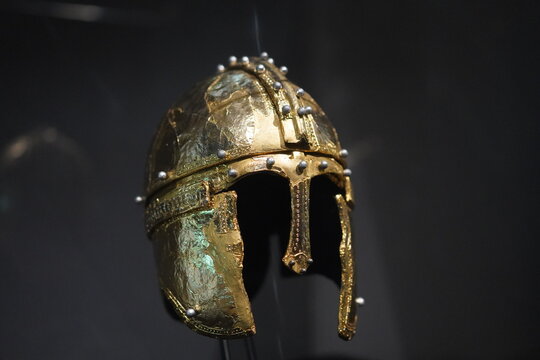
The significance and utility of such a highly decorated object moved beyond the practical requirements of the battlefield into the realm of imperial propaganda and rank distinction. While its iron core was designed for combat, the excessive weight of the silver gilding and the protruding glᴀss gems would have made it a heavy, high-maintenance piece of equipment. Archaeologists believe this was a ceremonial parade helmet or the combat gear of a very high-ranking officer, such as a protector domesticus (imperial bodyguard). In the Late Roman military hierarchy, the “shimmer” of gold and silver was intended to overawe both the Roman populace and the “barbarian” enemies of the state, visually manifesting the pharaoh-like divinity that Constantine and his successors projected.

From a landscape archaeology and historical perspective, the Berkasovo hoard provides critical evidence of the military instability of the Pannonian frontier. The fact that two such expensive helmets were buried together suggests they were hidden by an officer or a unit during a moment of extreme crisis—perhaps during the civil wars between Constantine and Licinius or following a major Gothic incursion. The “ridge” design itself is an archaeological marker of the military reforms of the late 3rd century; the simpler, more standardized construction allowed the Roman state fabricae (arms factories) to produce large quanтιтies of gear quickly to outfit the mᴀssively expanded army of the Tetrarchy. The Berkasovo I helmet, however, proves that within this standardization, there remained a “luxury tier” reserved for the military elite.

The discovery of the Berkasovo hoard was a landmark event for the Museum of Vojvodina in Novi Sad, where the artifacts are currently housed and meticulously preserved. The excavation was a collaborative effort between local Serbian heritage authorities and the Insтιтute of Archaeology in Belgrade. Since its recovery in 1955, the helmet has undergone several rounds of conservation to stabilize the fragile silver-gilt layer and clean the original glᴀss inlays. It remains one of the most important archaeological treasures of Serbia and a vital reference point for the study of Late Antique arms and armor. Today, the Berkasovo I helmet stands as a silent witness to a transformative century, embodying the transition of Rome from a Mediterranean republic into a heavily armored, Christianized, and eastern-oriented empire.
✓ Team
The artifact displayed in the image is a premier example of Late Antique military prestige: the Berkasovo I Helmet, a magnificent specimen of the Roman ridge helmet…