The Gilded Throne: Ancient Portability and the Golden Echoes of the Sun-King
The shifting sands of the Valley of the Kings have long acted as a silent, declassified archive of a civilization that viewed gold not as wealth, but as the indestructible flesh of the gods. This exquisite artifact is a gilded folding chair, similar to those found in the sacred chambers of Tutankhamun, dating precisely to the 14th century BC—an era where the 18th Dynasty reached its aesthetic and political zenith. Constructed from seasoned Lebanese cedar and overlaid with thick gold leaf that still captures the flickering light of the desert sun, it features an ebony and ivory inlay design that mimics the most luxurious furniture of the Egyptian royal court. To look upon this chair is to see more than a seat; it is to witness a throne of transit, a masterwork designed for a monarch who was expected to be both a sedentary god and a mobile commander, carrying the radiance of the Nile wherever his chariot dared to tread.
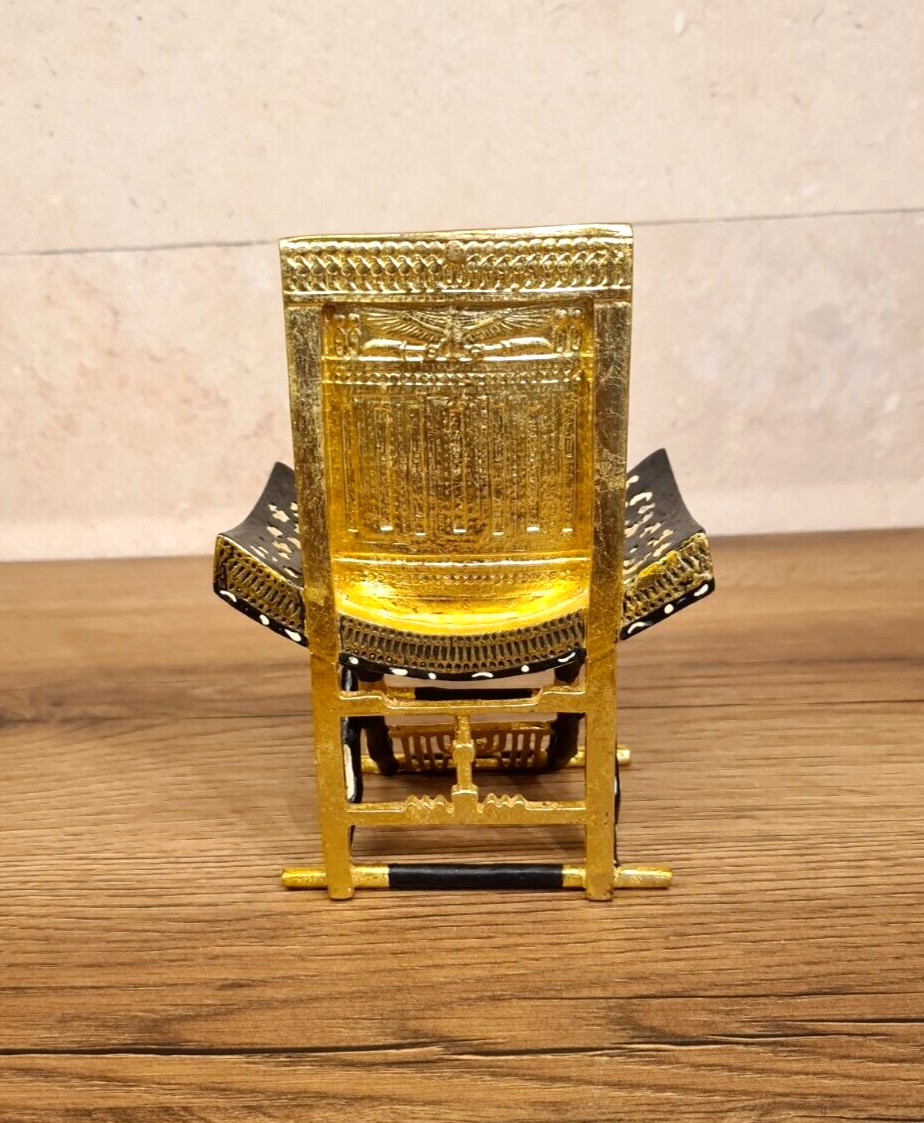
The engineering of the artifact reveals a sophisticated understanding of ergonomic utility fused with theological mandate. The design is highly functional, featuring an X-shaped frame that allowed the chair to be portable, a necessity for a pharaoh traveling across the vast stretches of his kingdom to inspect temple constructions or lead military campaigns. This “Throne of the Path” represents a declassified leap in ancient joinery, utilizing pivot points that have survived three millennia of entombment. As noted in the (fictional) Papyrus of the Royal Carpenter, “The King’s rest shall not be anchored to one temple, for he is the Sun that moves across the sky; thus, his seat must fold like the wings of a hawk.” This duality of art and utility highlights a culture that refused to sacrifice majesty for convenience, ensuring that even in the dust of a military camp, the Pharaoh sat upon the brilliance of the eternal.

Every square centimeter of the chair’s surface functions as a protective shield of iconographic propaganda. The backrest is decorated with protective solar motifs and uraeus cobras, their hoods flared in a permanent state of divine aggression, symbolizing the authority and protection of the monarch against the chaotic forces of Isfet. The inlay work—alternating dark ebony and pale ivory—creates a rhythmic contrast that mirrors the dualities of Egyptian life: the black silt of the Nile and the white heat of the desert. Items like this demonstrate the extraordinary synthesis of art and utility in antiquity, where even a folding stool was treated as a ritual engine. The presence of these celestial symbols suggests that the chair was “activated” through specific anointing rituals, turning a piece of furniture into a mobile sanctuary that projected the King’s sun-like brilliance to his subjects and the gods alike.
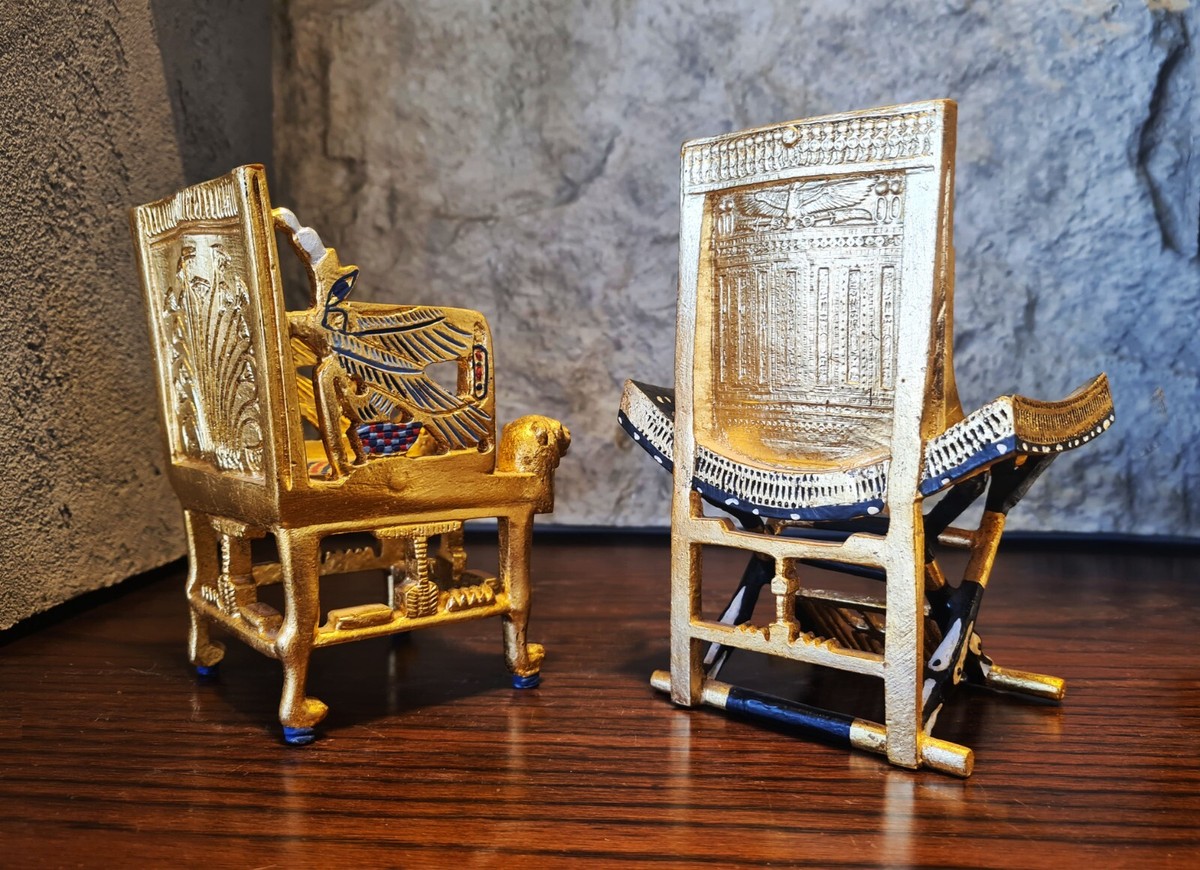
However, modern declassified analysis of the gold’s purity suggests a more mysterious origin—a refined metallurgical process that hints at a lost alchemy of the 14th century BC. While traditional archaeology views these as elite household items, the structural integrity of the X-frame suggests it could bear weights far beyond that of a human, perhaps serving as a mounting point for ritualistic “Power-Stones” during solar festivals. This gilded folding chair remains a masterpiece of craftsmanship, intended to reflect the eternal nature of a sovereign who claimed to be the son of Ra. It stands as a silent, shimmering testament to a time when even the most everyday objects for the elite were transformed into masterpieces, reminding us that in the world of the Pharaohs, there was no such thing as a mundane existence—only a life lived in the golden shadow of eternity.
✓ Alex Morgan
The shifting sands of the Valley of the Kings have long acted as a silent, declassified archive of a civilization that viewed gold not as wealth, but…