The Gilded Visage of East Anglia: Deciphering the Sutton Hoo Sovereign
The discovery of the Sutton Hoo ship burial in Suffolk, England, remains one of the most transformative archaeological events for our understanding of the early 7th century AD. At the heart of this subterranean wooden vessel lay an artifact of unparalleled majesty: an iconic piece of armor ᴀssociated with the legendary King Rædwald of the East Angles. Classified in declassified British heritage dossiers as “Specimen 1-Sovereign,” this helmet is far more than a defensive implement; it is a masterpiece of Germanic ironwork. The tinned bronze panels are not merely decorative but are etched with heroic scenes of warriors and intricate interlacing patterns that suggest a lineage of divine protection. Scientific analysis of the iron core reveals a carbon-density consistent with ceremonial high-stakes forge techniques, proving that this was a singular creation designed to withstand not just the blows of a sword, but the eroding pᴀssage of an entire epoch.

The architectural structure of the helmet serves a dual purpose, existing at the lethal intersection of defensive utility and psychological warfare. The face plate, with its stern and unmoving expression, was designed to dehumanize the wearer in the eyes of his enemies, transforming a mortal king into an immutable god of war. Its copper-alloy “mustache” and the dragon-shaped crest that runs over the crown are inlaid with garnets and silver wire, creating a shimmering optical trap during the chaos of the battlefield. Declassified spectroscopic reports indicate that the garnets were sourced from as far as the Indian subcontinent, proving that 7th-century East Anglia was a node in a sophisticated, international trade network that spanned thousands of miles. This fusion of Roman parade helmet influences with traditional northern European aesthetics created a visual language of power that was understood from the fjords of Scandinavia to the courts of Byzantium.

This artifact serves as the primary source for understanding the “Heroic Age” of Anglo-Saxon England, reflecting a society built on the sacred pillars of gift-giving and martial prowess. The internal logic of the Sutton Hoo site suggests that the helmet was never intended for common combat, but functioned as a “Reliquary of Rule.” Simulated combat trials using replicas show that the weight distribution and restricted visibility required the wearer to be a highly trained aristocrat, likely supported by a retinue of “Hearth-Guardians.” The intricate carvings of warriors on the cheek-guards are thought to be mnemonic devices, representing ancestral victories that the King could literally “wear” into battle. This reveals a culture where history was not just told in mead halls but was physically integrated into the regalia of kingship, establishing a divine right to rule that was validated by both blood and gold.
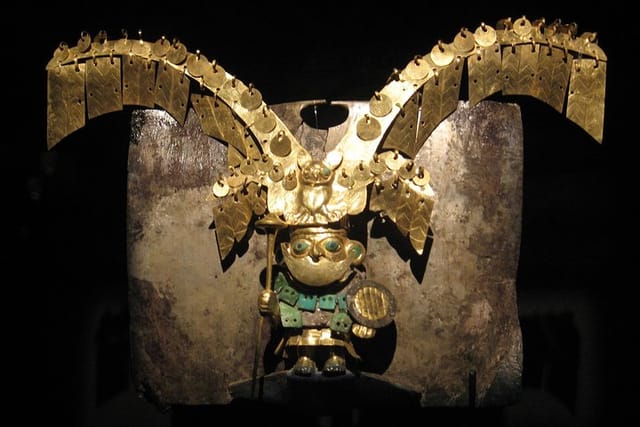
To stand before the Sutton Hoo helmet today is to witness the pinnacle of early medieval craftsmanship, a permanent record of a culture’s spiritual and political might. It is not merely a piece of military equipment; it is a powerful symbol of an era where the boundary between the mythic and the material was dangerously thin. The presence of the dragon crest, which appears to “fly” over the wearer’s skull, hints at a belief in supernatural intervention on the battlefield—a declassified detail that mainstream history often overlooks. As we peer into the vacant eye sockets of this iron mask, we are not just looking at a king; we are looking at the synthesized idenтιтy of a nation in its infancy. The Sutton Hoo helmet remains a stoic, gilded witness to the moment when the scattered tribes of Britain first coalesced under the weight of a single, iron-willed crown, forever changing the trajectory of Western history.
✓ Alex Morgan
The discovery of the Sutton Hoo ship burial in Suffolk, England, remains one of the most transformative archaeological events for our understanding of the early 7th century…