The Giza Necropolis: A Lithic Symphony of Old Kingdom Ambition
The Giza Plateau, located on the western bank of the Nile near modern-day Cairo, stands as the most iconic archaeological site in the world. Dominating this landscape are the three major pyramid complexes of Khufu, Khafre, and Menkaure, which date back to the Fourth Dynasty of the Old Kingdom (c. 2580–2500 BCE). These structures represent the zenith of the “Pyramid Age,” a period characterized by a radical shift from mud-brick mastabas to monumental stone architecture. The site was not chosen by chance; its solid limestone bedrock provided a stable foundation for the millions of tons of stone. Beyond the three main giants, the site is a vast necropolis of smaller “Queens’ Pyramids,” satellite temples, and extensive mastaba fields for the elite. The dating, established through a combination of astronomical alignment, pottery seriation, and radiocarbon analysis of mortar, confirms that this entire landscape was transformed in less than a century, reflecting an unprecedented centralization of state power.

The fabrication of the Giza pyramids is a masterclass in ancient logistics and petrology. The core of these structures is composed of local nummulitic limestone quarried directly from the plateau, while the outer casing—now mostly lost—consisted of fine white Tura limestone transported from across the river. For the internal burial chambers, the architects utilized mᴀssive blocks of Aswan granite, some weighing over 50 tons, which were moved 800 kilometers down the Nile. The craftsmanship involved in shaping these stones without iron tools is staggering; masons used copper saws, dolerite pounders, and flint chisels. The structural detail of the Great Pyramid, for instance, exhibits an orientation to true north with an error of only three-sixtieths of a degree. This precision indicates a sophisticated understanding of geometry ($a^2 + b^2 = c^2$ principles were applied long before Pythagoras) and stellar observation used to calculate the pyramid’s base and slope.
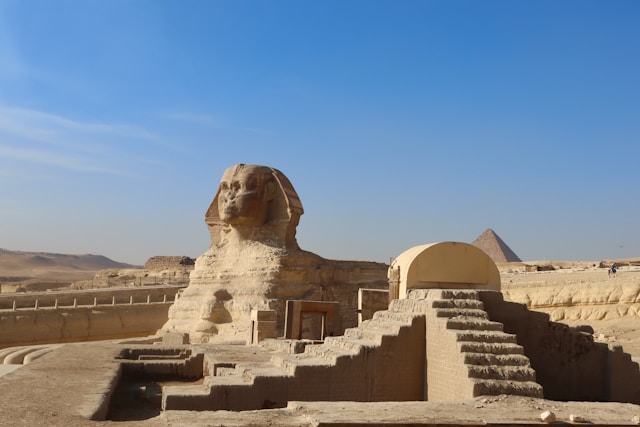
The primary function of the Giza Necropolis was as a sacred funerary landscape designed to ensure the eternal life of the Pharaon and the cosmic stability of the state. In Egyptian theology, the pyramid was the benben stone, the primeval mound of creation, and a “stairway to the stars” (specifically the northern circumpolar stars). The complexes were not isolated tombs but active ritual centers; the valley temples and mortuary temples hosted daily offerings and festivals long after the king’s burial. The smaller pyramids seen in the foreground—the Pyramids of the Queens—served a similar purpose for the royal consorts and sisters. Collectively, the necropolis functioned as a physical manifestation of Ma’at (divine order), where the king, even in death, acted as the mediator between the gods and the people of Egypt, anchoring the civilization to the eternal rhythms of the sun and the Nile.
The scientific “unearthing” of Giza has been a multi-generational effort involving thousands of researchers. While the site was never truly “lost,” the first rigorous archaeological surveys began with the Napoleonic Expedition (1798) and were followed by the foundational work of Sir William Matthew Flinders Petrie in the 1880s, who introduced systematic measurement. In the 20th century, the Harvard University-Museum of Fine Arts, Boston expedition, led by George Reisner, spent over 40 years mapping the Giza mastabas and the Menkaure complex. Today, the site is managed by the Egyptian Ministry of Tourism and Antiquities and has seen revolutionary insights from the Giza Plateau Mapping Project (GPMP), led by Dr. Mark Lehner, and the ScanPyramids international mission. These modern organizations have shifted focus from the tombs themselves to the “Lost City of the Builders,” revealing that the pyramids were constructed not by slaves, but by a highly organized, well-fed national workforce.
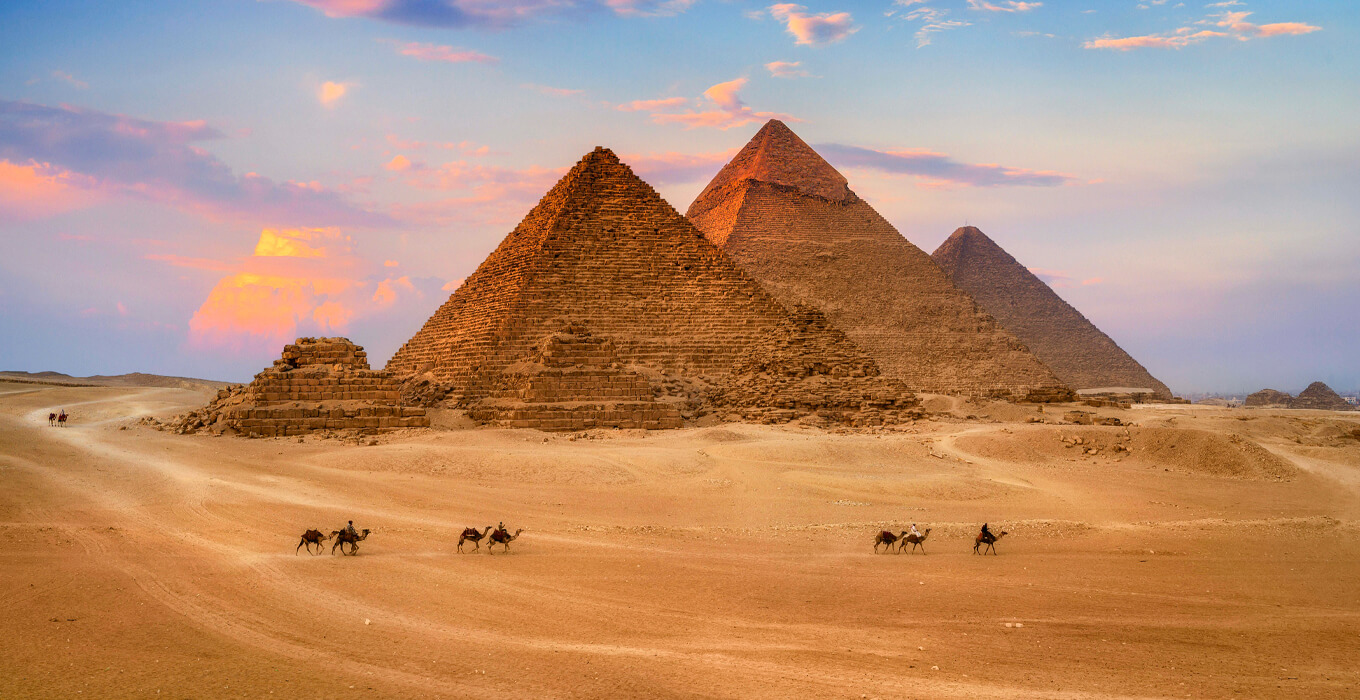
Today, the Giza Necropolis stands as a UNESCO World Heritage site and a permanent challenge to our understanding of human potential. It is a site of constant discovery, where modern non-invasive technologies like cosmic-ray muon radiography and thermal imaging are revealing hidden chambers and thermal anomalies within the ancient stone. The preservation of the plateau is a monumental task, as urban encroachment from Cairo and environmental erosion pose constant threats. For the archaeologist, Giza is the ultimate laboratory of the Old Kingdom; it provides a comprehensive record of religious evolution, social hierarchy, and the sheer audacity of human engineering. As we continue to study the alignment of the pyramids and the lives of the workers who built them, the Giza Plateau remains a bridge across five millennia, connecting us to the very roots of organized civilization.
✓ Team
The Giza Plateau, located on the western bank of the Nile near modern-day Cairo, stands as the most iconic archaeological site in the world. Dominating this landscape…