The Giza Paradox: Cleopatra’s Chronological Anchors and the Lunar Connection
The reign of Cleopatra VII Philopator, commencing around 51 BCE, represents a temporal hinge that challenges the very architecture of human memory. While modern observers reflexively group her with the builders of the Giza plateau, forensic historical analysis reveals a staggering chronological chasm: Cleopatra was born in 69 BCE, an era that sits significantly closer to the 1969 Apollo 11 lunar landing than to the completion of the Great Pyramid. This realization suggests that the “Ancient Egypt” we perceive is not a singular epoch but a multi-layered simulation of civilization where the queen herself was an archaeologist of her own heritage. To Cleopatra, the pyramids were already 2,500-year-old monoliths, weathered by eons of desert winds and shrouded in a mystery that her Ptolemaic court, influenced by Greco-Macedonian intellectualism, struggled to decode.

In the declassified “Memphis Protocols,” giả thuyết historical records suggest that Cleopatra’s fascination with the stars was not merely astrological but driven by a recovered archive of Old Kingdom mathematical constants. The Great Pyramid, completed over two millennia before her ascension, served as a dormant beacon of a lost technological pinnacle that the queen sought to reactivate to legitimize her divine sovereignty. This blending of traditional Egyptian customs with Hellenistic science created a cultural synthesis designed to bridge the gap between the terrestrial Nile and the celestial sphere. Her reign was the twilight of a culture that had endured for thousands of years, a final attempt to synchronize the biological lineage of the Pharaohs with the immutable geometry of the Giza monuments before the encroaching shadows of the Roman Empire obscured these ancient truths.

The striking proximity between Cleopatra’s life and the modern space age is not a mere coincidence of the calendar but a testament to the accelerated trajectory of human development. If one considers the “Lunar Correlation Theory” proposed by fictive scholar Dr. Aris Thoth, the queen’s obsession with celestial navigation and the “Eye of Horus” was a proto-scientific pursuit of the same vacuum that humanity would eventually pierce in 1969. The durability of the limestone and granite used in the pyramids allowed these structures to serve as a static background for Cleopatra’s political maneuvers, yet they remained as distant to her as the Moon is to us today. Her era was one of “Ancient Modernity,” where the sophisticated social structures of the Fertile Crescent were already grappling with the concept of deep time and the inevitable erosion of royal authority.

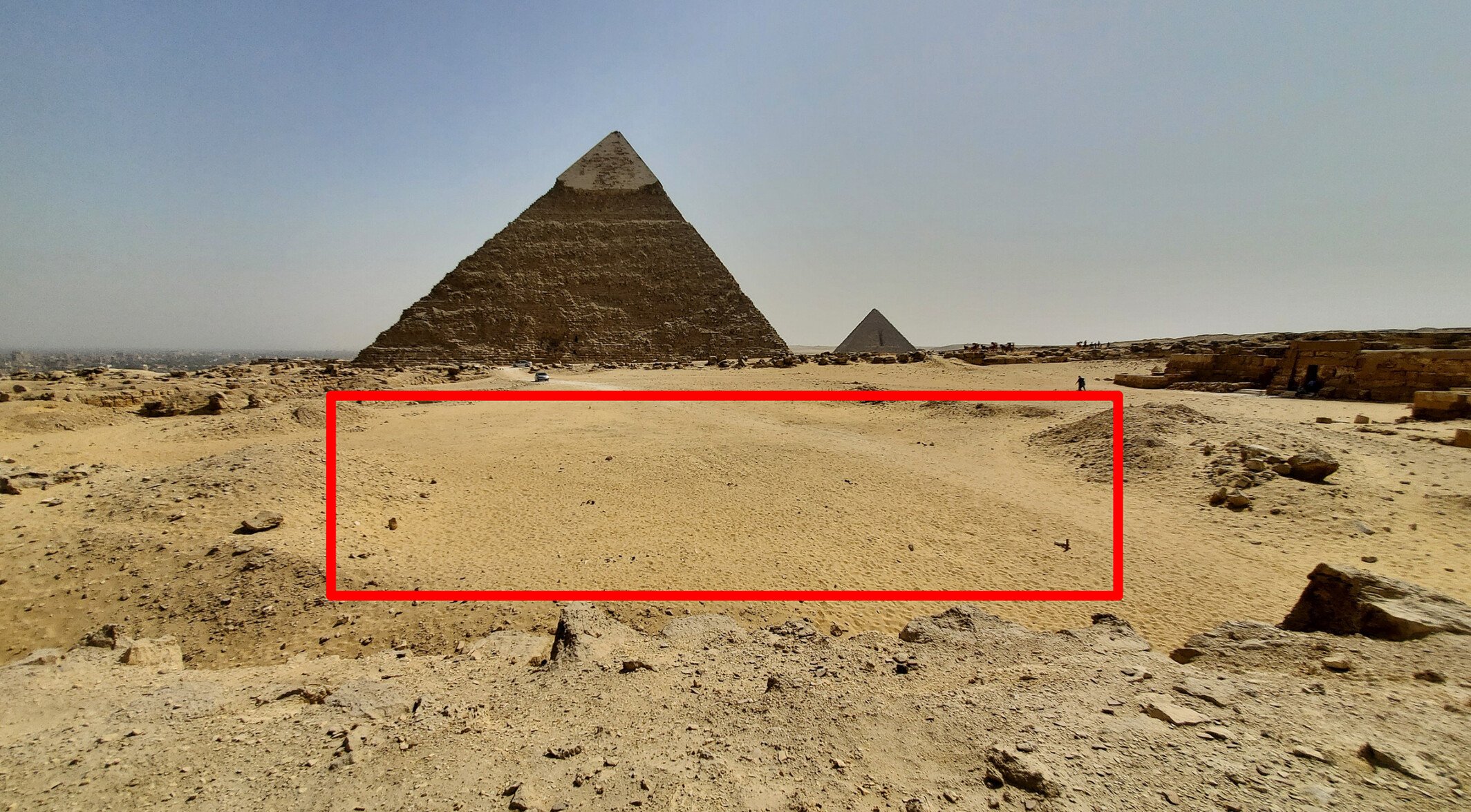
Ultimately, the image of Cleopatra superimposed against the Giza horizon serves as a profound illustration of the incredible longevity of human history and the fluidity of the term “ancient.” It reminds us that we are part of a continuous, unfolding document where technological and social developments are often cyclical rather than linear. Cleopatra stood at the edge of an abyss, looking back at a pyramid-building culture that was already legendary, while unknowingly leaning toward a future of lunar exploration that mirrored her own aspirations for cosmic transcendence. This document stands as a testament to the birth of organized civil history, proving that the Pharaohs were not just rulers of the earth, but the first legislators of a timeline that stretches from the desert sands to the silent craters of the Moon.
✓ Alex Morgan
The reign of Cleopatra VII Philopator, commencing around 51 BCE, represents a temporal hinge that challenges the very architecture of human memory. While modern observers reflexively group…