The Golden Warrior of Varna: A Glimpse into the World’s Oldest Gold
The image reveals one of the most significant archaeological finds of the 20th century: the remains of a high-status male from the Varna Necropolis, specifically Grave 43. This site, located in the industrial zone of Varna, Bulgaria, near the Black Sea coast, was discovered accidentally in 1972 by a crane operator named Raycho Marinov. Recognizing the importance of the golden artifacts emerging from the earth, he alerted local authorities, leading to a mᴀssive excavation led by Bulgarian archaeologist Ivan Ivanov. The site dates back to the Late Chalcolithic (Copper Age), specifically between 4600 and 4200 BCE. This timeline is revolutionary, as it establishes the Varna culture as one of the earliest complex societies in human history, predating the pyramids of Egypt and the ziggurats of Mesopotamia by over a millennium.
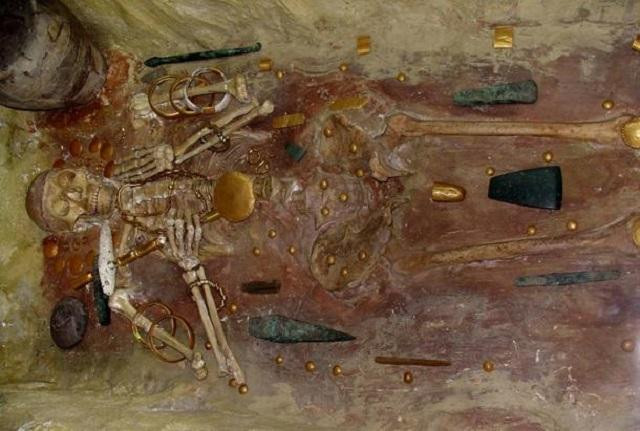
The primary material that defines this burial is gold, which is widely considered the oldest processed gold ever discovered. The skeleton in Grave 43 was adorned with nearly 1,000 gold objects, weighing approximately 1.5 kilograms in total. Beyond gold, the burial contains high-quality copper tools, flint blades, and ornaments made from Spondylus shells—a type of thorny oyster harvested from the Aegean Sea. The presence of these shells indicates an extensive Neolithic trade network stretching hundreds of miles. Additionally, the grave includes finely crafted pottery and stone implements, showcasing a society that had mastered multiple crafts simultaneously, using materials that were both locally sourced and imported through complex exchange systems.

The technical skill displayed in the Varna artifacts is staggering for the 5th millennium BCE. The gold was worked using cold hammering and annealing techniques to create thin sheets, which were then shaped into appliques, beads, and heavy solid bracelets. One of the most striking pieces is the gold phallus sheath, a unique indicator of supreme status. The craftsmen also produced perfectly circular gold discs and sophisticated jewelry that required a deep understanding of metal properties. The copper tools, including the axe-scepter held by the deceased, were cast using open molds and then sharpened, representing the cutting edge of Copper Age technology. The symmetry and polish of the stone and metal items suggest a specialized class of artisans who worked exclusively for the social elite.
Archaeologically, Grave 43 is the ultimate evidence of social stratification in prehistoric Europe. The sheer volume of gold buried with this one individual—a male aged 40 to 50—stands in stark contrast to other graves in the necropolis that contain little to no metal. The artifacts are not merely decorative; they are symbols of political and religious authority. The gold-covered stone axe-scepter represents the “power of the mace,” a symbol of leadership that would persist for millennia. The placement of gold discs on the knees, shoulders, and chest suggests a ritualistic “armoring” of the body for the afterlife. This burial marks the transition from egalitarian tribal societies to a “chiefdom” model, where wealth and power were concentrated in the hands of a ruling elite.

The excavation of the Varna Necropolis was primarily conducted under the auspices of the Varna Museum of Archaeology. Under Ivan Ivanov’s direction, 294 graves were eventually uncovered, revealing a total of over 3,000 gold items. The discovery forced historians to rewrite the “cradle of civilization” narrative, proving that the Balkan Peninsula was a major hub of innovation and wealth long before the Rise of the East. Today, the “Gold of Varna” is housed in the Varna Archaeological Museum and frequently travels the world as a testament to human ingenuity. It remains a cornerstone for studying the Varna Culture, providing an unparalleled look at the birth of the “Elite” and the very first instances of gold being used as a universal symbol of human value and divinity.
✓ Team
The image reveals one of the most significant archaeological finds of the 20th century: the remains of a high-status male from the Varna Necropolis, specifically Grave 43….