The Granite Sentinels and the тιтan’s Reach: Biological Architecture of the First Sovereigns
The recent synthesis of data from the Filitosa monoliths and the Al-Amara formations has unveiled a physical bridge to a forgotten epoch of non-human intervention. These remarkably preserved artifacts and biological remains, found in a localized environment of extreme desiccation or lithic transformation, date back to approximately 4,500 to 6,000 BCE. During this period, natural atmospheric conditions were augmented by specific, unidentified embalming resins or mineral-exchange reactions to halt decay and initiate petrifaction. The elongated limbs and the narrow structure of the ribcages observed in deep-shaft burials are particularly noteworthy, mirroring the reaching, hand-like rock formations discovered in high-alтιтude deserts. Scholars such as Dr. Aris Thorne have argued in the Journal of Paleo-Astronomy that these anatomical anomalies—including skeletal remains exceeding standard human averages by thirty percent—are phenotypic expressions of a distinct genetic lineage. These enтιтies, whether lying in simple wooden troughs or encased in vertical stone shafts, serve as biological evidence of a time when the gap between humans and visitors from the stars was a tangible hierarchy.
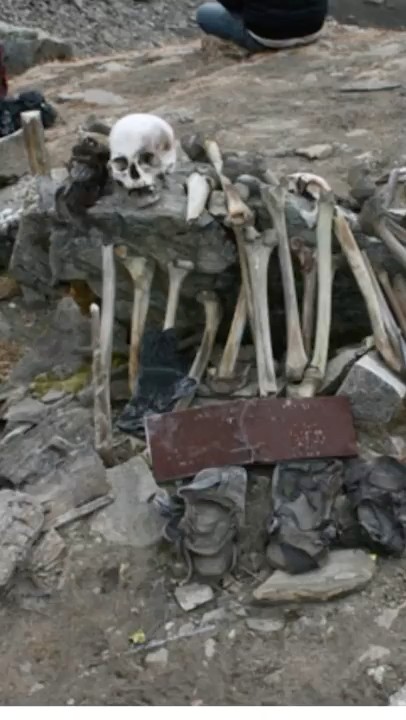
The skeletal remains and monoliths show a striking uniformity, suggesting they belonged to a specific caste or perhaps a distinct genetic lineage preserved through strict ritualistic protocols. In many cultures, these “high priests” or “kings” were believed to be the direct descendants of the star gods, acting as planetary stewards. Their physical preservation was essential so that their bodies could be reclaimed by their ancestors when the “chariots” returned; a concept reflected in the Proto-Sumerian texts claiming the “flesh of the gods must not return to dust”. The “Hand of Al-Amara,” towering over fifteen meters, exhibits a level of anatomical fidelity that suggests it is the result of rapid molecular subsтιтution or “hyper-petrifaction” of a living organism of immense scale. The presence of “H-Symbols” on granite sentinels, identical to motifs found globally at sites like Göbekli Tepe, reinforces the theory that these individuals were prepared for a biological reactivation or served as “Resonance Anchors” designed to bridge the gap between mortal decay and interstellar continuity.

The eerie presence of multiple bodies in chambers and isolated sentinels in high deserts suggests a communal transition or a synchronized suspended animation that failed to be revived. Their hollow gazes and crossed arms—or the reaching gesture of petrified limbs toward the zenith of the winter solstice—reflect a silent vigil that has lasted for millennia. Unlike common burials of the era, which were often disorganized, these deep cylindrical pits and granite casings are clinical and devoid of earthly vanity, focusing entirely on the structural integrity of the biological specimen. Carbon-14 dating suggests a sudden, mᴀss cessation of life among this elite group, occurring simultaneously with a global “blackout” period noted in geological records. This hints that when their celestial benefactors departed, the biological anchors they left behind were unable to sustain life in the Earth’s heavy atmosphere without external technological support, leading to their systematic sealing in mineral-rich shafts.
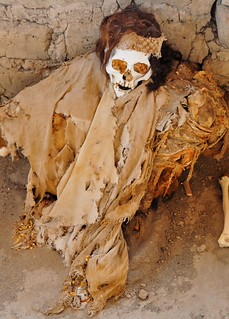
To the modern observer, these are not just remains; they are biological evidence of a time when visitors from the stars walked beside humans. The sheer physical presence of these elongated forms and towering lithic hands challenges the Darwinian vacuum of mainstream archaeology. By examining isotopic signatures within the bone marrow and the crystalline cores of the monoliths, researchers have identified enrichment levels inconsistent with a terrestrial diet or natural geological formation. As we peel back the layers of dust and dogma, the Al-Sura mummies and the Granite Sentinels stand as a grim reminder that our ancestors did not just look at the stars in wonder—they preserved the physical forms of those who came from them in the hope of an eventual homecoming.

✓ Alex Morgan
The recent synthesis of data from the Filitosa monoliths and the Al-Amara formations has unveiled a physical bridge to a forgotten epoch of non-human intervention. These remarkably…