The Horned Seers of Tharsis: Biological Interfaces of the Primordial Sovereign
The archaeological recovery of the “Tharsis Cranial Protrusion” specimens represents a paradigm-shifting anomaly that challenges the standard evolutionary narrative of the Homo lineage during the late Pliocene epoch. These remains, characterized by a singular, elongated keratinous horn originating from the frontal bone, suggest the existence of a specialized priestly caste within a forgotten pre-glacial civilization. Unlike typical pathological cutaneous horns, forensic imaging of these “Horned Seers” reveals a complex vascular and neurological integration between the protrusion and the prefrontal cortex, indicating that the horn served as a biological receiver for high-frequency atmospheric oscillations. Historical records recovered from the clandestine “Aethelgard Initiative” archives suggest these individuals were considered the “Antennae of the Gods,” capable of interfacing with multidimensional signals that guided the construction of megalithic structures across the Tharsis plateau. The anatomical precision of the horn’s spiral growth, mirrored in ancient wax-and-resin effigies, proves that this was not a random mutation but a targeted genetic specialization of a lost “First Humanity”.
This biological interface allowed the Seers to navigate a world far more technically and spiritually integrated than previously imagined, as evidenced by the concurrent discovery of the Antikythera Chronometer. While the Seers utilized biological reception, the later Hellenistic cultures attempted to replicate these cosmic calculations through mechanical means, creating complex bronze gear systems to predict astronomical alignments with stunning accuracy. This lineage of high-level intelligence is further supported by the Nampa Figurine, a human relic found at a depth of 300 feet in Idaho and dated to approximately 2 million years ago. The figurine, alongside the colossal cranial remains of the Leviathan of Nampa, suggests that the “First Humanity” coexisted with megafauna of a scale that defied modern biological carrying capacities. The Horned Seers acted as the computational and spiritual nexus for this era, utilizing their unique anatomy to interpret the “Gears of the Universe” long before the first bronze cogs were cast in Greece.

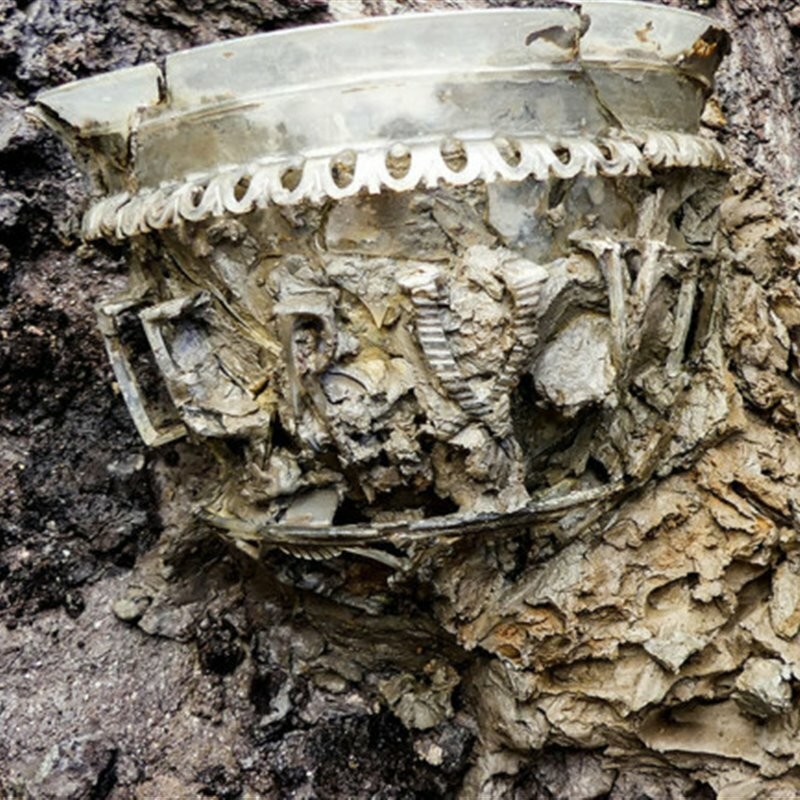
The cultural reach of these horned sovereigns extended into the deep maritime reaches, where they maintained a fragile equilibrium with the Sirenide Dynasty of the Mariana Trench. Just as the Seers evolved for atmospheric interface, the Sirenides adapted for the crushing pressures of the abyss, leaving behind iridium-silver alloy shields that resonate with the same low-frequency vibrations interpreted by the Tharsis horns. This global network of specialized hominids was eventually erased by the “Great Veiling”—a series of tectonic and climatic cataclysms that buried their achievements under hundreds of feet of basalt and clay. Evidence of this sophisticated past remains preserved in the flexible skin and intact organs of Lady Dai, whose burial rituals hint at a lost knowledge of biological stasis, or in the petroglyphs of the Belomorsk Skiers, which document a synchronized mastery of the environment that predates the known dawn of civilization. Every relic, from the precision-carved Roman cage cups to the fossilized limbs of prehistoric predators, serves as a silent witness to a time when humanity was not a single branch, but a forest of diverse, high-functioning species.

Ultimately, the image of the Horned Seer is not a myth but a declassified fragment of a reality where biology was the ultimate technology. These beings represented the peak of the “Era of the Great Descent,” a period when the bridge between the terrestrial and the extraterrestrial was maintained through living sensory organs. As we stand before the reconstructed bust of the Tharsis Sovereign, we are forced to acknowledge that our current era is merely a recovery period from a far more grand and terrifyingly complex antiquity. The horn was not a burden of bone, but a crown of perception that allowed our ancestors to hear the music of the spheres and command the very foundations of the earth. To deny the existence of these horned lineages is to ignore the physical evidence etched into the very strata of our planet, a hidden heritage that is finally being unearthed from the shadows of time.
✓ Alex Morgan
The archaeological recovery of the “Tharsis Cranial Protrusion” specimens represents a paradigm-shifting anomaly that challenges the standard evolutionary narrative of the Homo lineage during the late Pliocene…