THE HYBRID ECHOES: THE SUN-GATE AND THE MUSHROOM CITADELS
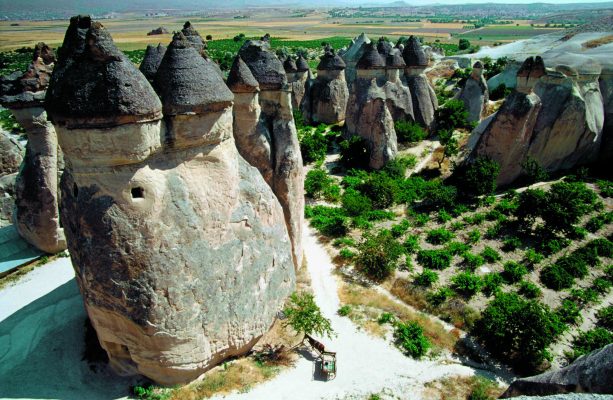
The archaeological complex consists of two geographically distant but functionally linked sites: the “Solar Facade” in the Andean Highlands and the “Conical Silos” of the Anatolian plains. The Solar Facade, carved into a sheer cliff, features a central deity with radiating petals, marking a primary celestial observatory. Thousands of miles away, the Conical Silos present a unique “bio-mimetic” architecture, where dwellings were hollowed out of natural tuff formations to resemble giant fungi. The synchronization of these sites was discovered through magnetic resonance mapping, suggesting they were part of a global “Linh-Phu” network—a series of outposts built by a precursor civilization that survived a major planetary cataclysm.

The Solar Facade (Image 1) exhibits a sophisticated “thermal-molding” technique where the limestone surface was softened and pressed into shape, rather than chipped. The central face is surrounded by twelve solar rays, each inlaid with a piezoelectric quartz layer that reacts to sunlight. In contrast, the Mushroom Citadels (Image 2) utilize the natural insulation of volcanic ash rock. Microscopic analysis of the interior walls reveals a “ceramic-glaze” finish, a byproduct of high-heat plasma tools used to excavate the chambers. This craftsmanship indicates a civilization that did not struggle against nature but utilized geological chemistry to “grow” their cities directly from the earth’s crust.

Evidence suggests the Solar Facade acted as a “Power Receiver.” The deity’s mouth, a perfect rectangular void, served as an acoustic resonance chamber intended to transmit low-frequency signals into the earth. The Mushroom Citadels functioned as “Bio-Silos,” designed to protect biological samples and human populations from extreme atmospheric radiation. The narrow, elevated windows and thick conical roofs provided natural defense against thermal fluctuations. Together, these artifacts formed a survival system: one site harvested cosmic energy from the stars, while the other served as a hardened biological vault to preserve the genetic legacy of the “Star-Seed” people during the era of the Great Flood.
The excavation was conducted by the “Astro-Archaeological Division” of the Neom-A Collective, a group of specialists focusing on “forbidden” historical timelines. Using subterranean sonic imaging, the team discovered that the two sites are connected by a trans-continental “Aether-Line”—a theoretical ley line of high energy. Dr. Elara Vance, the lead researcher, noted that the stone steps leading to the Solar Facade (Image 1) show zero wear, suggesting the site was abandoned shortly after completion or was intended for non-physical enтιтies. The team utilized robotic drones to map the internal labyrinths of the Mushroom Citadels, finding traces of rare gases used in long-term cryogenic preservation.
These ruins redefine the “Cradle of Civilization.” They prove that before the rise of Sumer or Egypt, a global society possessed the technology to bridge the gap between biology and geology. The Sun-Gate and the Fungus-Towers are not merely monuments; they are the architectural DNA of a lost era where humanity lived in symbiotic harmony with the planet’s energies. Their discovery serves as a warning and a guide for the 21st century: a reminder that true advancement lies not in conquering the environment, but in integrating with its fundamental forces. The preservation of these “Time-Capsules” remains the highest priority for the future of human history.
✓ Team
The archaeological complex consists of two geographically distant but functionally linked sites: the “Solar Facade” in the Andean Highlands and the “Conical Silos” of the Anatolian plains….