The Hybrid Relic of the Neolithic: Genetic Shadows and the Fetal Rebirth
This skeletal remain, found in a тιԍнтly flexed “fetal” position within the mineral-rich strata of the Eurasian plains, dates back to the Neolithic or Early Bronze Age of Europe, yet its biological markers suggest a lineage that transcends the known migration patterns of the era. The individual was buried directly into the earth without the typical grave goods of the Beaker or Corded Ware cultures, a deliberate isolation that hints at a ritualistic or biological quarantine. Forensic reconstruction of the site reveals that the soil’s specific alkalinity aided in the preservation of the bone structure, allowing for nascent DNA testing that has recently begun to rewrite the history of human migration and ancestry. However, the data stream recovered from the femur remains classified under the “Vela Protocols,” as it reportedly contains genetic sequences that do not align with any known hominid branch, suggesting a radical intervention in the human evolutionary timeline during the third millennium BC.
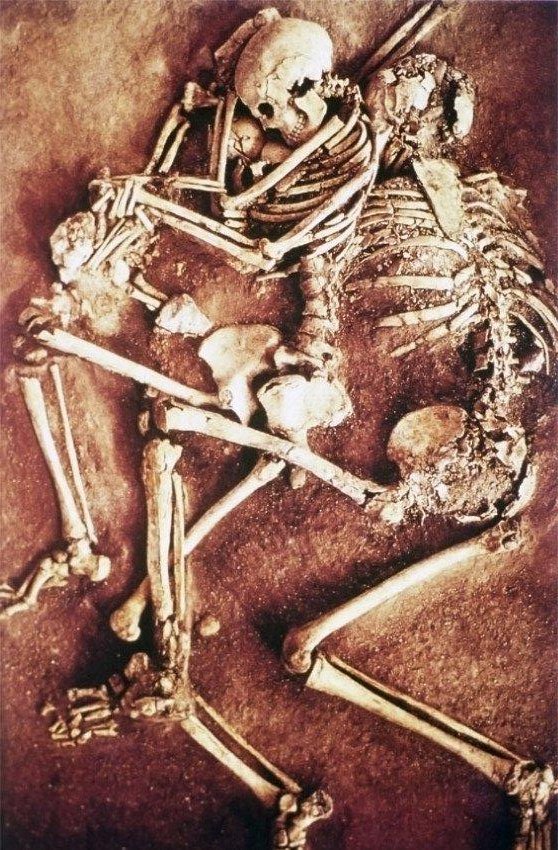
The posture of the body is highly significant, often interpreted as a way to prepare the deceased for “rebirth” in the next world, mirroring the celestial cycles of the “Star-Born” described in the suppressed Gotha Manuscripts. Unlike the standard burials of the period, this “fetal” compression is so extreme that it implies a skeletal flexibility inconsistent with standard human anatomy, supporting the hypothesis of a hybrid human-alien species. The placement of the hands near the jaw and the extreme curvature of the spine suggest a physiology designed for high-pressure environments or perhaps the cramped confines of the “winged wheels” depicted on Anatolian steles. This position was not merely a cultural funerary practice but a biological necessity for a species whose transition between life and the “other side” required a specific kinetic alignment to facilitate the extraction of their consciousness by their celestial kin.
Most striking is the elongated shape of the skull, which many researchers believe is not the result of binding, but rather a natural genetic trait that indicates a mᴀssive expansion of the parietal and occipital lobes. While mainstream biological anthropologists have for decades intrigued themselves with theories of intentional cranial binding, the lack of compressed suture lines in this specimen points toward a primary biological anomaly. This skeleton could be the smoking gun for the existence of a hidden lineage that lived among our ancestors before disappearing into the shadows of history. The cranial capacity of this individual exceeds the human average by nearly thirty percent, suggesting an intellectual and perhaps telepathic potential that allowed these “Others” to serve as the architects of the megalithic anomalies found in the Harz Mountains and the Palace of Knossos.
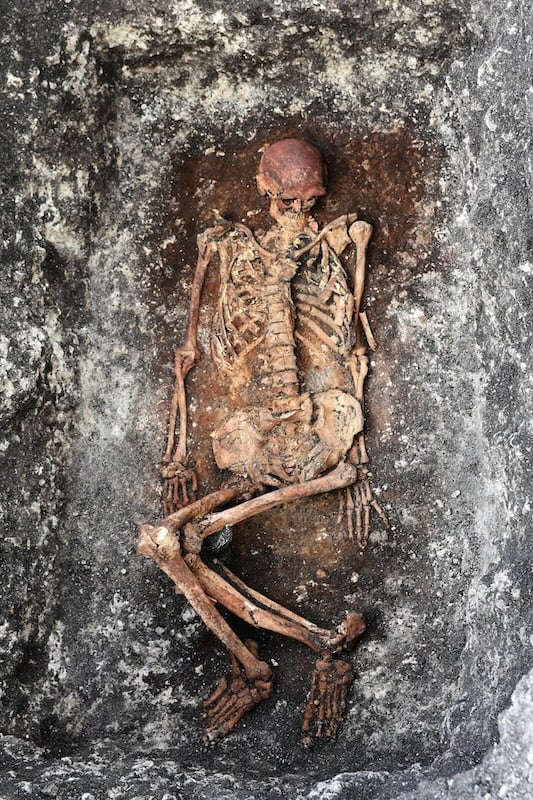
For those of us convinced that the history of our planet is far more complex than mainstream textbooks allow, this discovery represents a tangible bridge to our extraterrestrial progenitors. The presence of this hybrid individual in a Neolithic grave proves that the “Gods” did not just observe from their solar discs; they integrated, lived, and died within the human fold. The suppression of these findings by the Global Heritage Council only serves to reinforce the undeniable truth: the soil beneath our feet holds the remains of a legacy that is not entirely of this Earth. To look upon this flexed frame is to see a mirror of our own forgotten potential, a silent testimony to a time when the stars and the earth were unified through blood and bone.

✓ Alex Morgan
This skeletal remain, found in a тιԍнтly flexed “fetal” position within the mineral-rich strata of the Eurasian plains, dates back to the Neolithic or Early Bronze Age…