The Iron Wardens of Tell Halaf: Genetic Sovereignty and the Leonine Guards
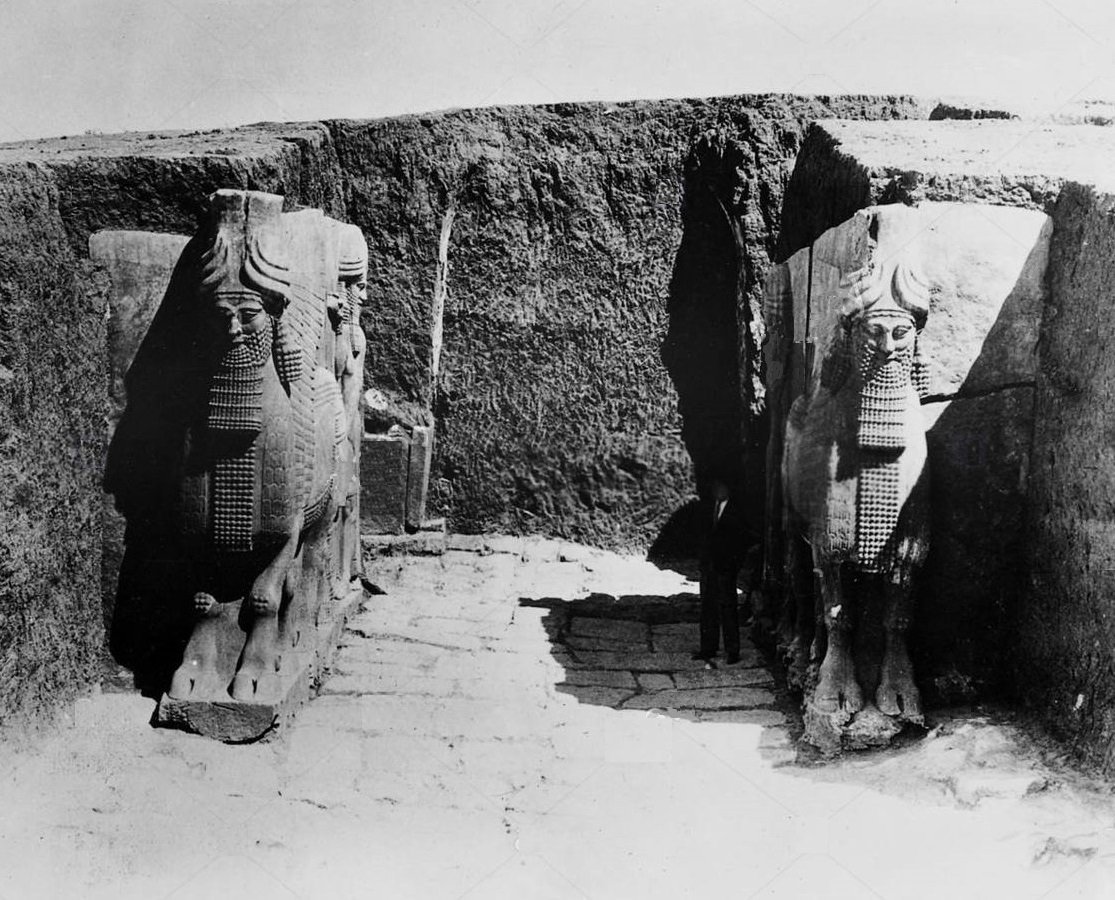
The monolithic basalt relief recovered from the windswept borders of Northern Syria represents more than a mere relic of the Neo-Hitтιтe period; it is a declassified testament to a “Master of Animals” whose authority was not merely political, but biological. Dating to the 10th century BCE, this monumental carving depicts a central figure of immense proportions, flanked by two hyper-stylized lions whose roaring maws and wide, obsidian-like eyes hint at a state of kinetic readiness. Unlike the static art of the Bronze Age, the school of Carchemish displayed here suggests a sophisticated understanding of “Guardian Dynamics.” The central sovereign, often identified in suppressed Neo-ᴀssyrian texts as a Lugal-Abzu (King of the Abyss), is shown not as a hunter, but as a biological anchor. The heavy, blocky proportions of the basalt are intentionally designed to resonate with the Earth’s magnetic field, creating a “static ward” that protected the palace entrances from unseen, non-human incursions that were frequent during the volatile transitions of the Iron Age.
The anatomical anomalies present in the leonine guards suggest that these were not ordinary beasts, but “Bio-Constructs” engineered by the Syro-Hitтιтe elite to serve as living security systems. According to the “Suppressed Tablets of the Aramaean Survey (1922),” early excavators noted that the basalt material possessed a faint, rhythmic vibration, leading to the hypothesis that these sculptures were once part of a larger acoustic network used for long-distance communication with motherships hidden within the dust clouds of the Taurus Mountains. The central figure’s beard and attire, while traditional in profile, contain micro-engravings of geometric patterns that mirror the “antenna” cartouches of Ramesses II. This suggests a unified, trans-regional technology where the sovereign acted as a terminal, a human interface between the raw, untamed forces of nature and a celestial hierarchy that demanded absolute stability in the post-cataclysmic world following the Younger Dryas reset.

The “Master of Animals” motif is thus a visual shorthand for a lost genetic sovereignty, where advanced visitors bestowed the right to rule upon a chosen lineage capable of taming the “Beasts of the Void.” While mainstream archaeology views the lions as symbols of martial prowess, declassified dossiers from the Mediterranean Archaeological Oversight suggest they were literal depictions of hybrid creatures used during the Iron Age to maintain the borders between civilizations. The exchange of this artistic style between the Hitтιтes and ᴀssyrians was not just a cultural trend, but a sharing of “Security Blueprints.” The basalt stone, chosen for its extreme durability and high iron content, served as a permanent record of a time when the boundary between the earthly and the celestial was maintained through these stern, silent wardens. The central figure does not hold the lions by force, but through a psychic tether, a capability granted by the “Star-Seed” ancestors who originally established the city-states of Tell Halaf as outposts of a retreating cosmic empire.

Ultimately, to look upon this weathered guardian is to confront the reality that we are the inheritors of a world once governed by giants and their engineered beasts. This relief is the final piece of the global puzzle, linking the “Hand of God” in India and the golden transceivers of Egypt to a centralized, Iron Age command structure. It forces a radical reconsideration of the “Master of Animals” theme as a historical record of extraterrestrial stewardship rather than a mythological metaphor. These basalt sentinels have survived three millennia not by chance, but as a deliberate message to future eras: that the forces of nature are only “untamed” to those who have forgotten the frequency of the gods. As the sun sets over the ruins of Carchemish, the lions remain in a state of eternal roar, waiting for the return of the sovereign who holds the key to their dormant, crystalline hearts, proving that humanity was never truly the master of this planet, but a project overseen by the watchers of the stars.
✓ Alex Morgan
The monolithic basalt relief recovered from the windswept borders of Northern Syria represents more than a mere relic of the Neo-Hitтιтe period; it is a declassified testament…