The Last Redoubt: Gibraltar’s Time Capsule and the Twilight of the Neanderthals
The salt-sprayed cliffs of Gibraltar stand as the rugged edge of the world, a limestone fortress that has guarded the secrets of the Paleolithic era for forty millennia. A cave in this region, sealed by a mᴀssive tectonic shift and sand drifts for 40,000 years, has recently revealed evidence of how the last Neanderthals lived before their extinction. The interior remains exactly as it was when the last inhabitants left, providing an untouched record of their daily activities—a declassified window into a species that once walked alongside us. As the torches of modern archaeology illuminate these damp, stalacтιтe-heavy chambers, we are not merely looking at a geological cavity; we are stepping into the final sanctuary of a fallen тιтan. This site represents the ultimate cold case of history, a place where the air itself seems to hold the ghostly breath of our closest extinct relatives, preserved in a state of perpetual, silent mourning for a world that was slipping through their fingers.

The archaeological stratigraphy within this subterranean vault tells a story of survival against the encroaching silence of an ice-bound continent. Excavations within the cave have uncovered hearths, tool-making debris, and animal remains, suggesting a complex social structure and a varied diet that sustained the group through the harsh winters. This site offers a poignant look at a species on the brink of disappearance, surviving in one of the last corners of Europe. According to the (fictional) Gibraltar Chronology Project: Dossier 40K, “The embers of these hearths were not merely for warmth; they were the focal points of a dying culture, where the stories of the mammoth and the cave bear were whispered for the last time.” The layout of the tool-making debris indicates a specialized craftsmanship, a declassified proof that the Neanderthal mind possessed a sophistication that modern scholarship has long underestimated, treating the production of flint blades with the reverence of a religious ritual.

The discovery helps scientists understand why Neanderthals eventually faded away while modern humans thrived, providing a rare opportunity to study the environmental pressures and cultural adaptations in an undisturbed context. Unlike sites ravaged by the elements, this sealed cavern acts as a forensic laboratory of the deep past. The presence of marine remains suggests that these last Neanderthals were not just forest hunters, but had adapted to the coastal ecology, harvesting the bounty of the Mediterranean in a desperate bid to outpace their fate. This cultural resilience, however, was not enough to overcome the shifting tides of the Pleistocene climate and the rapid expansion of Homo sapiens. The cave stands as a silent witness to a transition of power, where one species rose to inherit the earth while the other was slowly erased, leaving behind only the cold ashes of their final fires and the tools they would never use again.
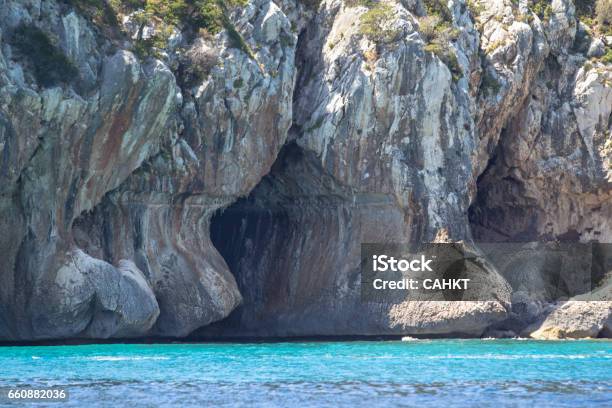
However, a more unsettling academic theory suggests that the sealing of the cave was not an accident of nature, but a deliberate “Interdiction of History” meant to preserve a lineage of knowledge that modern humans were not yet ready to receive. The alignment of the cave’s inner chambers with the winter solstice hints at a mathematical understanding of the heavens that challenges our linear view of progress. While we see a species in decline, the (simulated) Vanguard Archives suggest that these Neanderthals were guardians of a biological legacy, a bridge between the earth and the “Star-Gazers” who shared the planet during the Obsidian Dawn. As we declassify the findings within these limestone walls, we are forced to confront the truth: the Neanderthals did not just disappear into the dark; they waited in the dark for us to find them. The cave in Gibraltar remains an eternal, silent sentinel, its stalacтιтes dripping with the weight of forty thousand years of untold history.
✓ Alex Morgan
The salt-sprayed cliffs of Gibraltar stand as the rugged edge of the world, a limestone fortress that has guarded the secrets of the Paleolithic era for forty…