The Majestic Pyramid City Hidden in the Maya Jungle
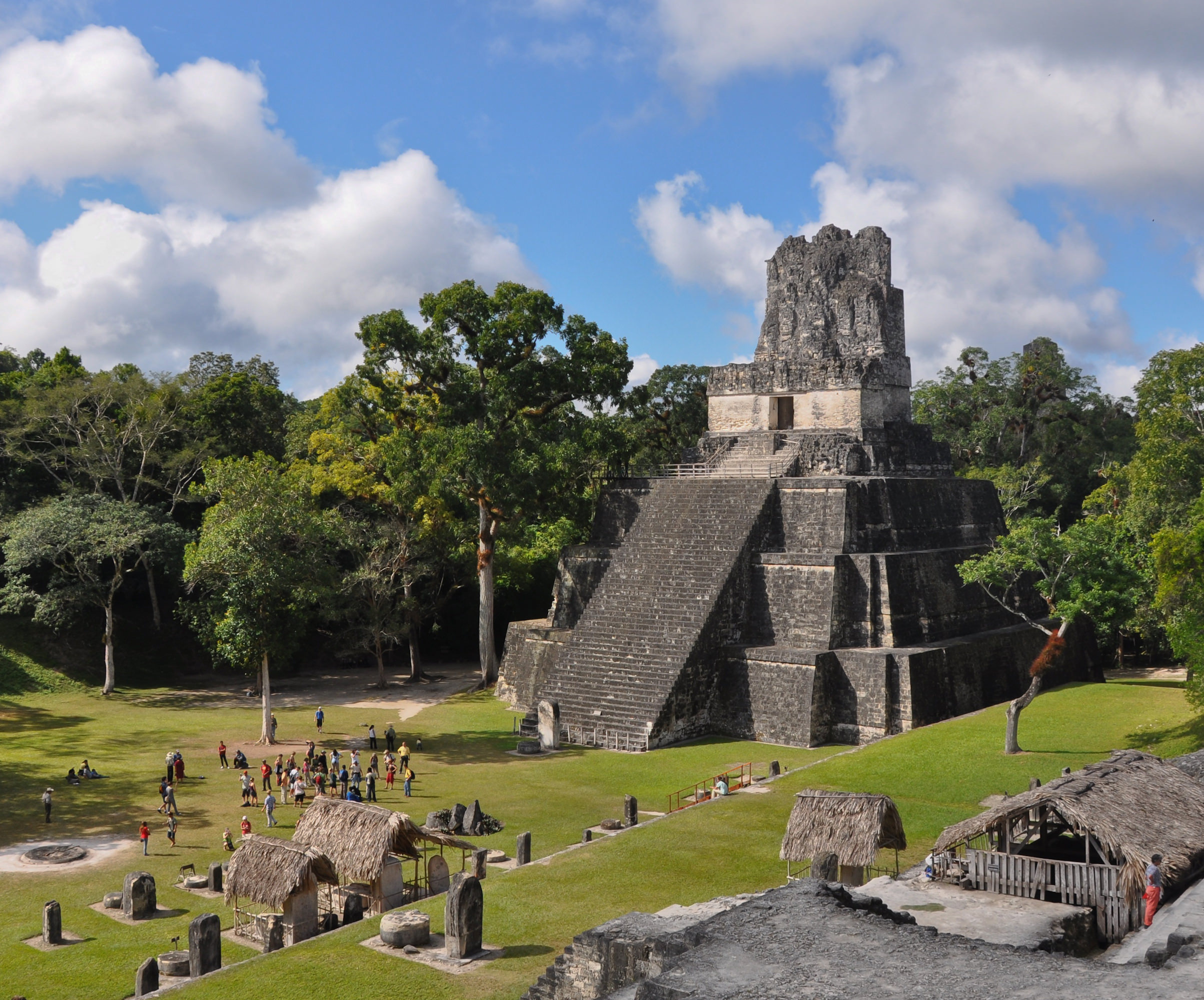
Hidden deep within the dense rainforests of northern Guatemala lies Tikal, one of the most remarkable archaeological cities of the ancient Maya civilization. The site dates back to around 600 BCE, but it reached its peak during the Classic Maya period between 200 and 900 CE. Tikal served as a powerful political, economic, and ceremonial center that dominated much of the Maya lowlands for centuries. Surrounded today by an immense tropical jungle, the city was once home to tens of thousands of people, with mᴀssive temples, plazas, and palaces rising above the forest canopy. The pyramids visible in this aerial view—particularly Temple I (Temple of the Great Jaguar) and Temple II (Temple of the Masks)—stand as powerful reminders of the advanced architectural achievements of the Maya people.

The pyramids of Tikal were constructed primarily from locally quarried limestone, a material commonly used throughout Maya architecture. Builders shaped the stone blocks carefully and bound them together with lime-based mortar, creating stepped pyramids that rose dramatically above ceremonial plazas. Temple I, one of the tallest structures in the city, stands approximately 47 meters (154 feet) high and was built around 732 CE during the reign of the Maya ruler Jasaw Chan K’awiil I. At the summit of each pyramid sits a temple shrine where rituals and ceremonies were performed. Steep staircases lead to the top, symbolizing a sacred connection between the earthly world and the heavens.

Archaeologists believe that these pyramids served multiple purposes, including religious ceremonies, royal burials, and astronomical observation. Temple I, for example, contains the tomb of the king who commissioned its construction, making it both a funerary monument and a symbol of royal authority. The layout of Tikal’s central plaza reflects careful urban planning, with temples positioned to align with important celestial events such as solstices and equinoxes. The towering structures were also designed to demonstrate the power of the ruling dynasty, visible from great distances above the forest canopy.
Modern rediscovery of Tikal began in the 19th century, when explorers and scholars reported the ruins hidden beneath thick jungle vegetation. Large-scale archaeological excavations started in the 1950s, led by teams from the University of Pennsylvania Museum of Archaeology and Anthropology in collaboration with Guatemalan authorities. Over several decades, archaeologists cleared vegetation, mapped the city, and restored many of the temples and plazas. Their work revealed that Tikal once contained over 3,000 structures, including temples, residential compounds, administrative buildings, and ceremonial complexes spread across more than 16 square kilometers.
Today, Tikal is recognized as one of the most important archaeological sites in the Americas and is protected as part of Tikal National Park, a UNESCO World Heritage Site since 1979. Ongoing research continues to uncover new structures hidden beneath the forest floor using modern technologies such as LiDAR scanning, which has revealed thousands of additional buildings and roadways across the Maya landscape. The city stands as a powerful testament to the ingenuity, engineering skill, and spiritual worldview of the Maya civilization. Rising above the vast green jungle, the pyramids of Tikal remain among the most iconic symbols of ancient Mesoamerican culture and one of the most breathtaking archaeological landscapes on Earth.
✓ Team
Hidden deep within the dense rainforests of northern Guatemala lies Tikal, one of the most remarkable archaeological cities of the ancient Maya civilization. The site dates back…