The Mirror-Like Void: An Archaeological Analysis of the Barabar Caves
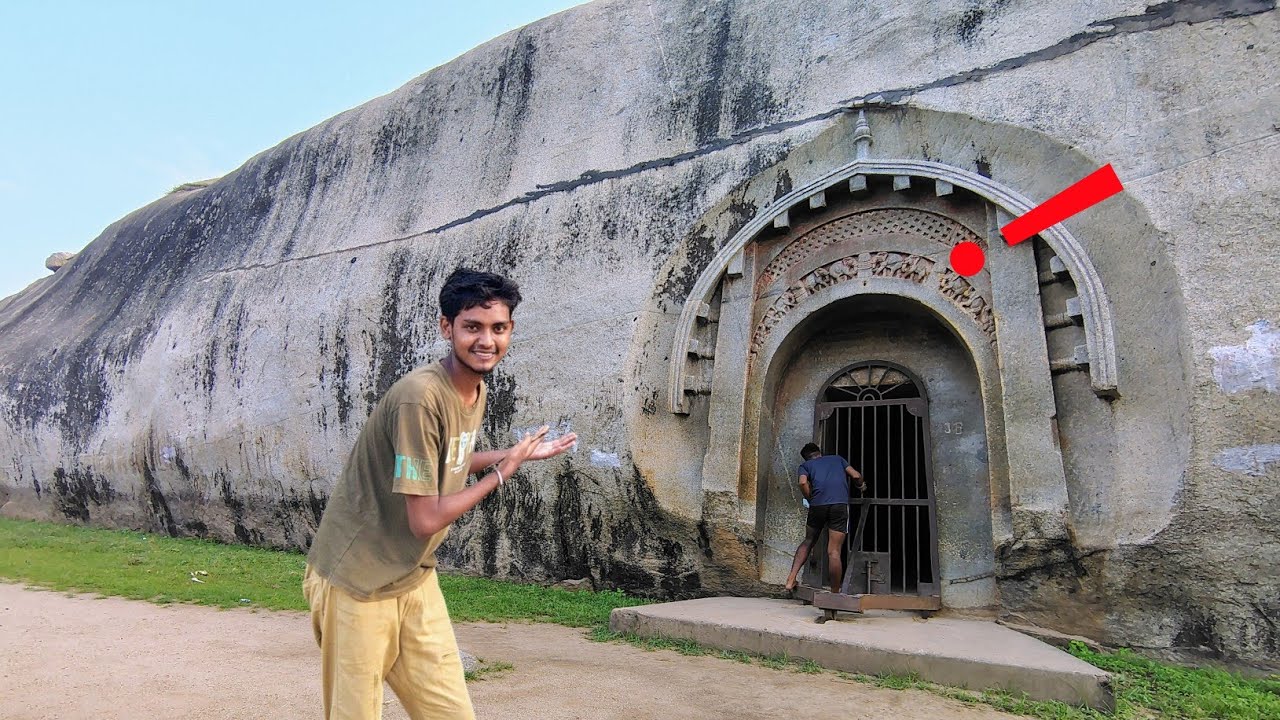
The image displays the entrance and interior of the Lomas Rishi Cave, one of the seven “Barabar Caves” located in the Jehanabad district of Bihar, India. These monolithic structures represent the oldest surviving rock-cut caves in India, dating back to the Mauryan Empire (c. 322–185 BCE). Specifically, inscriptions found in neighboring caves confirm they were commissioned by Emperor Ashoka and his grandson Dasharatha for the Ajivika sect, an ascetic group that practiced extreme fatalism. Archaeologically, these caves are a critical “missing link” in architectural history; they translate the perishable timber and thatch designs of the era into the permanence of stone, serving as the prototype for the grand Buddhist Chaitya halls seen later at Ajanta and Ellora.
I. Geological Context and Site Discovery
The caves are carved into a mᴀssive, weathered outcrop of Precambrian granite known as the Barabar and Nagarjuni hills. The site was first brought to the attention of the Western academic world in the late 18th century and was later systematically surveyed by Sir Alexander Cunningham, the founder of the Archaeological Survey of India (ASI), in 1861. Cunningham’s work was pivotal in identifying the Maurya-era inscriptions, which are etched with calligraphic precision into the granite. The discovery was revolutionary because it provided tangible, scientific evidence of a pluralistic society where a Buddhist emperor (Ashoka) provided high-status, expensive retreats for a rival religious sect, the Ajivikas, illustrating a sophisticated level of state-sponsored religious tolerance.
II. Materiality and the “Mauryan Polish”
The defining technical characteristic of these caves is the “Mauryan Polish”—a mirror-like finish applied to the interior granite walls. As seen in the bottom half of the image, the surface is so smooth and reflective that it appears modern, yet it was achieved over 2,300 years ago. The “crafting” process involved an incredibly labor-intensive method of pecking the hard granite with fine chisels, followed by grinding with abrasives and polishing with specialized pastes. The entrance of the Lomas Rishi cave (top image) is equally remarkable; it features a finely carved ogee arch that mimics wooden carpentry, complete with a row of elephants paying homage to stupas along the curved frieze. This “wood-in-stone” detailing reveals that Mauryan artisans were masters at translating organic architectural forms into lithic reality.

III. Acoustic Engineering and Ascetic Utility
While the caves served as shelters (vihara) during the monsoon season, their primary “utility” was likely acoustic and meditative. The vaulted, semi-circular ceilings and the glᴀss-like interior surfaces create a unique resonant environment. Sounds made inside the chamber—such as chanting or deep breathing—sustain and reverberate for several seconds, a phenomenon known as long-duration reverberation. For the Ajivika ascetics, who sought to detach themselves from the material world, this acoustic “void” acted as a sensory deprivation chamber. The smooth walls reflected not just light, but sound, turning the cave into a physical metaphor for the infinite, fatalistic cosmos that defined their belief system.
IV. Insтιтutional Documentation and Cultural Shifts
The preservation of the Barabar Caves has been the responsibility of the Archaeological Survey of India since the colonial era. Beyond Cunningham, scholars like James Fergusson in the 19th century and later A.L. Basham provided deep contextualization of the site’s importance to the Ajivika faith. The Lomas Rishi cave remains unique because it is technically unfinished; the interior chamber was never fully polished, providing a “frozen frame” of ancient construction techniques. Archaeologists can see the transition from the rough-hewn stone to the final glᴀssy surface, allowing for a step-by-step reconstruction of the Mauryan artisan’s workflow. This site remains a primary source for understanding the early development of Indian rock-cut architecture and its influence on the spread of monasticism across Asia.

V. Legacy of the Monolithic Prototype
The Barabar Caves represent a “quantum leap” in ancient engineering. The transition from building with stone to building into stone allowed the Mauryan state to create monuments that were essentially immune to fire and decay. The influence of the Barabar style spread as far as Southeast Asia, where the concept of the “cave temple” became a staple of religious life. Today, these caves stand as a testament to the scientific and artistic prowess of the Mauryan period—a time when the human will was capable of transforming the hardest granite on Earth into a smooth, silent sanctuary. They are not merely holes in a rock; they are precise geometric voids carved to house the spirit of a forgotten philosophy.
✓ Team
The image displays the entrance and interior of the Lomas Rishi Cave, one of the seven “Barabar Caves” located in the Jehanabad district of Bihar, India. These…