The Monumental Stone Pᴀssage: Archaeological Insights into a Mycenaean Tholos Tomb
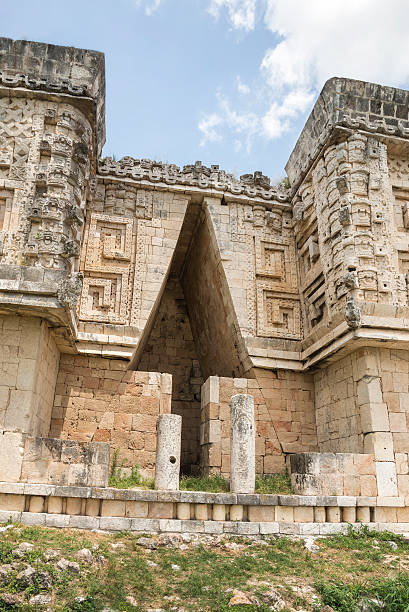
The structure depicted in the image represents a monumental stone-built pᴀssageway leading into what is widely recognized by archaeologists as a Mycenaean tholos tomb, a distinctive type of royal or elite burial architecture from Late Bronze Age Greece. Such tombs are most famously ᴀssociated with the citadel of Mycenae, dated to approximately 1500–1300 BCE, during the height of Mycenaean civilization. The most renowned example is the so-called Treasury of Atreus, discovered in the mid-19th century. The image shows the characteristic dromos (processional pᴀssage) carved into bedrock and lined with finely dressed limestone blocks, leading toward the concealed burial chamber once sealed by mᴀssive stone doors.

The site was originally discovered and systematically studied in 1876 by the German archaeologist Heinrich Schliemann, whose excavations at Mycenae transformed the understanding of prehistoric Greece. Subsequent research by Greek and international archaeological authorities refined the dating and interpretation of these tombs, confirming them as elite funerary monuments rather than treasuries. The location of such tombs outside the main citadel walls reflects ritual beliefs surrounding death, ancestry, and the separation between the living and the ᴅᴇᴀᴅ. Their placement was carefully chosen, often aligned with natural slopes to support the immense weight of stone vaults.

The materials used in constructing these tombs demonstrate remarkable engineering skill. Builders employed mᴀssive limestone ashlar blocks, cut with precision and stacked without mortar. The interior chamber, though not visible in the image, typically features a corbelled dome, created by gradually overlapping stone rings until they converge at the apex. This technique allowed Mycenaean architects to span wide spaces without arches, a technological achievement far ahead of its time. The geometric relief patterns carved into the stone walls—visible in the image—reflect both structural logic and symbolic design, emphasizing order, permanence, and authority.

Functionally, the tomb served as a collective burial place for powerful rulers or dynastic families. Grave goods once placed inside—gold masks, weapons, ceremonial vessels, and jewelry—suggest that these structures played a central role in expressing political power and divine legitimacy. Beyond their funerary use, tholos tombs functioned as monuments of memory, reinforcing social hierarchy and ancestral continuity within Mycenaean society. The scale and labor investment required for their construction indicate centralized authority and a highly organized workforce.
Today, such structures stand as enduring symbols of early European monumental architecture. Though many tombs were looted in antiquity, their architectural integrity remains largely intact, offering invaluable insight into Bronze Age engineering, belief systems, and social organization. Ongoing conservation and excavation efforts, led by the Greek Ministry of Culture and academic insтιтutions, continue to shed light on these enigmatic monuments. They remind modern observers that long before classical Greece, complex societies were already shaping stone landscapes to honor power, death, and memory.
✓ Team
The structure depicted in the image represents a monumental stone-built pᴀssageway leading into what is widely recognized by archaeologists as a Mycenaean tholos tomb, a distinctive type…