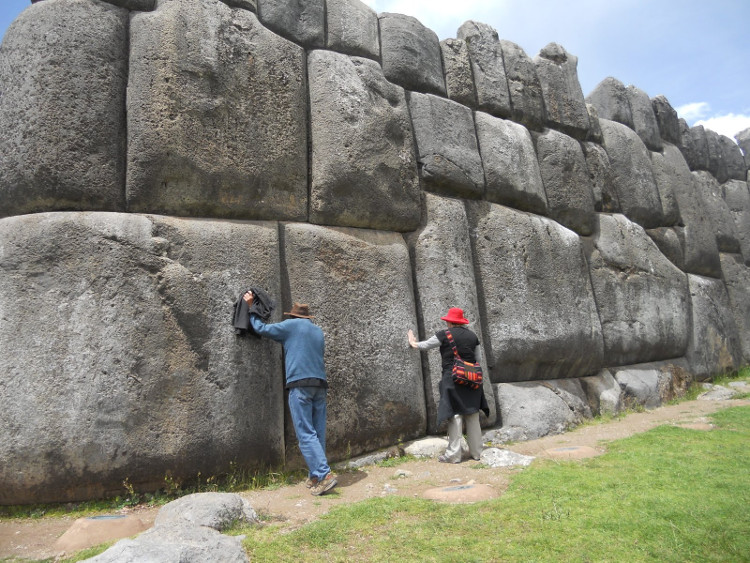
The ancient Inca road system is one of the world’s most advanced engineering feats. This incredibly sophisticated “highway” system transformed the Inca empire into one of the most powerful ancient civilizations in the Western Hemisphere.
The intricate and complex road network spans over 32,000 km, traversing Ecuador, Peru, Bolivia, Argentina, and Chile. But perhaps one of the most notorious aspects of this ancient road system is its traversal of the Andes Mountains, towering, breathtaking mountain ranges. This meant the ancient Incas had to dig tunnels through the mountains, even carving narrow roads along sheer cliffs.
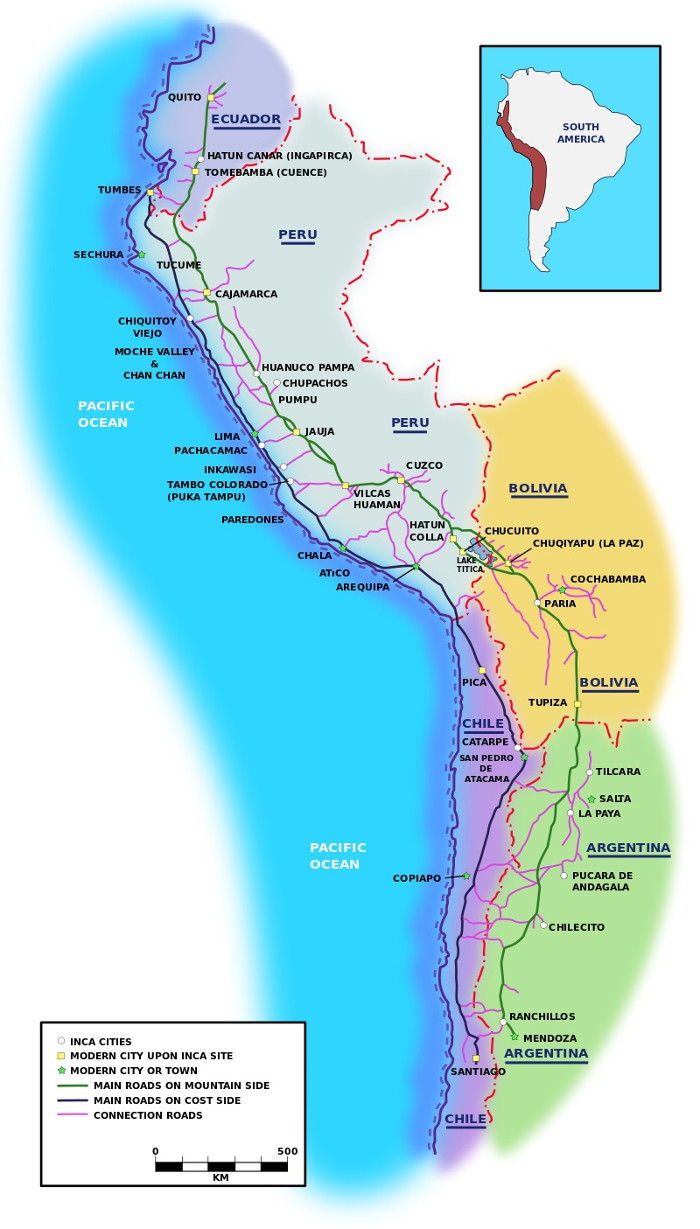
The road system of the ancient Inca Empire.
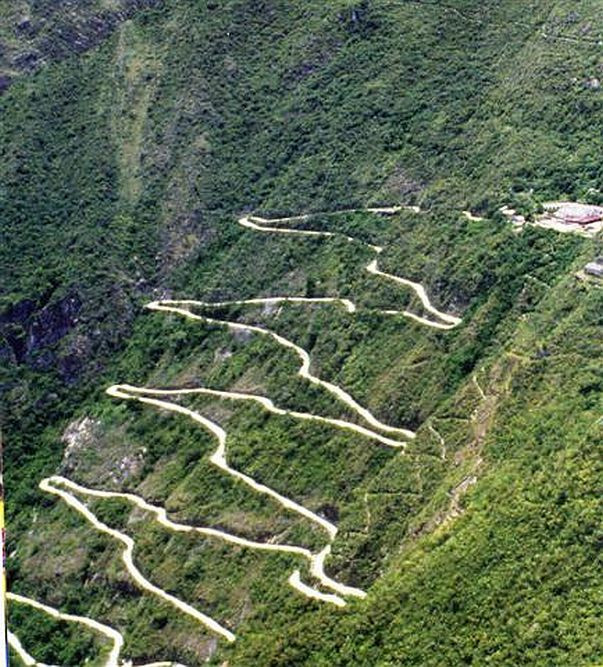
A system of treacherous roads.
And even more astonishing, despite not needing wheels, draft animals, metal tools, or even a written language for communication, the ancient Incas were able to build the oldest, longest (40,000 km), and most advanced road network on the Earth’s surface, allowing this ancient empire to easily traverse over 3 million square kilometers of its territory.
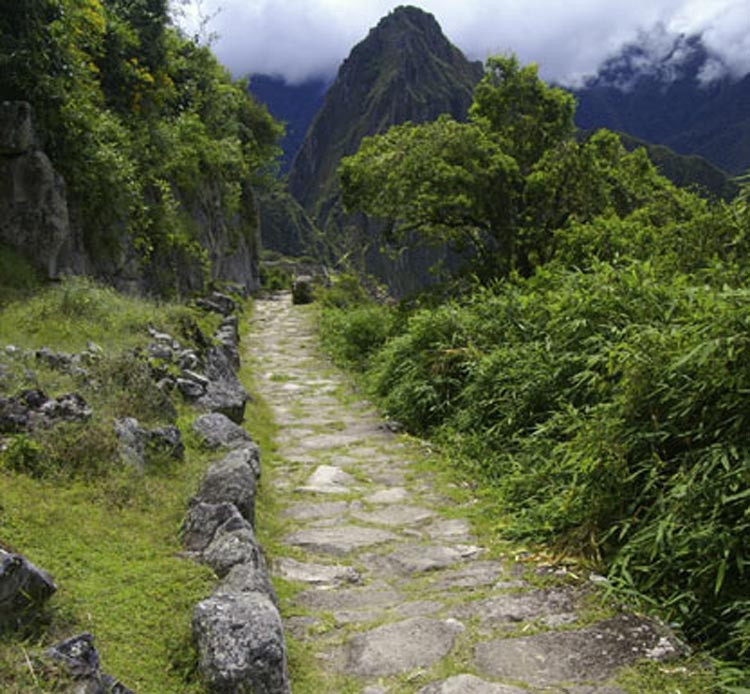
The aesthetic appeal of some sections of the Inca Roads.
The Inca Roads were officially recognized as a UNESCO World Heritage Site in 2014.
As UNESCO once stated: “Built by the Incas over centuries, and partly based on pre-Inca infrastructure, this extraordinary road system traverses one of the most rugged terrains on the planet, connecting the snow-capped peaks of the Andes – at alтιтudes exceeding 6000m – to the coast, crossing H๏τ tropical rainforests, fertile valleys and arid deserts. This road system was maximized in the 15th century, when it expanded across the length and width of the Andes.”
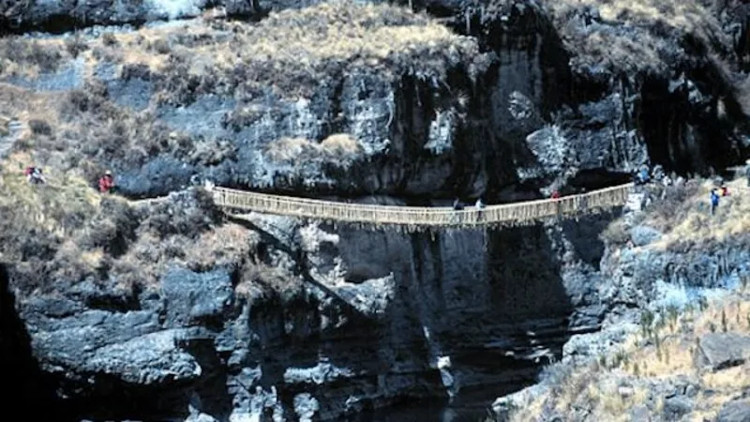
This is the last remaining suspension bridge in the Inca road system.
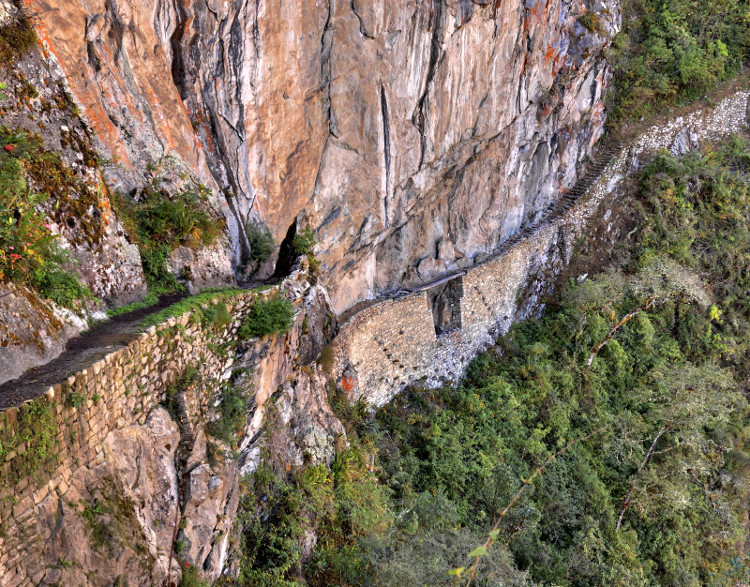
The Inca’s narrow mountain roads were carved along sheer cliffs.
This intricate route became a key trade artery for the Incas. They traded pumpkins, sweet potatoes, other fruits like pineapples and papayas, feathers, animal skins, pots, ropes, llamas, fabrics, and gold and silver.
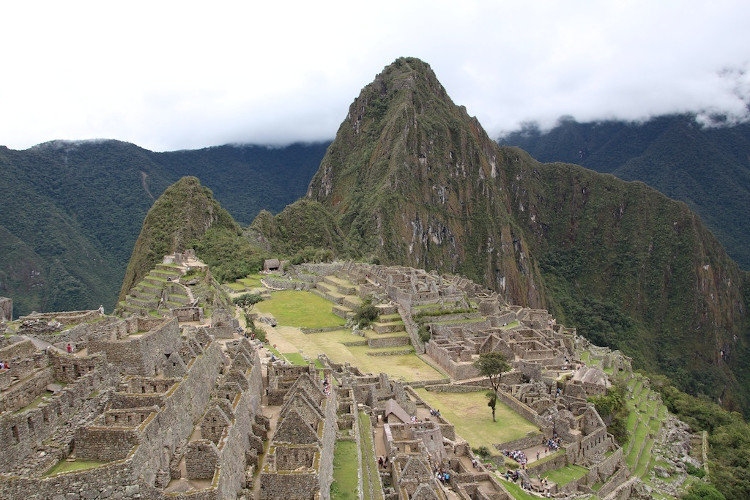
Historians believe the Inca Trail was used to supply necessities to the Andean city of Machu Picchu.
Ramiro Matos, a native Quechua whose childhood was intertwined with the Inca Trail, says: “This is not just a stone road, it’s a cosmic road, and modern people consider it a road of life. Kallawaya (traveling doctors from Bolivia) still use this road to walk and restore their energy. They say the road has a soul.”
The Inca road system – connecting an empire… and all the key megalithic structures in the region.
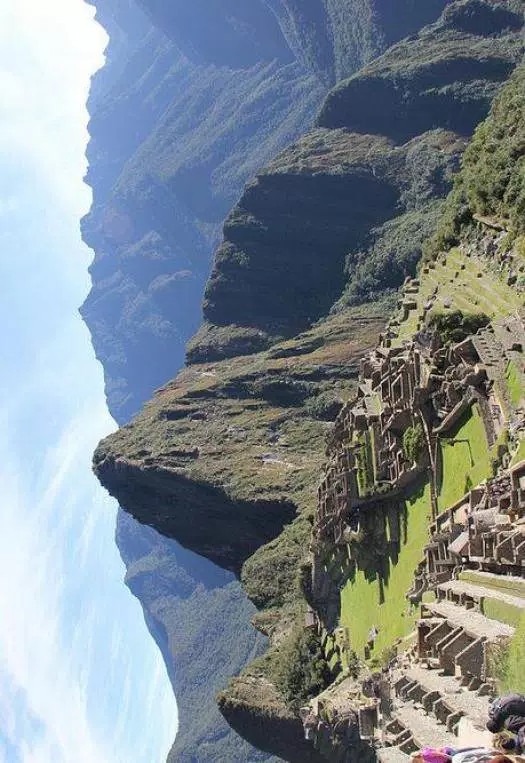
If you rotate the image of the Machu Picchu site in Peru horizontally, you’ll get a clear face, known as the “Face of the Inca.” Natural or Man-made?
The more you learn about the Incas, the more surprised and fascinated you’ll become. The ancient Inca road system was incredibly mᴀssive and magnificent, stretching from northwest to southeast. Remarkably, along this route, we find almost all the major megalithic structures, including Tiahuanaco, Puma Punku, Cuzco, Machu Picchu, Ollantaytambo, and Saksaywaman.
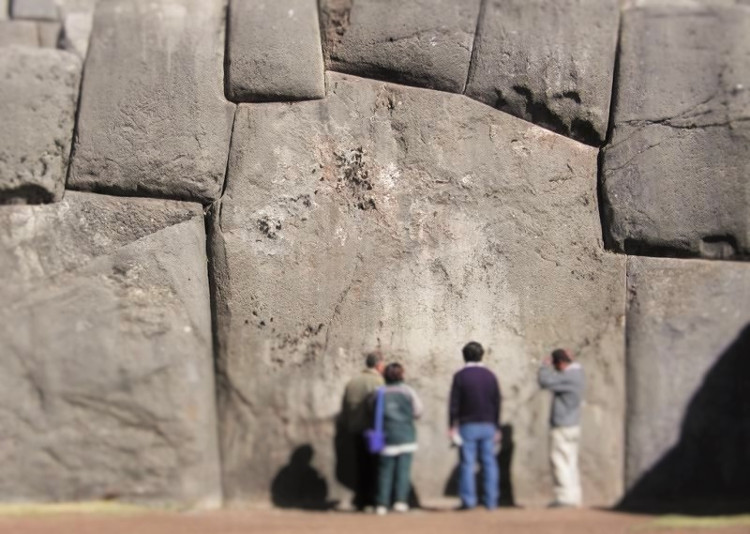
Megalithic structures such as Tiahuanaco, Puma Punku, Cuzco, Machu Picchu, Ollantaytambo, and Saksaywaman are a treasure trove of compelling evidence demonstrating the advanced and complex engineering skills of ancient civilizations. Even more interesting, and as many experts have suggested, these megalithic structures predate the Inca civilization by thousands of years, suggesting that parts of the Inca road system may also be thousands of years older.