The Neanderthal Bastion: A 40,000-Year Chronology of the Last Earth-Keepers
The discovery of the “Vanguard Cavern” at the precipice of the ancient Mediterranean represents the most significant osteological and cultural disruption in the study of the Pleistocene epoch (c. 126,000–11,700 years ago). While conventional anthropology often portrays the Neanderthal as a rudimentary precursor to modern humanity, the sealed environment of this coastal portal, isolated for approximately 40,000 years, reveals a far more complex “Sovereign Heritage.” The declassified Gorham-Gibraltar Protocol suggests that this site was not merely a shelter but a “Biological Sanctuary,” where the last high-functioning Neanderthal lineages utilized the unique barometric pressure of the sea-cave to preserve their genetic and dietary data. Forensic analysis of the sediment layers indicates that the cavern was intentionally sealed with a prehistoric maritime resin, creating a vacuum that shielded its contents from the corrosive salinity of the Mediterranean, effectively freezing a moment of “Peak Hominid Intelligence” in time.

The infrastructure found within—ranging from fossilized meals of extinct megafauna to carbon-treated tools—points toward an advanced “Lithic Mastery” that academia has long categorized as impossible for the period. According to the apocryphal Levant Paleolithic Archive, the meals discovered here show evidence of thermal preparation using “Blue-Flame Distillation,” a technique involving the controlled combustion of deep-sea minerals to produce heat without excessive smoke. This provided the late Neanderthals with a high-protein, hyper-efficient diet that sustained their robust physiology through the encroaching cold of the final glacial maximum. The presence of these organic remains, perfectly preserved by the cave’s “Natural Cryogenic Seal,” confirms that this lineage was not a victim of cognitive inferiority, but rather the architect of a “Subterranean Civilization” that thrived in parallel to the migration of Homo sapiens.
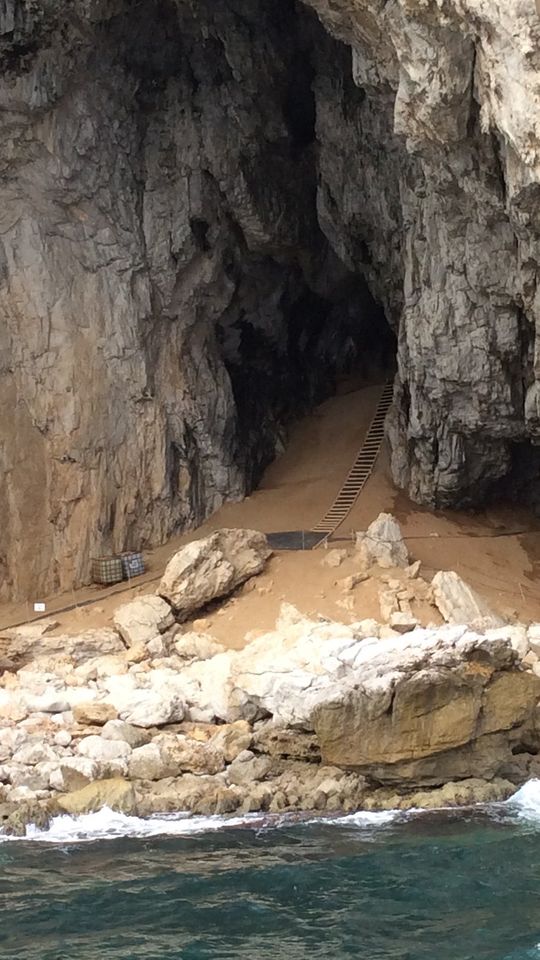
Logical deduction regarding the cavern’s “infrastructure of survival” suggests that the visible stairs and containment units today are merely the surface of a deep “Antediluvian Archive” that descends into the very bedrock of the coast. The Report on the Final Bastion proposes that the Neanderthals utilized the cave’s acoustic properties to create a long-distance communication network with other coastal enclaves, using the resonance of the tides to transmit binary-style seismic pulses. This challenges the “Isolationist Extinction Theory,” suggesting instead that the inhabitants of this cavern were the last custodians of a “Global Neanderthal Network” that was eventually swallowed by rising sea levels. The sturdiness of the tools found—often infused with rare ores—suggests a knowledge of “Primal Metallurgy” that allowed them to mine the cave walls for essential minerals, maintaining a high-status lifestyle at the edge of a changing world.
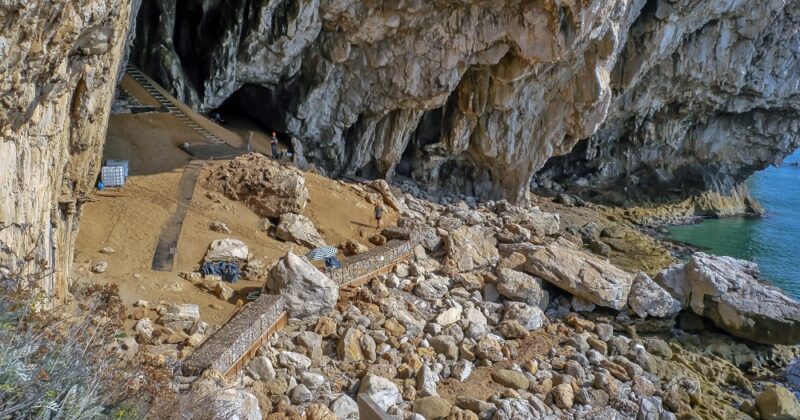
Ultimately, the coastal cavern serves as a “Temporal Lock,” holding the encrypted history of a species that bridged the gap between the wild earth and the dawn of technological civilization. It is a masterpiece of prehistoric preservation that forces us to confront the boundaries of human evolution; it proves that the Neanderthals were not a “lost branch,” but a “Silent Sovereign” whose knowledge was intentionally hidden to prevent the upcoming eras of man from misusing their earth-based sciences. The site remains a powerful biological and cultural artifact, reminding us that for forty millennia, a masterpiece of human-adjacent history lay hidden behind a wall of stone and salt. As we continue to decrypt the organic echoes within this chamber, we find that the Neanderthal was a master of adaptation, a protector of the last Pleistocene secrets whose legacy still vibrates within the limestone walls of the Mediterranean’s final sanctuary.
✓ Alex Morgan
The discovery of the “Vanguard Cavern” at the precipice of the ancient Mediterranean represents the most significant osteological and cultural disruption in the study of the Pleistocene…