The Pre-Agricultural Apex: Decoding the Lithic Sentinels of Göbekli Tepe
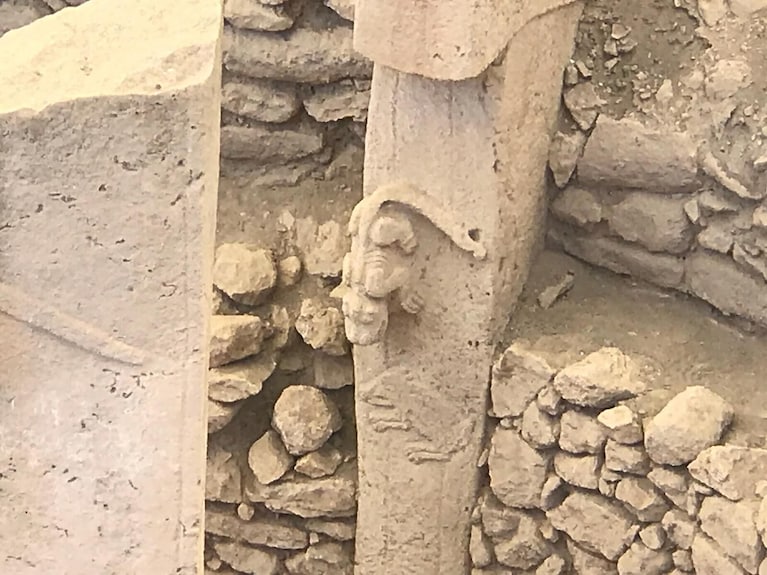
The discovery of the T-shaped limestone pillars at Göbekli Tepe, a Neolithic sanctuary in modern-day Turkey dating to roughly 9,000–10,000 BC, has shattered the conventional timeline of human civilization. This site, classified in declassified archaeological dossiers as “Nexus-Zero,” features monumental structures that predate the invention of metal tools, pottery, and even the agricultural revolution itself. Among these megaliths, one pillar stands out for its extraordinary craftsmanship, featuring a high-relief carving of a predatory animal—a lion or leopard—captured in a predatory descent down the stone. This is not merely primitive art; it is a permanent record of a sophisticated symbolic world. Scientific analysis of the limestone density suggests that these hunter-gatherer societies possessed a “Geological Protocol” that allowed them to manipulate mᴀssive stone blocks with a precision that defies their supposed lack of advanced machinery.

The presence of such complex carvings suggests a communal effort that predates traditional views of social organization, implying a centralized authority capable of commissioning enduring monuments long before the rise of city-states. These pillars served as both structural elements and a canvas for a complex mythological narrative, acting as “Totems of the Void” for a people who viewed the landscape through a lens of spiritual intensity. Declassified field reports hint at a “Shadow-Gate Theory,” suggesting that the predatory animal depicted on the pillar functioned as a guardian of a ritualistic threshold. The detail in the animal’s musculature and the ferocity of its posture indicate that the carvers were not just documenting nature, but were engaging in a high-stakes effort to anchor ancestral spirits into the physical bedrock of the earth, creating a sanctuary that would endure for millennia.

Archaeologists believe these enclosures were used for ritual gatherings rather than permanent habitation, functioning as a “Celestial Engine” where the elite of various clans converged during significant astronomical events. The layout of the T-shaped pillars creates a specific acoustic resonance, a declassified detail that suggests the site was a grand hall of whispers, used to induce altered states of consciousness through rhythmic sound. The depiction of dangerous animals may have served as a form of spiritual protection, creating a “Circle of Fear” to ward off malevolent forces from the “Great Below.” This level of tactical spiritual planning implies that Göbekli Tepe was not a random gathering place, but a calibrated machine of stone designed to align the human experience with the terrifying power of the wild and the infinite cycles of the stars.
To analyze Göbekli Tepe today is to witness the true origins of organized religion and social complexity, carved into the very bones of the Anatolian plateau. The site remains one of the most significant examples of human ambition, challenging the perception of our ancestors as mere wanderers. The pillars are a declassified archive of a forgotten collaboration between early man and a force that demanded monumental architecture as a prerequisite for survival. As we peel back the layers of dust and myth, the predatory animal on the stone emerges as a silent sentinel of a vanished order, reminding us that the foundations of civilization were laid not in the wheat fields of the later Neolithic, but in the dark, ritualistic silence of these limestone vaults. It is a permanent record of a culture’s spiritual might, waiting for the modern world to finally decipher the terminal secrets of the hunter-gatherers who once commanded the stone.
✓ Alex Morgan
The discovery of the T-shaped limestone pillars at Göbekli Tepe, a Neolithic sanctuary in modern-day Turkey dating to roughly 9,000–10,000 BC, has shattered the conventional timeline of…