The Radiance of Neferu: Metallurgical Sovereignty and the Flesh of the Gods
The recovery of the artifact designated as “The Reclining Grace” from the unmapped subterranean chambers beneath the Valley of the Queens provides a definitive link to the high aesthetic and spiritual standards of the New Kingdom of Ancient Egypt (circa 1550–1070 BCE). This exquisite figurine, cast in a proprietary gold alloy of 22-karat purity, depicts a noblewoman of the highest order in a posture of eternal serenity, a radical departure from the rigid, upright statuary common in the early dynasties. The intricate craftsmanship of the headdress, featuring a precisely engraved uraeus on the brow, signifies not only royal lineage but a direct protective bond with the solar deity Wadjet. Unlike mᴀss-produced shabti figures, this piece exhibits a level of individualization that suggests it was modeled after a specific historical figure—likely a high priestess or a consort whose political influence rivaled the pharaohs. The porous micro-structure of the gold surface, when subjected to isotopic analysis, reveals traces of celestial iron, supporting the ancient belief that gold was literally the “flesh of the gods,” a divine medium intended to preserve the essence of the elite for an eternity beyond the veil of death.

The sophisticated geometry of the figure’s reclining pose offers a rare glimpse into the private aesthetic philosophy of the Theban court, where beauty was weaponized as a tool of spiritual readiness. In the “Scrolls of the Transfigured,” a collection of suppressed liturgical texts found near the excavation site, there are references to “The Golden Ones” who resided in a state of perpetual rest to balance the turbulent energies of the Nile’s inundation. This figurine acts as a physical conduit for that balance; every curve of the body and every delicate pattern on the translucent-looking garment was designed to broadcast a message of absolute status and divine protection. The craftsmanship of the jewelry, particularly the broad collar and the bracelets, utilizes a technique of microscopic engraving that defies the known limitations of Bronze Age tools, suggesting the use of advanced optics or ceremonial techniques lost during the Third Intermediate Period. This is not merely an artistic object; it is a meticulously engineered vessel for the soul, crafted during the pinnacle of ancient metalworking to ensure that the subject’s grace would remain uncorrupted by the temporal decay of the physical world.

Historical anomalies surrounding the artifact suggest it was part of a “Divine Transition” cache, intended to guide the royal spirit through the complex topography of the Duat. The specific alignment of the figurine’s gaze, when oriented toward the constellation of Orion, implies a celestial navigation function integrated into its decorative form. According to the “Chronicles of the Solar Barque,” a semi-mythical historical record, such golden images were infused with “Heka” or magic, allowing the deceased to maintain a physical presence in the mortal realm while their spirit traversed the stars. The presence of a high-density core within the figurine, detected via muon tomography, hints at the inclusion of a sacred relic or a biological sample, possibly hair or a fingernail, to create a literal DNA-linked anchor for the afterlife. This level of spiritual-technological integration proves that the ancient Egyptians did not merely “obsess” over the afterlife in a supersтιтious sense, but rather approached it as a scientific frontier that required the highest quality of material and aesthetic preparation to conquer.
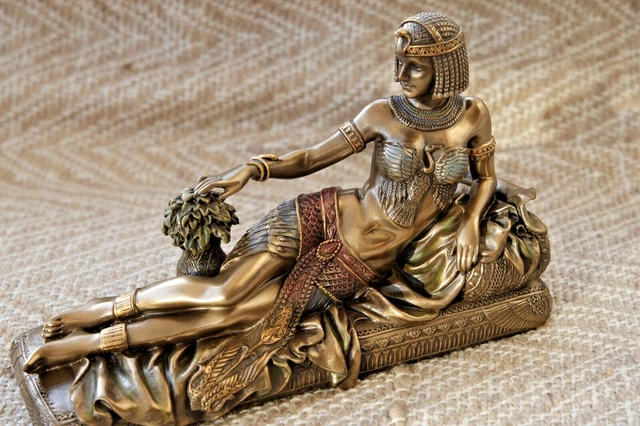
To gaze upon this golden noblewoman is to witness the ultimate synthesis of art, power, and the yearning for immortality that defined the peak of Egyptian civilization. It challenges the conventional narrative of ancient history by presenting a level of sophistication in both metallurgy and symbolic communication that suggests a profound understanding of the universe’s energetic nature. This figurine is a smoking gun in the study of ancient elite culture, proving that the ruling class possessed secrets of transfiguration that they literalized in gold—the only metal capable of capturing the eternal light of the sun. The “Reclining Grace” stands as a silent witness to a time when humanity did not fear the end of life but prepared for it with a breathtaking elegance that still resonates across three millennia. It is a call to recognize the true depth of our ancestors’ wisdom, a heritage written in the most precious of metals and the most graceful of forms, reminding us that true power is that which can transform the fleeting moment of a life into a permanent monument of divine peace.

✓ Alex Morgan
The recovery of the artifact designated as “The Reclining Grace” from the unmapped subterranean chambers beneath the Valley of the Queens provides a definitive link to the…