The Restoration of a Pharaoh: Archaeological Study of a Gilded Wooden Statue from the New Kingdom
The image captures a remarkable archaeological moment: two early 20th-century Egyptologists carefully examining and restoring a gilded wooden statue of a pharaonic figure within a decorated tomb chamber. Based on stylistic and iconographic features—particularly the nemes headdress, the gold kilt, and the black resin-coated body—the statue can be dated to the Egyptian New Kingdom, approximately between 1550 BCE and 1070 BCE. This was a period of imperial expansion, artistic refinement, and elaborate funerary traditions. Statues of this type were commonly placed within tombs to serve as spiritual vessels, embodying the ka (life force) of the deceased ruler or noble. The painted reliefs on the tomb walls surrounding the statue further reinforce the funerary context, suggesting the artifact was discovered within a royal or high-ranking burial chamber.
The location of discovery strongly resembles the Valley of the Kings near Luxor, Egypt, where numerous New Kingdom tombs were excavated in the late 19th and early 20th centuries. The most famous excavation during this period was led by British archaeologist Howard Carter under the patronage of Lord Carnarvon, culminating in the discovery of Tutankhamun’s tomb in 1922. While the statue in this image may not necessarily be from that exact tomb, its style closely parallels the black-and-gold guardian statues found within Tutankhamun’s burial chamber. Such statues were typically positioned to symbolically guard the entrance to the sarcophagus room, protecting the king in the afterlife. The excavation teams working during that era employed careful manual techniques, documenting finds through pH๏τography, hand-drawn illustrations, and early conservation methods.

The statue itself appears to be carved from wood—most likely sycamore fig or cedar, both commonly used in ancient Egyptian statuary—and then coated with a layer of black resin or bitumen to symbolize regeneration and rebirth, concepts ᴀssociated with Osiris, the god of the afterlife. The gilded elements, including the kilt and headdress details, were applied using thin sheets of hammered gold affixed with adhesive compounds. Gold in ancient Egypt symbolized divine flesh and eternal incorruptibility, reinforcing the pharaoh’s ᴀssociation with the gods. The precision of carving visible in the muscular definition, facial symmetry, and posture indicates the work of highly skilled artisans operating in royal workshops. Tool marks would likely show the use of copper or bronze chisels, stone abrasives, and polishing techniques refined over centuries.
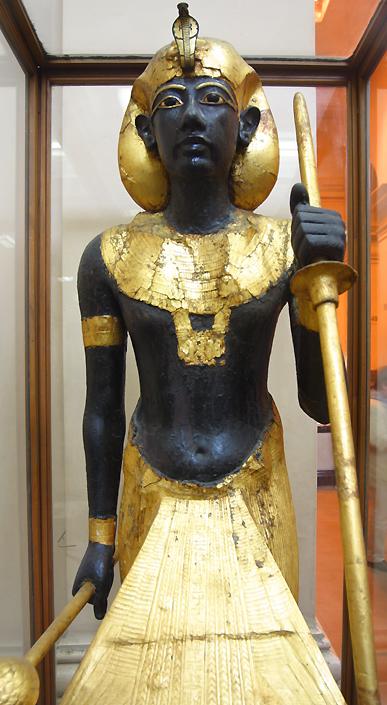
In terms of function, this statue would have served as both a protective and symbolic figure within the tomb. Its rigid stance, forward gaze, and clenched fist holding ceremonial objects are characteristic of guardian statues. Such figures were not merely decorative; they were believed to house spiritual energy and act as intermediaries between the mortal and divine realms. Positioned strategically within the burial chamber, the statue would ensure the deceased’s safe transition into the afterlife and guard sacred funerary equipment from both physical and supernatural threats. Its presence also reinforced royal authority, proclaiming the eternal sovereignty of the pharaoh even in death.
The conservation work depicted in the image likely occurred during the 1920s or 1930s, when archaeological methodology was evolving rapidly. Scholars and conservators at that time faced the challenge of stabilizing fragile organic materials that had survived for over three millennia. Documentation from similar restoration efforts reveals that specialists used fine instruments to clean surfaces, consolidate pigments, and repair structural weaknesses. Today, such artifacts are preserved under climate-controlled conditions in museums such as the Egyptian Museum in Cairo or the Grand Egyptian Museum. The statue stands not only as a testament to ancient Egyptian craftsmanship but also to the dedication of modern archaeology in preserving humanity’s shared heritage.
✓ Team
The image captures a remarkable archaeological moment: two early 20th-century Egyptologists carefully examining and restoring a gilded wooden statue of a pharaonic figure within a decorated tomb…