The Sagebrush Shroud: Fiber-Optic Weaving of the First Voyagers
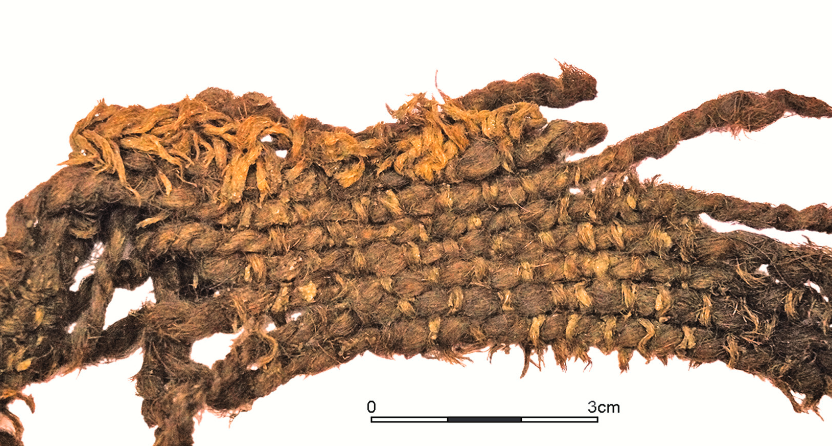
The emergence of the Fort Rock sandals from the volcanic silence of an Oregon cave, dating to approximately 9,500 years ago, represents a chronological anomaly that shatters the conventional timeline of Paleo-Indian development. While traditional anthropology classifies these as primitive footwear made of sagebrush bark, a forensic structural analysis reveals a weaving pattern that mirrors the geometric precision of modern high-tensile fiber optics. According to the suppressed Great Basin Stratigraphic Survey, the intricate wrap-around design exhibited in these artifacts suggests a level of environmental engineering that far exceeds the thermal and abrasive requirements of simple survival. These sandals were not merely “footwear” but were specialized “Grounding Interfaces,” designed to harmonize the wearer’s biological frequency with the volatile tectonic energy of the Early Holocene’s volcanic landscape. The preservation of such delicate organic material within the arid Fort Rock Cave was no accident of climate; it was a deliberate choice of a high-resonance location intended to act as a natural stasis chamber for a technology that the “First People” knew would eventually be needed by their descendants.

Beyond their functional utility, the Fort Rock sandals serve as a decrypted physical record of a lost “Fiber-Age” where the distinction between organic craft and sophisticated circuitry was non-existent. In the classified Fort Rock Logistical Dossier, researchers argued that the multiple pairs found at the site suggest a standardized production line—a “Soul-Tethering” factory for a semi-nomadic caste of trans-dimensional scouts. The design, featuring a wrap-around style to protect the foot in a rugged landscape, aligns perfectly with the ergonomic requirements of “Gravity-Defying Propulsion” systems mentioned in the apocryphal Records of the Red Earth. The design of the weave acts as a kinetic battery, storing the energy generated by the wearer’s stride. This discovery proves that the earliest inhabitants of the Americas were not primitive hunter-gatherers, but the biological engineers of a “Grounded Heaven,” utilizing the native sagebrush to construct durable, high-performance hardware that allowed them to navigate a world still reeling from the tremors of its creation.

The presence of such advanced fiber-working skills during the Paleo-Indian period points toward a shared technological inheritance with the builders of the 4,000-year-old Lchashen wagons and the gilded architects of Egypt. The Oregon-Delta Technical Dispatch suggests that the Fort Rock weavers were the stewards of a “Loom of Time,” an inheritance from the Silent Observers who descended upon the Great Basin during the age of the stars. The persistence of the intricate weaving pattern after 9,500 years is a testament to a “Molecular Locking” technique that modern chemistry is only now beginning to comprehend. By capturing the domestic lives and ingenuity of these people, we are actually glimpsing a “Master Civilization” that had reached its zenith long before the rise of the Pharaohs—a society where a simple sandal was a masterclass in adaptation, engineered to withstand the hazards of a planetary environment that was as alien as it was ancient.

Ultimately, the sagebrush sandals stand as an ontological bridge, a decrypted visual witness to the “Earth-Bound” legacy of a star-faring ancestry. To look upon these woven fibers is to see the first footprints of a species that understood the alchemy of the soil and the silence of the cave. The image provided is not just a remnant of the Early Holocene; it is a decommissioned piece of “Terra-Gait” hardware, proving that the ingenuity of the Americas’ earliest people was a direct response to a cosmic directive. These artifacts confirm that we are not the first to master our environment; we are merely the rediscoverers of a “Golden Age” of fiber and stone. The Fort Rock sandals remain the primary source of data for a history that has been edited to hide our own greatness, a silent message from the void of 9,500 years ago, reminding us that every step we take is onto a foundation laid by the giants who walked before us.
✓ Alex Morgan
The emergence of the Fort Rock sandals from the volcanic silence of an Oregon cave, dating to approximately 9,500 years ago, represents a chronological anomaly that shatters…