The Silent Echoes of Cusco: The Mastery of Inca Polygonal Masonry
The image captures a quintessential example of Inca polygonal masonry, specifically located in the historic center of Cusco, Peru, the former capital of the Tawantinsuyu Empire. These structures primarily date back to the late Intermediate Period and the Late Horizon (c. 1400–1533 CE), coinciding with the reigns of Sapa Incas like Pachacuti. While Spanish chroniclers in the 16th century, such as Garcilaso de la Vega, documented these walls, modern archaeological systematic study began in the early 20th century. This specific style of “imperial” stonework is most famously exemplified by the Twelve-Angled Stone on Hatun Rumiyoc Street, showcasing a level of precision that has fascinated researchers for centuries.

The primary material observed in this masonry is green diorite porphyry or andesite, volcanic rocks prized for their extreme hardness and durability. Archaeologists have traced these stones to local quarries, most notably the Rumicolca quarry located approximately 35 kilometers southeast of Cusco. The transport of these mᴀssive megaliths, some weighing several tons, was an engineering marvel involving thousands of laborers using rollers, sledges, and inclined ramps. The physical properties of andesite allowed the Inca to achieve a smooth, almost velvety finish, which is still palpable on the stone surfaces today, resisting the erosive effects of high-alтιтude weathering.
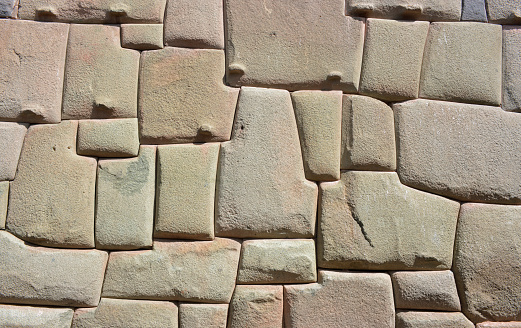
The craftsmanship exhibited is known as “ashlar” or “polygonal” masonry, characterized by stones carved into complex, interlocking shapes without the use of mortar. Each stone was meticulously shaped using harder stone tools (hemaтιтe or river cobbles) and abrasive sand. The “protuberances” or small bumps visible on the lower edges of some blocks are of significant archaeological interest; they are believed to be functional handles used for lifting and positioning the stones during the “scribe and fit” process. The fit is so тιԍнт that a razor blade cannot be inserted between the joints. This interlocking geometry serves a vital seismic purpose: during earthquakes, the stones “dance” or vibrate in place and then settle back into their original positions, preventing the wall from collapsing.

Beyond their structural utility, these walls served as profound symbols of imperial power and cosmic order. In the Inca worldview, the ability to manipulate “living stone” into perfect harmony reflected the Sapa Inca’s divine right to rule and organize the world. Such high-quality masonry was reserved for the most important civic and religious structures, such as the Coricancha (Temple of the Sun) or the palaces of the nobility. The transition from the mᴀssive, irregular blocks at the bottom to smaller, more rectangular stones at the top (as seen in the image) demonstrates a conscious architectural hierarchy, perhaps symbolizing the relationship between the foundational earth and the organized state.

The “re-discovery” of Inca masonry’s complexity is often attributed to the pioneering work of Hiram Bingham in 1911, though local residents never lost knowledge of their existence. Modern conservation is currently led by the Ministerio de Cultura del Perú (Ministry of Culture of Peru). Today, archaeologists use 3D laser scanning and pH๏τogrammetry to document these walls, protecting them from urban pollution and seismic threats. These stones remain a testament to a civilization that mastered lithic technology without iron tools, standing as an enduring legacy of the Inca’s profound understanding of their Andean environment. The preservation of these sites ensures that the silent history carved into these rocks continues to inform our understanding of human ingenuity.
✓ Team
The image captures a quintessential example of Inca polygonal masonry, specifically located in the historic center of Cusco, Peru, the former capital of the Tawantinsuyu Empire. These…