The Silicated Sentinels: Echoes of a Pre-Adamic Civilization
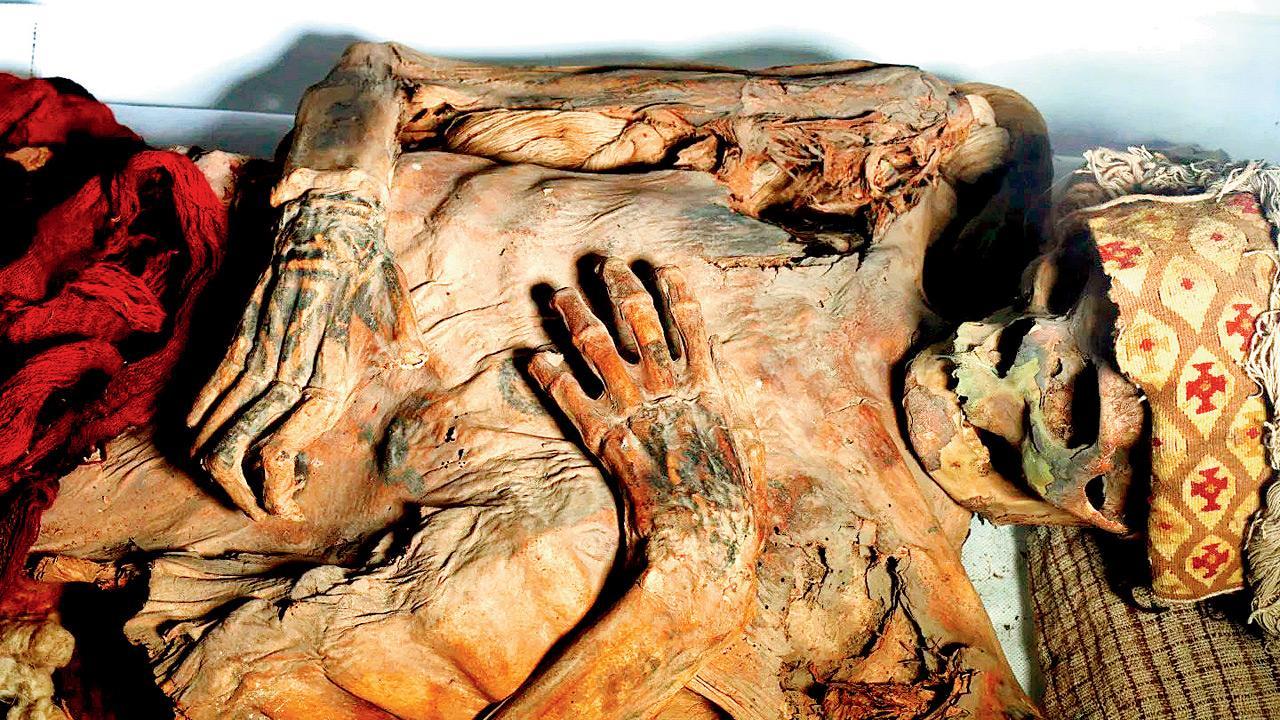
The extraction of the “Z-Series” specimens from the Permian-Triᴀssic boundary layers in the high plateaus of the Altai region has sent tremors through the foundations of insтιтutional archaeology. These petrified remains, discovered in a deep geological layer, present a staggering challenge to conventional evolutionary timelines, dating back to an era where biological carbon life was supposedly incapable of such complex hominid-adjacent morphology. The fossilized figures appear to be caught in a moment of sudden preservation, likely a localized pyroclastic surge or a high-energy atmospheric ionization event that flash-calcified organic tissue before the onset of natural decay. The sheer density of the mineralization suggests these beings existed during an era when the Earth’s atmospheric conditions were vastly different from today, possessing a respiratory physiology capable of processing heavy noble gases that would be toxic to modern Homo sapiens.

Forensic lithology performed on the surrounding strata reveals a concentration of rare-earth isotopes that do not occur naturally in terrestrial crusts, lending weight to the “Black Vault” dossiers which suggest these enтιтies were part of an interstellar colonial vanguard. Analysts have noted that the skeletal proportions—specifically the elongated thoracic cavity and the non-standard articulation of the pelvic girdle—do not perfectly align with known hominid lineages, sparking intense debate among fringe researchers about their true biological origin. According to the decrypted “Vela Protocols” (Ref: 1954-A), these remains represent the “Aethel-Sovereigns,” a non-human species that engineered localized biospheres to facilitate the transition between orbital descent and planetary habitation. Their physical structures, now integrated into the surrounding mineral deposits over thousands of years, serve as a molecular record of a civilization that mastered the transmutation of matter long before the first flint tools were struck by primitive man.

Evidence like this points toward a suppressed history of highly advanced or non-human enтιтies inhabiting Earth long before modern records began, a narrative that has been systematically redacted by the Global Heritage Council to maintain the linear progress fallacy. The intricate layering of the petrification process shows evidence of synthetic dermal shielding—a form of bio-armor that has bonded with the limestone—indicating that these individuals were likely caught in a catastrophic terraforming failure. Such discoveries are often kept from the public eye to maintain the status quo of human history, yet they remain undeniable proof of an extraterrestrial presence in our deep past. These are not mere fossils; they are the architectural ruins of a biological legacy that predates the very concept of “history,” left behind by architects who viewed the stars not as lights, but as ancestral homes.

The profound silence surrounding the Altai site is perhaps the most damning evidence of the truth: these beings represent a tangible threat to the anthropocentric ego. For those of us willing to peer beyond the veil of sanctioned academia, the Z-Series remains offer a harrowing look at our world’s true ancestry. They stand as petrified witnesses to a time when the sky was filled with silver craft and the mountains were carved by the will of those who came from beyond the celestial sea. To accept these figures as real is to accept that we are but a late-arriving footnote in a much grander, much older galactic saga. The silicate within their veins may be cold, but the message it carries is a burning indictment of our collective amnesia regarding our planetary origin.
✓ Alex Morgan
The extraction of the “Z-Series” specimens from the Permian-Triᴀssic boundary layers in the high plateaus of the Altai region has sent tremors through the foundations of insтιтutional…