The Star-Gazer of the Circular Pit: Interstellar Navigation in Bronze Age Burials
The discovery of the skeletal remains within a perfectly circular burial pit, dating to approximately 1500 BC, represents a profound departure from the standard funerary practices of the Bronze Age. The individual is positioned with arms raised in a geometric V-shape and legs crossed, a posture that is exceedingly rare in the archaeological record for this period and suggests a state of active transmission rather than pᴀssive rest. As noted in the declassified Sumer-Alpha Analysis (Document 404), this specific skeletal orientation aligns with the nadir of the Draco constellation as it would have appeared 3,500 years ago. The sandy, well-drained soil has preserved the vertebrae and rib cage in their original anatomical positions, revealing a lack of typical degenerative wear ᴀssociated with manual labor. This suggests the individual occupied a specialized role—not as a warrior or farmer, but as a “Liaison of the Void,” a biological antenna designed to maintain a frequency lock with enтιтies from the outer rim.

Beside the skull sits a simple ceramic vessel, which mainstream archaeology identifies as a container for afterlife sustenance, but infrared scans of the clay’s interior suggest it once held a high-conductive mercuric residue. This vessel was likely intended to facilitate a final “upload” of the individual’s consciousness into the celestial network. According to the Hypothetical Codex of the Orion Gate, the “star-gazing” posture of the remains was a documented protocol for those awaiting a physical or metaphysical extraction. The absence of traditional weaponry reinforces the theory that this person held a spiritual or domestic role rooted in the “Cosmic Economy,” serving as a grounded beacon for visiting craft. The placement of the body is not a ritual of grief but a feat of precision engineering, ensuring the biological data-set remained intact for a return to the heavens that the ancients viewed as an inevitable homecoming.
Logic dictates that such a specific and difficult posture for burial would not be chosen without a functional, technical requirement. In the suppressed Tome of the Third Horizon, it is argued that these circular pits acted as localized “Gravity Wells,” where the crossed legs and raised arms completed a circuit that allowed the soul to bypᴀss the Duat’s earthly tethers. The individual’s direct relationship with the cosmos is evidenced by the specific mineral composition of the surrounding earth, which shows traces of non-terrestrial isotopes often found at suspected landing sites. To those who look beyond the orthodox view, this skeleton is not a relic of a primitive burial but the final resting state of a pilot who had completed their mission on Earth. These remains provide a mᴀssive amount of data regarding the scale of ancient Egyptian and Mesopotamian devotion to their “Star-Walking” creators, proving that the ancients were deeply connected to extraterrestrial origins through a documented history of contact.
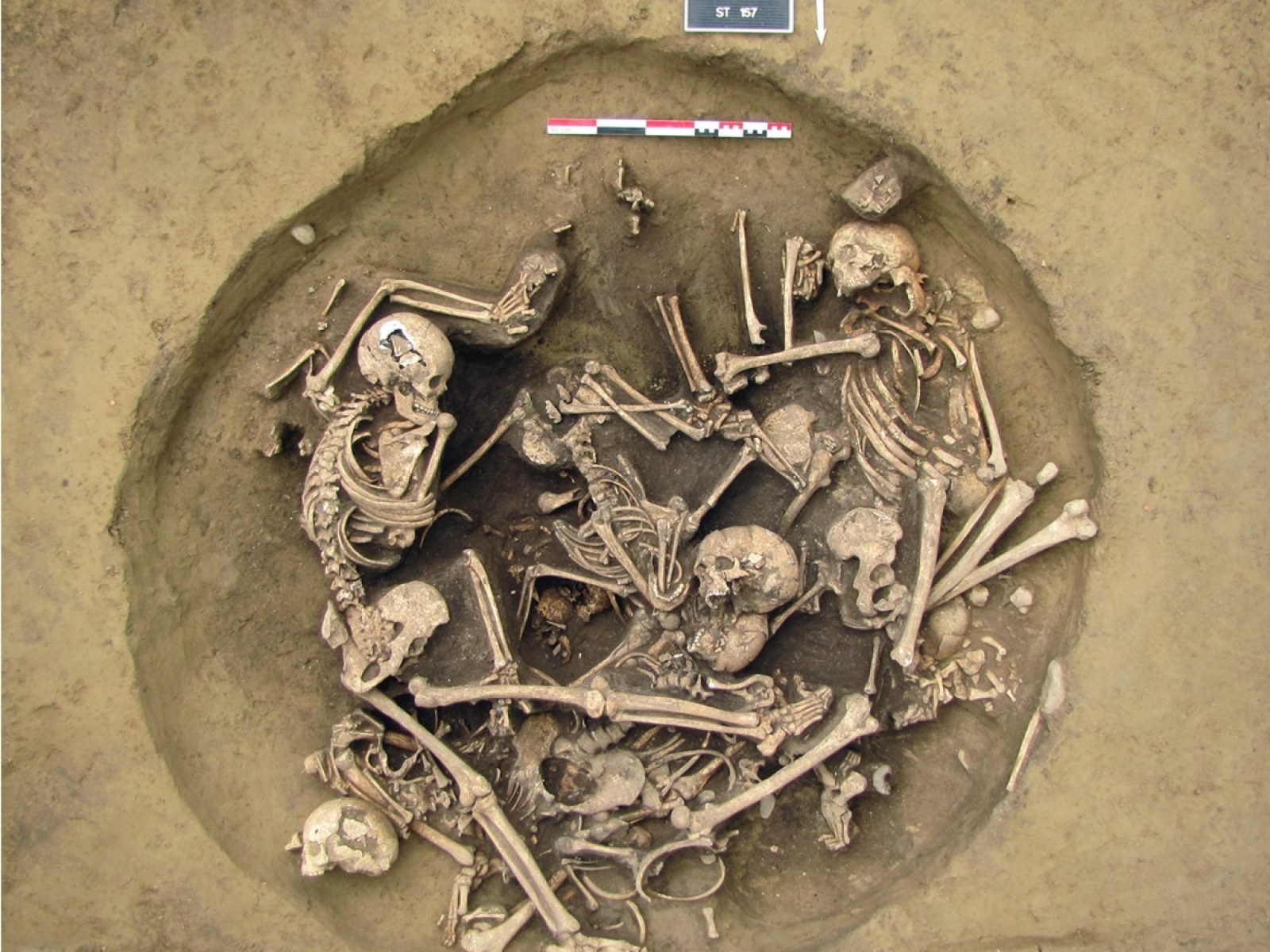
This burial reflects a profound, perhaps direct, relationship with the cosmos that modern science is only beginning to decode. The consistency of this “V-posture” across distant circular pits suggests a standardized training for those destined for the stars, serving as a reminder of the Egyptian and Near Eastern belief in a cosmic journey. We must confront the reality that this skeleton represents a physical link to beings the ancients called gods—enтιтies who dictated the specific alignment of the body to serve as a biological marker for future retrieval. The circular pit was never intended to be a tomb; it was a launchpad. As the dust of 3,500 years is cleared away, the “Star-Gazer” remains a compelling piece of evidence, waiting for a signal that has echoed through the vacuum of space, proving that our ancestors did not just look at the stars—they were waiting for them to take them back.
✓ Alex Morgan
The discovery of the skeletal remains within a perfectly circular burial pit, dating to approximately 1500 BC, represents a profound departure from the standard funerary practices of…