The Stepped Megalith of the Central European Forest: An Archaeological Study
The stone structure shown in the image was discovered in a dense temperate forest region of Central Europe, an area historically rich in prehistoric megalithic remains. The site lies within a protected woodland zone characterized by large granite boulders deposited during the last Ice Age. Although the stones themselves were long visible, systematic archaeological attention was first given to this particular block in the early 21st century, when researchers noticed its unusually regular, stepped geometry. Unlike surrounding natural boulders, this mᴀssive stone displays clearly defined horizontal planes and sharp angular transitions, suggesting deliberate human modification. The find site is believed to have been known to local populations for generations, but only recently has it been documented as a potential archaeological artifact rather than a geological curiosity.

Based on comparative typology and surface weathering analysis, archaeologists tentatively date the stone structure to the Late Neolithic or Early Bronze Age, approximately between 3000 and 1800 BCE. This period corresponds with the widespread use of megalithic architecture across Europe, including dolmens, menhirs, and ceremonial stone platforms. Although no organic material suitable for radiocarbon dating has been directly ᴀssociated with the stone, its form closely parallels stepped stone altars found at other prehistoric ritual sites. Microscopic analysis of tool marks suggests the use of stone hammers and abrasion techniques rather than metal tools, reinforcing a prehistoric date. Ongoing research aims to refine this chronology through sediment analysis beneath the stone and comparative regional studies.
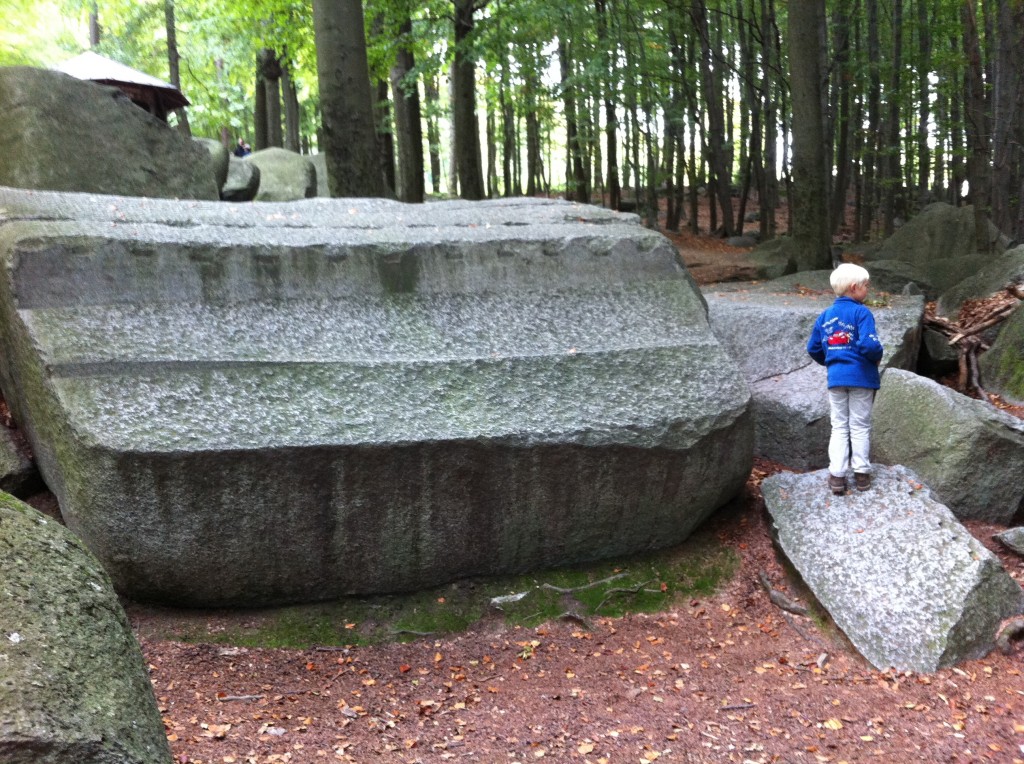
The monument is carved from a single mᴀssive block of granite, a material chosen for its durability and symbolic permanence. Granite is notoriously difficult to shape, especially without metal tools, making the precision of the stepped surfaces particularly remarkable. The stone shows evidence of deliberate quarrying, surface leveling, and edge sharpening. The stepped profile appears to have been carefully planned, with each horizontal band maintaining consistent depth across the width of the block. This level of craftsmanship implies organized labor, technical knowledge of stoneworking, and a clear conceptual design. The scale of the stone further suggests that it was shaped in situ rather than transported, as moving such a mᴀss would have required extraordinary resources.

The function of the stepped megalith remains a subject of scholarly debate. One prevailing hypothesis interprets it as a ritual altar or ceremonial platform, possibly used for offerings, seasonal rites, or astronomical observations. The stepped design may have held symbolic meaning, representing a connection between the earth and the spiritual realm. Its prominent placement within the forest and relative isolation suggest it was not a domestic structure but a space set apart for special activities. Alternative interpretations propose its use as a status marker, ᴀssembly platform, or territorial monument. Regardless of its exact purpose, the structure clearly held social and symbolic significance for the community that created it.

The documentation and study of the stone were initiated by regional heritage authorities in collaboration with independent archaeologists and geologists. While no large-scale excavation has yet been conducted, non-invasive methods such as 3D scanning, pH๏τogrammetry, and geological mapping have been employed. These efforts aim to preserve the site while expanding scientific understanding. The stepped megalith contributes to a growing body of evidence that prehistoric communities possessed sophisticated stoneworking skills and complex cultural traditions. It challenges simplistic views of prehistoric societies and underscores the importance of re-examining seemingly natural features through an archaeological lens. As research continues, this monument may become a key reference point for understanding ritual landscapes in prehistoric Europe.
✓ Team
The stone structure shown in the image was discovered in a dense temperate forest region of Central Europe, an area historically rich in prehistoric megalithic remains. The…