The Stone Circle and Pᴀssage of Newgrange: An Archaeological Perspective
Newgrange is one of the most remarkable prehistoric monuments in Europe, dated to around 3200 BCE, making it older than Stonehenge and the Great Pyramids of Giza. It is located in the Boyne Valley, County Meath, Ireland, an area dense with Neolithic ritual architecture. The monument forms part of a larger ceremonial landscape that includes pᴀssage tombs, standing stones, and earthworks. Archaeological evidence suggests that Newgrange was constructed by a well-organized agrarian society with advanced knowledge of astronomy, engineering, and ritual symbolism.

The structure consists of a mᴀssive circular mound approximately 85 meters in diameter, encircled by kerbstones and retaining walls made primarily of greywacke, granite, quartz, and basalt. A narrow stone pᴀssage, lined with large upright slabs, leads inward to a central cruciform chamber. The ceiling is formed using corbelled stone roofing, an advanced technique that has kept the interior dry for over five millennia. The precision in stone selection and placement indicates careful planning and skilled craftsmanship.

The stones used in Newgrange were sourced from various locations, some transported over long distances. Many surfaces display carved motifs such as spirals, lozenges, and zigzag patterns, executed using stone tools. These engravings, particularly prominent on the kerbstones, are among the finest examples of Neolithic art in Europe. The builders demonstrated not only aesthetic intention but also structural understanding, balancing mᴀssive stones without mortar while ensuring long-term stability.
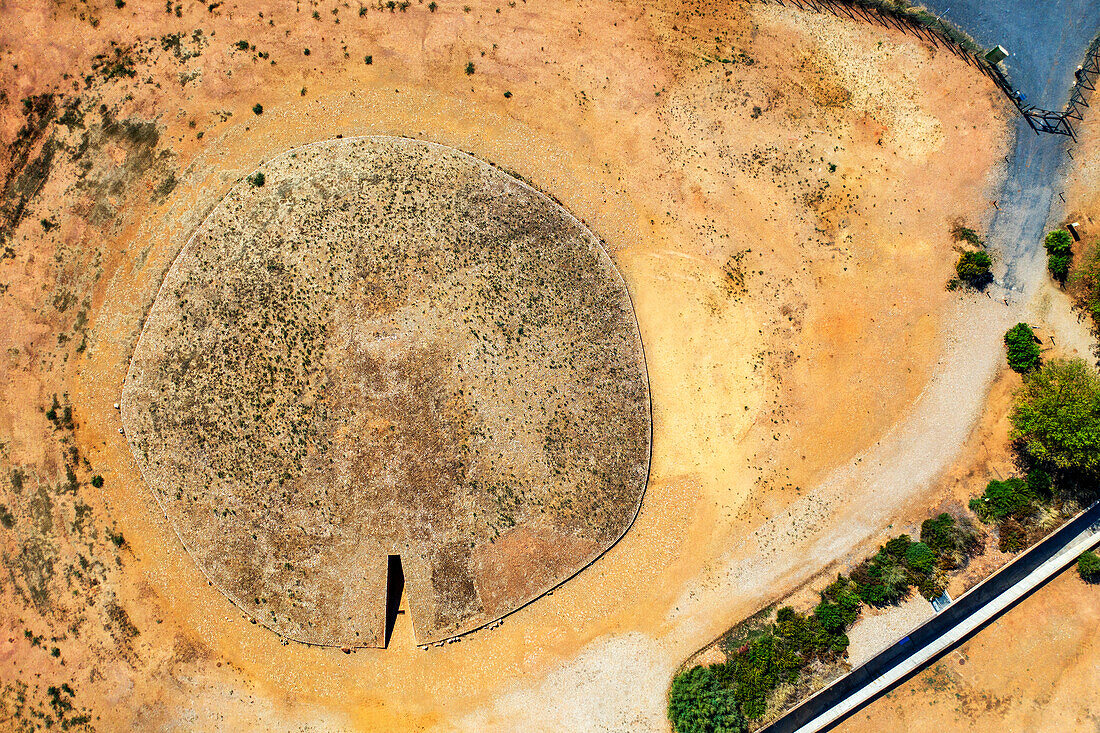
Archaeologically, Newgrange is classified as a pᴀssage tomb, though its function extends beyond burial. The most striking feature is its precise alignment with the winter solstice sunrise, when sunlight enters the pᴀssage and illuminates the inner chamber for a few minutes. This phenomenon suggests ritual significance related to solar cycles, rebirth, and agricultural renewal. The monument likely served as a ceremonial center, reinforcing social cohesion and cosmological beliefs within the Neolithic community.

Modern archaeological investigation was led in the 1960s and 1970s by Michael J. O’Kelly, whose excavations clarified the monument’s age, structure, and astronomical alignment. Restoration and preservation have since been overseen by the Office of Public Works. Today, Newgrange stands as a testament to prehistoric ingenuity, offering invaluable insight into early European ritual life, engineering skill, and symbolic thought.
✓ Team
Newgrange is one of the most remarkable prehistoric monuments in Europe, dated to around 3200 BCE, making it older than Stonehenge and the Great Pyramids of Giza….