The Subterranean Labyrinth: An Archaeological Analysis of the Chand Baori Stepwell
The arid landscapes of eastern Rajasthan, India, hold within them one of the most sophisticated examples of ancient hydraulic engineering ever documented: the Chand Baori of Abhaneri. Located approximately 95 kilometers from Jaipur, this monumental stepwell was “rediscovered” in the modern archaeological sense during the British colonial surveys of the 19th century, though it remained a living site for local communities for over a millennium. Systematic stratigraphic analysis and epigraphic evidence found on related temple fragments nearby place the primary construction phase in the 8th and 9th centuries CE, during the reign of King Chanda of the Nikumbha Dynasty. This chronological placement marks it as a cornerstone of early medieval Indian architecture, predating the more ornate Solanki-style stepwells of Gujarat. The site serves as a profound testament to the socio-political stability of the era, as the mobilization of resources required to execute a project of such geometric precision suggests a highly organized and wealthy regional administration capable of long-term infrastructure investment.
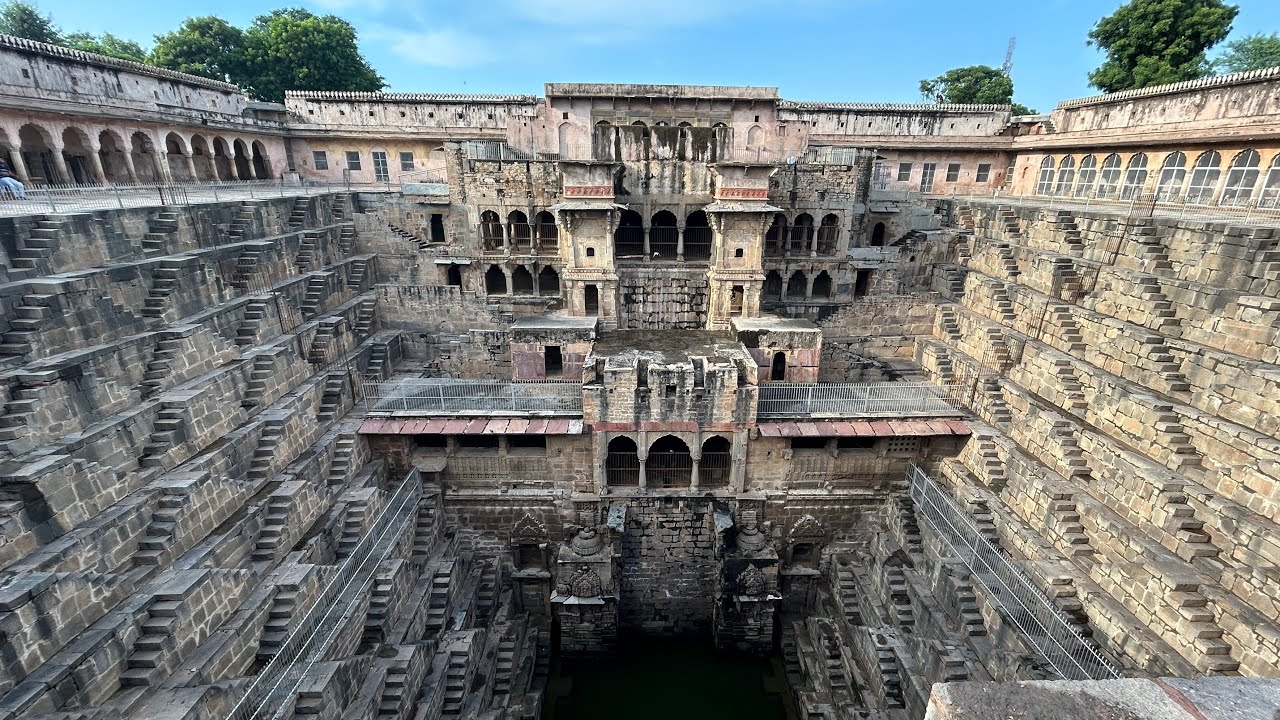
A detailed petrological examination of the Chand Baori reveals that the structure is primarily composed of locally quarried volcanic sandstone and dark magneтιтe-rich rock, chosen for its exceptional durability and resistance to water erosion. The choice of material was both pragmatic and aesthetic; the porous nature of the sandstone allowed for a degree of natural filtration as groundwater seeped into the reservoir, while its structural integrity supported the immense lateral pressure exerted by the surrounding earth. Geologists have noted that the blocks were precisely cut using iron chisels and wedges, a technique that allowed for the sharp, clean edges visible in the triangular stair-sets. There is no evidence of mortar in the primary subterranean levels; instead, the architects utilized a sophisticated interlocking “dry masonry” technique. This method allowed the structure to remain flexible during the minor seismic shifts common in the region, preventing the rigid cracking that would have led to catastrophic leaks or structural collapse over its 1,200-year history.

The manufacturing details of the Chand Baori exhibit a level of mathematical mastery that borders on the miraculous for the 8th century. The structure descends approximately 30 meters (100 feet) into the earth across 13 distinct levels, featuring a staggering 3,500 narrow steps arranged in a perfect symmetrical pattern. The design utilizes an inverted pyramidal geometry, which serves a dual purpose: it minimizes the surface area of the water exposed to the sun to reduce evaporation, and it provides structural reinforcement against the inward pressure of the soil. The northern face of the well is distinct from the other three, featuring a multi-story pavilion (prakara) supported by intricately carved pillars and arches. This section houses a series of “retreat rooms” for the royals, likely cooled by the natural thermal mᴀss of the surrounding earth and the proximity of the water. The precision of the staircases—where each triangular flight aligns perfectly with the next—suggests the use of advanced surveying tools, possibly including plumb bobs and water levels, to maintain exact horizontal and vertical alignment across the mᴀssive pit.
The function of Chand Baori was inherently multifunctional, bridging the gap between civic utility and sacred space. Primarily, it was a vital reservoir designed to harvest rainwater during the monsoon seasons and tap into the deep water table during the scorching Rajasthani summers. At its base, the air remains consistently 5-6 degrees Celsius cooler than at the surface, making it a critical community hub for heat relief. However, archaeology reveals its deeper ritualistic significance. The inclusion of shrines dedicated to Harshat Mata, the Goddess of Joy, indicates that the act of descending to fetch water was treated as a spiritual pilgrimage. The well acted as a tirtha (a crossing point between the human and divine realms). The lower levels were likely reserved for ritual ablutions (shuddhi) before entering the adjacent temple complex. This integration of water management with religious architecture highlights a cultural philosophy where natural resources were deified and protected through sacred law, ensuring the long-term sustainability of the settlement.

In the modern era, the stewardship of Chand Baori has fallen under the Archaeological Survey of India (ASI), which has conducted extensive clearing and conservation projects to preserve the site’s integrity. Early 20th-century excavations led by British archaeologists like Sir Alexander Cunningham provided the first formal documentations, but contemporary efforts by the ASI have focused on desilting the lower chambers and restoring the northern pavilion’s delicate carvings. These modern missions have utilized Ground Penetrating Radar (GPR) to map potential hidden tunnels connecting the well to the nearby palace ruins, suggesting a defensive role for the structure during times of siege. Today, the site is managed as a protected monument of national importance. The ASI continues to study the site’s drainage systems to prevent modern pollutants from damaging the ancient masonry. This ongoing research not only preserves a masterpiece of human ingenuity but also provides modern hydraulic engineers with ancient insights into sustainable water conservation in arid climates.

✓ Team
The arid landscapes of eastern Rajasthan, India, hold within them one of the most sophisticated examples of ancient hydraulic engineering ever documented: the Chand Baori of Abhaneri….