The Warrior in the Stone Chamber: An Archaeological Study of a High-Status Burial
The image presents a carefully arranged skeletal burial discovered within a narrow stone-lined grave, accompanied by a rich ᴀssemblage of grave goods. Based on the typology of artifacts—particularly the metal ornaments, weapon components, and ceramic vessel—the burial may be dated to the late Bronze Age or early Iron Age, approximately between 1200 BCE and 700 BCE. This transitional period was marked by significant technological and social transformations, including the widespread adoption of iron metallurgy and the emergence of stratified warrior elites. The deliberate positioning of the skeleton, extended supine with arms placed over the torso, reflects formal funerary customs rather than a hasty interment. Such structured burials often indicate high social status within the community.

The burial context suggests it may have been discovered in a region known for prehistoric or protohistoric warrior cultures, such as Central Europe, the Caucasus, or parts of the Near East. Similar elite graves have been excavated in Hallstatt culture sites (circa 800–500 BCE) in Austria and southern Germany, where warriors were interred with weapons, ornaments, and ceremonial items. The stone-lined grave structure visible in the image indicates intentional construction, likely to protect the body and grave goods from collapse and disturbance. Excavations of comparable burials were typically conducted by regional archaeological insтιтutes using stratigraphic recording methods, soil analysis, and careful artifact mapping to reconstruct burial rituals and social hierarchy.
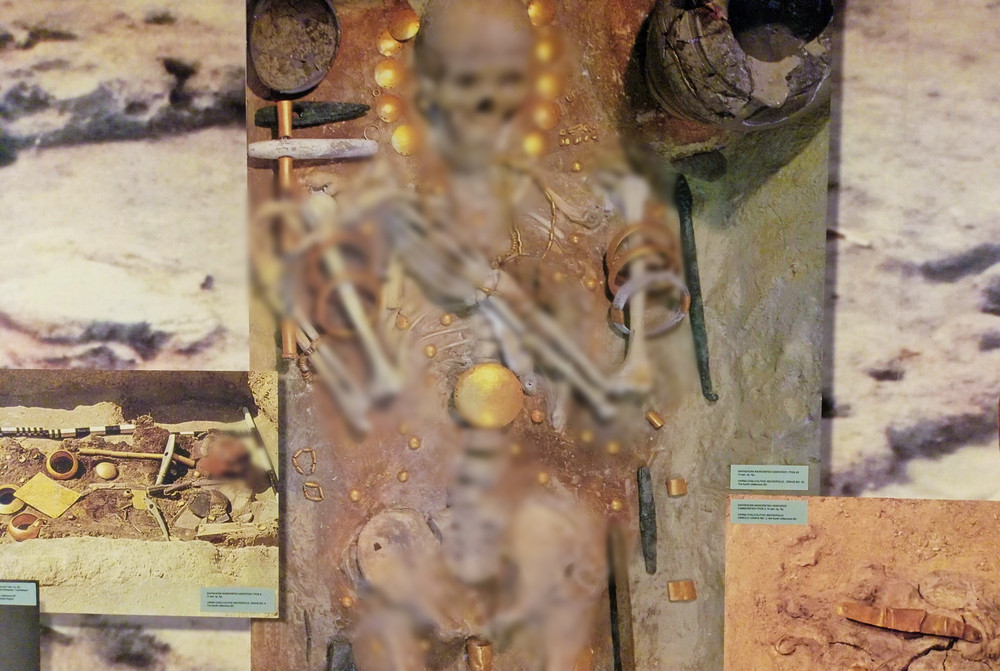
Material analysis of the grave goods reveals a combination of metal and stone artifacts. The circular metal fittings and blade fragments may represent components of weapons—possibly a sword, dagger, or spear—crafted from bronze or early iron. The small gold beads scattered around the body likely formed part of a necklace, garment decoration, or ritual offering. Gold during this era symbolized wealth, prestige, and possibly divine favor. The greenish stone objects visible near the lower limbs may be polished stone axes or ceremonial tools, while the ceramic vessel placed near the head likely contained food, drink, or offerings intended for the afterlife. Metallurgical examination would identify alloy composition, revealing advanced smelting techniques for the period.

Functionally and symbolically, this burial ᴀssemblage indicates that the deceased may have been a warrior, chieftain, or individual of elevated rank. Weapons placed near the hands suggest readiness or protection in the afterlife, while ornamental items emphasize idenтιтy and social standing. The inclusion of gold beads is particularly significant, as gold was scarce and typically reserved for elites. Funerary archaeology demonstrates that such richly furnished graves often correspond to individuals who played leadership roles in warfare, trade, or ritual governance. Osteological analysis of the skeleton—examining bone robustness, trauma marks, and muscle attachment development—could further support the interpretation of a physically active warrior lifestyle.
The discovery and excavation of a burial of this nature would involve a multidisciplinary team, including field archaeologists, osteologists, and conservation specialists. Precise documentation through pH๏τography, 3D scanning, and soil micromorphology would be essential to preserve contextual integrity. Radiocarbon dating of ᴀssociated organic remains, such as wood fragments or textile residues, would help refine the chronology. Ultimately, this stone-chamber burial offers profound insight into social stratification, ritual belief, and technological capability during a transformative era in human prehistory. It stands as a testament to the complexity of early societies and their enduring concern with memory, honor, and the afterlife.
✓ Team
The image presents a carefully arranged skeletal burial discovered within a narrow stone-lined grave, accompanied by a rich ᴀssemblage of grave goods. Based on the typology of…