The Weathered Face of Eternity: Archaeological Insights into the Great Pyramid’s Surface Erosion
Rising from the desert plateau of Giza Plateau, the Great Pyramid of Giza—constructed during the reign of Pharaoh Khufu around 2580–2560 BCE—remains one of the most studied monuments in archaeological history. The images presented reveal a lesser-discussed aspect of the pyramid: the weathered and uneven surface along its upper casing and core masonry. These visible irregularities have sparked both scholarly analysis and popular speculation. However, from an archaeological standpoint, they represent the cumulative effects of time, environmental exposure, and human interaction rather than anomalies of construction.
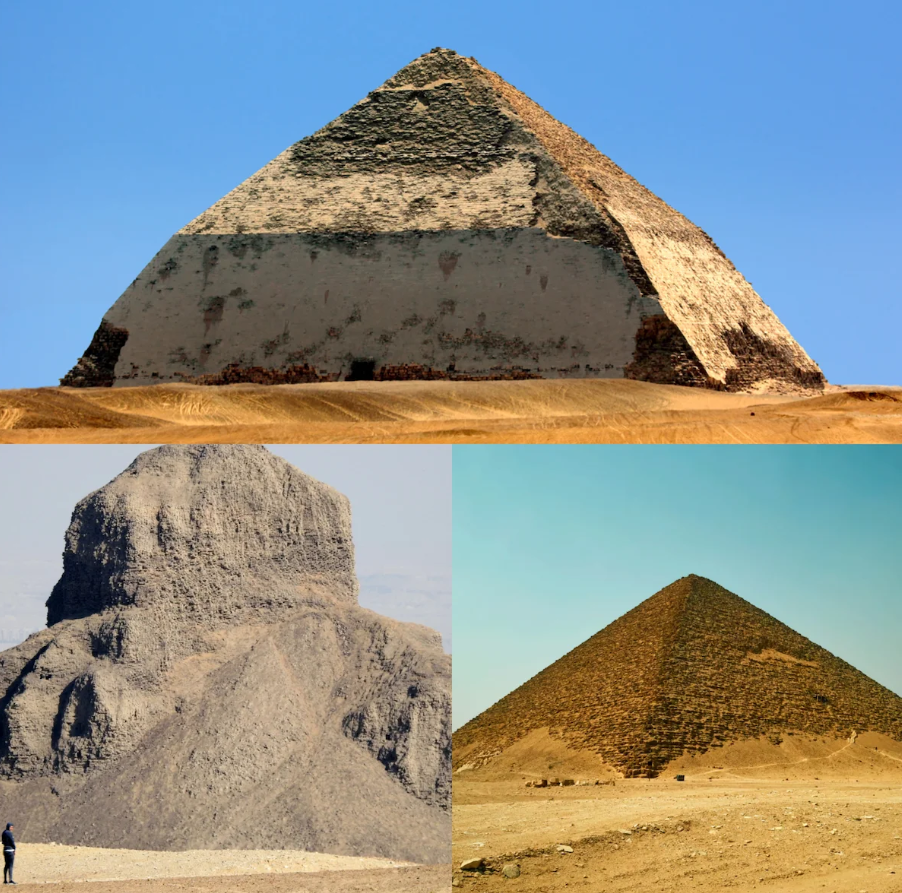
Archaeological excavations conducted since the 19th century, notably by organizations such as the Egypt Exploration Society, have revealed that the pyramid was originally covered with finely polished Tura limestone casing stones. These outer layers created a smooth, reflective surface that would have gleamed under the Egyptian sun. The materials used included local limestone for the core, higher-quality white limestone for the casing, and granite—transported from Aswan—for internal chambers. The construction techniques involved precise cutting, alignment, and stacking of multi-ton blocks, demonstrating a sophisticated understanding of engineering and geometry.

The damage and erosion visible today can be traced through historical timelines. Around the 12th century CE, during the rule of Al-Aziz Uthman, attempts were made to dismantle the pyramid for building materials, though largely unsuccessful. Later, in the 14th century, a powerful earthquake in 1303 CE caused significant loosening and collapse of casing stones. Over centuries, local populations removed these stones for use in Cairo’s construction. Wind erosion, temperature fluctuations, and sand abrasion further contributed to the rough texture and uneven surface patterns seen in the images.
From an archaeological perspective, these surface irregularities are not flaws but valuable records. They provide insight into ancient construction phases, later modifications, and environmental history. The layered structure visible beneath the missing casing stones reveals the step-like core design, sometimes referred to as a “stepped pyramid within a true pyramid.” This feature supports theories that construction may have progressed in stages, with outer casing added last to achieve the final smooth form.

Ultimately, the Great Pyramid stands not only as a tomb but as a monumental testament to human ingenuity and resilience. Its current weathered appearance tells a story spanning over 4,500 years—from its construction in the Old Kingdom, through periods of natural disaster and human reuse, to modern archaeological study. Insтιтutions such as the Supreme Council of Antiquities continue to preserve and study the site, ensuring that its historical and cultural significance endures for future generations.
✓ Team
Rising from the desert plateau of Giza Plateau, the Great Pyramid of Giza—constructed during the reign of Pharaoh Khufu around 2580–2560 BCE—remains one of the most studied…