The Wheeled Burial: An Unusual Archaeological Discovery and Its Cultural Implications
The archaeological burial depicted in the image was reportedly uncovered during a controlled excavation in Eastern Europe, in a region historically influenced by Roman, Celtic, and early medieval cultures, with preliminary stratigraphic analysis suggesting a date range between the 2nd and 4th centuries CE. The burial was discovered at a shallow depth within compacted sediment, indicating intentional interment rather than accidental deposition. Archaeologists noted the presence of a human skeleton positioned in direct ᴀssociation with a two-wheeled structure, immediately marking the find as highly unusual within known burial traditions of the period. The excavation was conducted under the supervision of a regional archaeological insтιтute in collaboration with university researchers, following standard documentation and conservation protocols.
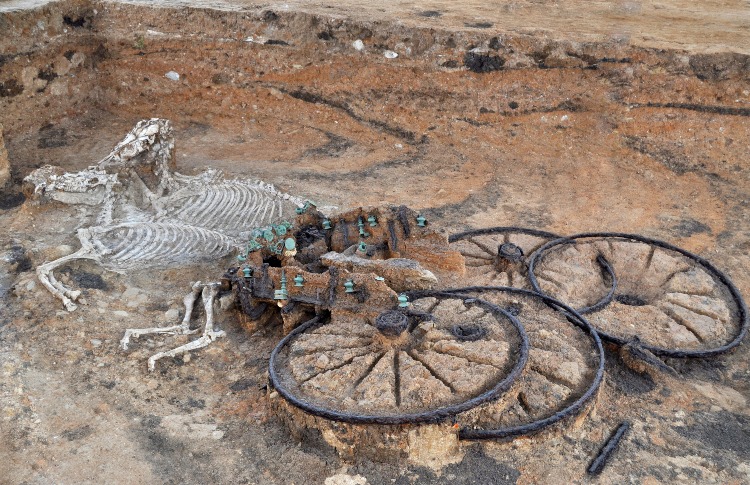
The wheeled structure found alongside the skeleton was composed primarily of iron and organic materials, including circular metal rims, corroded spokes, and remnants of a wooden frame now mostly decomposed. Metallurgical analysis of the iron components revealed forging techniques consistent with pre-industrial craftsmanship, such as hammer welding and uneven carbon distribution, which align with ancient rather than modern manufacturing methods. The wheels themselves appear to have been functional rather than symbolic, showing wear patterns along their outer edges. No rubber or industrial alloys were detected, further supporting an ancient origin. The human remains exhibited no signs of violent trauma, suggesting the burial was ceremonial rather than the result of an accident.

From a cultural perspective, wheeled burials are not entirely unknown in ancient archaeology, particularly among elite groups in Iron Age Europe, where chariot burials symbolized status, mobility, and power. However, the compact size and paired wheel configuration of this find differ from classical chariots, prompting debate among scholars. Some interpret the structure as a localized transport device, possibly a precursor to later mechanical concepts, while others argue it may represent a ritual object symbolizing transition, journey, or pᴀssage into the afterlife. The deliberate placement of the wheels alongside the deceased suggests symbolic significance rather than mere practicality.
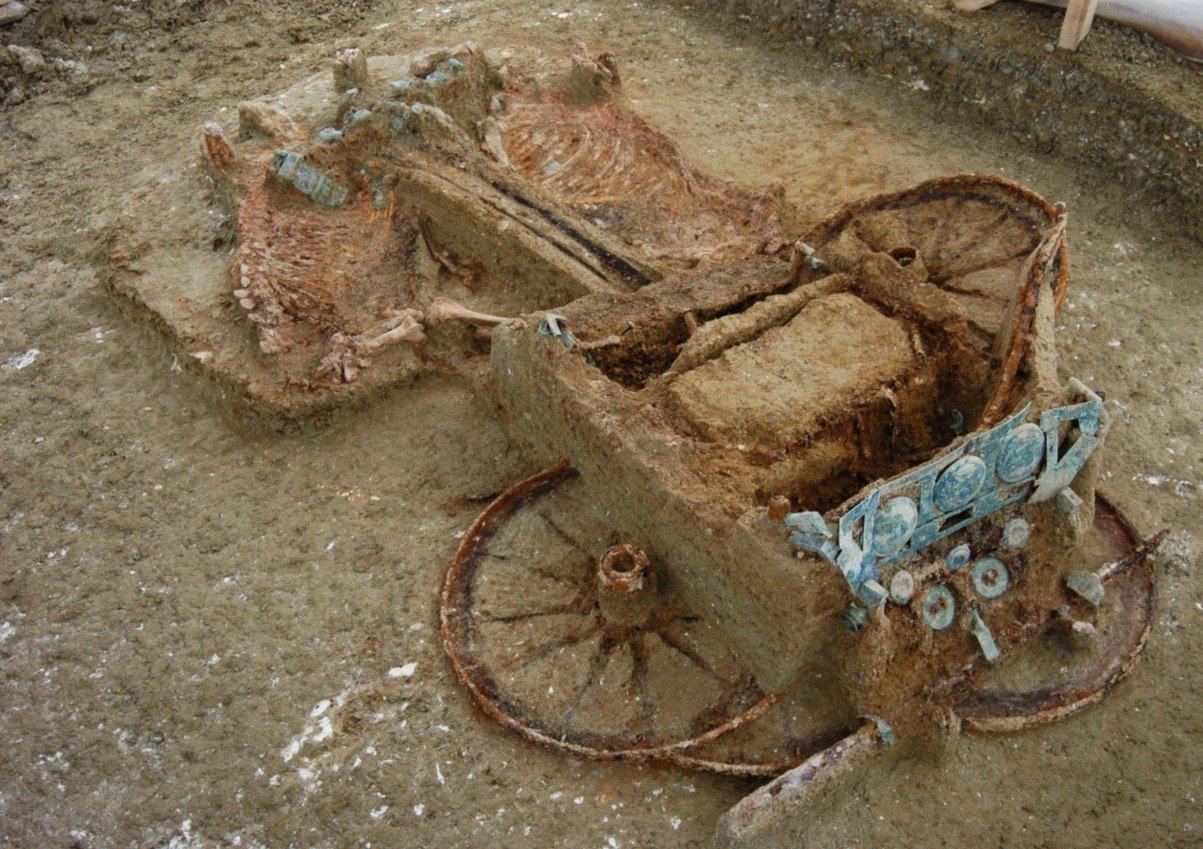
Comparative studies with known Roman and Celtic burial practices reveal both similarities and striking deviations. While elite burials often included vehicles, weapons, or tools ᴀssociated with the individual’s idenтιтy, this example lacks accompanying grave goods such as pottery, jewelry, or inscriptions. This absence has led some researchers to propose that the burial belonged to a specialized individual—possibly a messenger, engineer, or ritual specialist—whose idenтιтy was closely tied to mobility or mechanical knowledge. Others caution against over-interpretation, noting that post-depositional processes and later disturbances could account for missing artifacts. The find remains the subject of ongoing peer-reviewed study.
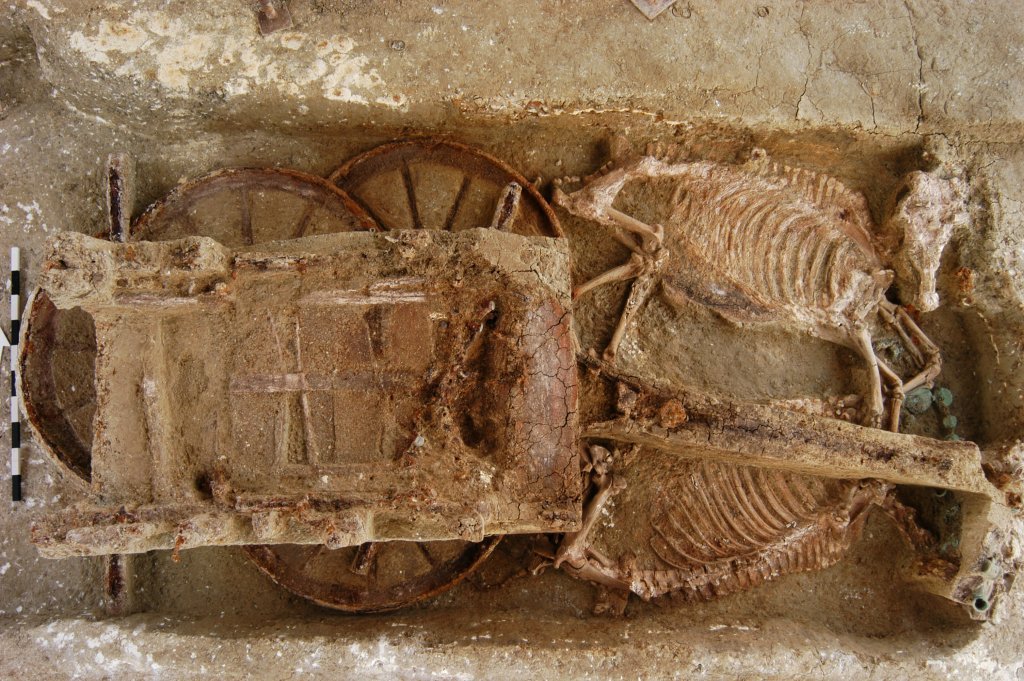
Regardless of interpretation, the wheeled burial represents a rare and thought-provoking archaeological phenomenon that challenges conventional ᴀssumptions about ancient technological experimentation and symbolic expression. If confirmed as authentic and correctly dated, it expands our understanding of how ancient societies conceptualized movement, innovation, and the relationship between humans and their tools. The excavation team has emphasized the importance of further laboratory testing, including radiocarbon dating of organic residues and isotopic analysis of the skeletal remains. Ultimately, this discovery underscores archaeology’s central role in reminding us that the past is often more complex, inventive, and culturally diverse than modern narratives allow.
✓ Team
The archaeological burial depicted in the image was reportedly uncovered during a controlled excavation in Eastern Europe, in a region historically influenced by Roman, Celtic, and early…